
Gifting & Occasions· 6 min read
Blade Geometry on the Charcuterie Board: Slicing vs. Cleaving
More than just sharpness, blade geometry dictates a clean cut. Learn how torque and handle design prevent slips on hard rinds for the perfect cheese board experience.
By Antler Tree · 1 June 2026
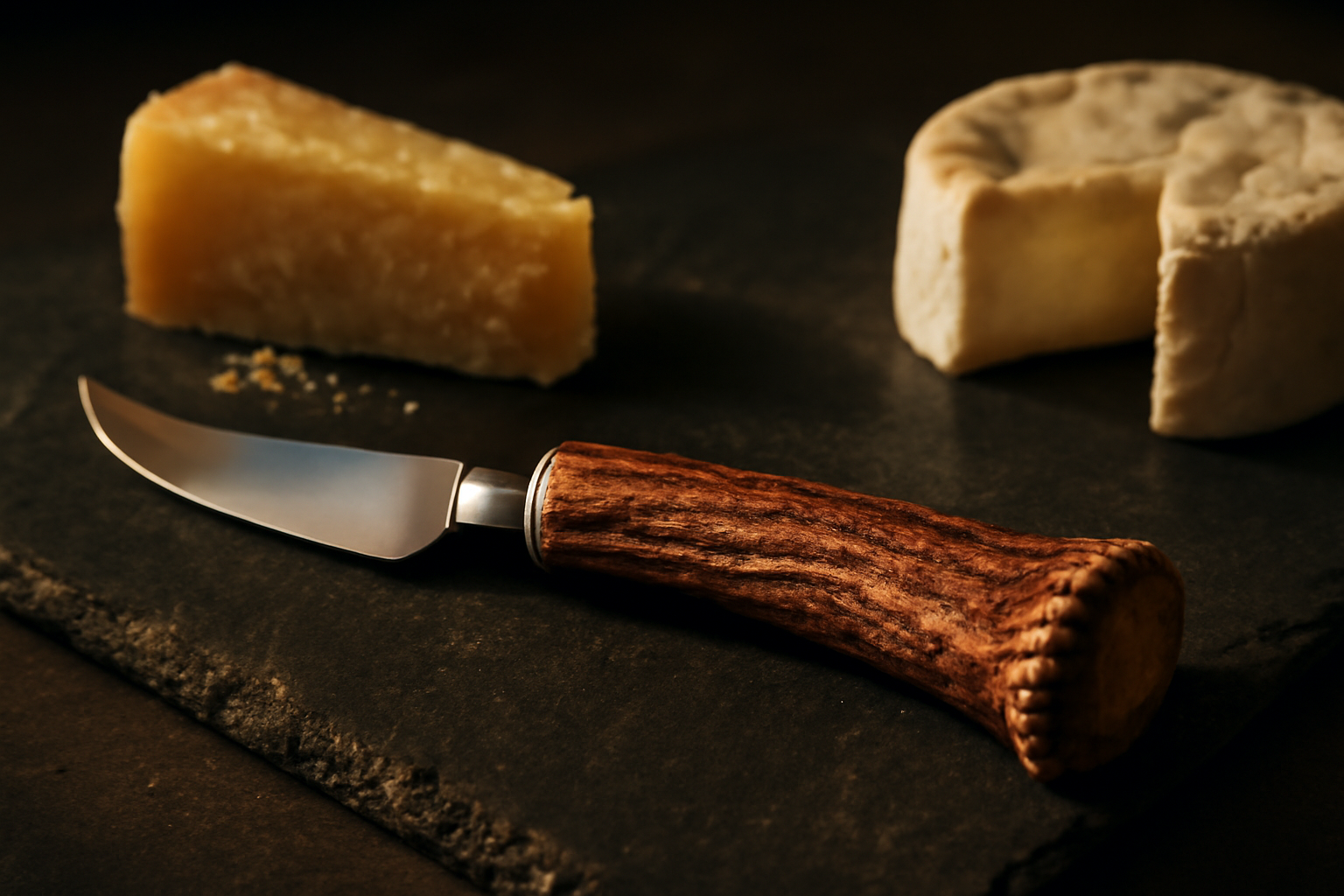
Not all cheese knives are created equal. The belief that any small blade will suffice for a charcuterie board is the single greatest reason for cracked cheddars and smeared bries. The integrity of the cheese, from rind to paste, depends almost entirely on the tool used to serve it.
The Unseen Architecture of the Cut
When we admire a well-crafted knife, our eyes are often drawn to the length of the blade, the polish of the steel, or the material of the handle. But the most critical element for performance is one we cannot easily see: the edge geometry. This refers to the cross-sectional shape of the blade, the precise angles at which the steel has been ground to form a cutting edge. It is this invisible architecture that determines whether a knife will glide through a soft brie or split a hard parmesan.
Think of it as the difference between an axe and a scalpel. Both are sharp, but their purpose is dictated by their shape. An axe has a wide, wedge-like profile designed to split wood apart with force. A scalpel has an incredibly thin, acute profile designed for precise slicing with minimal tissue disturbance. On the cheese board, these same principles apply. The two primary actions we require from a cheese knife are slicing (for soft, creamy cheeses) and cleaving (for hard, dense cheeses), and each demands a fundamentally different blade geometry. Choosing the wrong tool for the job doesn't just make serving difficult; it compromises the texture and presentation of the cheese itself.
Slicing the Delicate: The Art of the Soft Cheese Knife
A wheel of ripe camembert or a log of fresh chèvre presents a unique challenge. Their paste is soft, sticky, and has a high moisture content. The goal here is a clean slice that leaves a smooth face on both the main block and the portion being served. A thick, wedge-like blade is the enemy. As it pushes through the cheese, its wide profile creates immense friction and drag. The soft paste clings to the sides of the blade, smearing and compressing, resulting in a mangled portion and a ruined presentation.
The ideal geometry for slicing soft cheese is therefore one that minimises surface contact and friction. This means a very thin blade with a highly acute primary bevel, often ground to an angle of 10 to 15 degrees per side. This razor-like profile allows the knife to part the cheese rather than bulldoze through it.
Many so-called 'soft cheese knives' attempt to solve the sticking problem with large perforations, or holes, in the blade. While this does reduce surface area, it is often a design gimmick that overlooks the more important factor of a thin blade stock and acute edge geometry. A truly effective soft cheese knife relies on its sleek profile first and foremost. It should feel almost weightless in its passage, leaving behind nothing but a perfect cut that respects the delicate structure of the cheese.
Taming the Hard-Aged: The Physics of the Cleave
At the opposite end of the spectrum lie the magnificent, aged cheeses: a wedge of nutty Gruyère, a crystalline block of aged Gouda, or the king of hard cheeses, Parmigiano-Reggiano. These are low-moisture, high-density cheeses, often characterized by a brittle, crumbly texture and a formidable natural rind. Attempting to use a thin, flexible slicing knife on one of these is a recipe for disaster.
When a thin blade meets a hard rind, the force is concentrated on a minuscule area. The blade is likely to jam, or worse, the fine edge may chip or roll. If you do manage to push it through, the blade may flex and wander, producing an uneven, shattered cut rather than a clean break.
For these dense cheeses, the principle is not slicing but cleaving or splitting. The geometry required is that of a wedge. The blade needs to be thicker and more robust, with a wider, more obtuse edge angle—typically 20 to 25 degrees per side. This stout profile gives the blade the structural strength to withstand the significant pressure required to penetrate the rind. Once the tip is in, the wedging action of the blade’s primary grind takes over. It cleanly forces the cheese apart along its natural fracture lines, which is especially important for crystalline cheeses like parmesan, where this preserves the delightful granular texture. A common tool for this is the squat, spade-shaped parmesan knife, which is excellent for its specific purpose but lacks versatility for anything else on the board. A well-designed, all-purpose hard cheese knife will adopt this robust, wedge-like geometry in a more traditional blade shape, allowing for both powerful splitting and controlled portioning.
The Handle's Role: Torque, Control, and the Human Hand
While blade geometry dictates how a knife interacts with the cheese, the handle dictates how you interact with the knife. For soft cheeses, the handle is a matter of simple guidance. But when confronting a dense, hard-aged cheese, the handle becomes a critical piece of ergonomic equipment, responsible for translating the force from your hand into a stable, controlled downward cut. This is where most generic cheese knives profoundly fail.
From Palm to Rind: Maximising Downward Torque
Picture the act of pressing down on a hard, unyielding rind of parmesan. With a typical, thin, or cylindrical handle, the force is concentrated onto a narrow line across your palm and fingers. This creates painful pressure points and instability. Your hand naturally wants to shift to relieve the discomfort, causing the blade to rock or twist. The moment the blade twists, it is likely to slip sideways off the curved, waxy surface of the rind—a dangerous and frustrating event.
This is a problem of physics and ergonomics that we have carefully considered in our work with naturally shed New Zealand red deer antler. A handle's effectiveness in this scenario is determined by two factors: surface area and shape. A thicker handle with a contoured profile distributes the downward force across a much larger area of the palm. For instance, a handle that tapers from a slender 20mm near the bolster to a substantial 30-35mm at the butt allows the user to engage their entire hand. The flared end rests securely in the hollow of the palm, providing a solid anchor.
This is where torque comes into play. Torque, in simple terms, is rotational force. When a blade wants to slip sideways, it is attempting to rotate. A wider handle increases the leverage your hand can exert to resist this rotation. The natural, organic contour of a piece of antler is not just beautiful; it is functionally superior because it provides multiple points of contact that fit the curves of a gripping hand. This increased contact and wider grip give you significantly more control to counteract the blade's tendency to twist, keeping it planted firmly as you apply downward pressure. The substantial feel and inherent texture of the antler further enhance this grip, ensuring your force is directed exactly where you intend it to go: straight down, through the rind.
The Balance Point
Beyond shape and size, the balance of the knife is paramount. A well-crafted knife should feel like a natural extension of your arm. The point of balance should be right where the blade meets the handle, allowing for nimble manipulation without feeling blade-heavy or handle-heavy. When a knife is balanced, it requires less muscular effort to control, reducing fatigue and increasing precision. This is a hallmark of a handcrafted tool, where the weight of the steel and the weight of the handle material are deliberately matched to create an object that is not just effective, but a genuine pleasure to hold and use.
Unifying Form and Function: The Versatile Cheese Knife
Given the opposing demands of soft and hard cheeses, must one own a small arsenal of specialised blades? Not necessarily. The pinnacle of tool design often lies in creating a single, versatile object that performs multiple jobs with elegance and efficiency. A truly great cheese knife can bridge this divide.
The solution lies in a hybrid blade geometry. The blade must be forged from high-quality steel, thick and sturdy enough at the spine to provide the rigidity needed for a hard cleave. Yet, it can be ground with a fine, continuous curve down to a sharp, durable edge that is still acute enough to pass through softer cheeses without significant drag. A slightly wider blade profile also serves a practical purpose, allowing you to use the side of the knife to pick up and serve the portion you have just cut.
The careful balance of these opposing needs is a true design challenge, one we have spent years refining in the design of our own Antler Cheese Knife. In this single tool, the robust, wedge-like principle required for hard cheeses is married with an edge fine enough for most semi-soft varieties. Paired with a handle crafted from the rugged, organic form of naturally shed antler found in the New Zealand wilderness, the knife becomes a conversation piece that is also a supremely functional instrument. It embodies the union of rustic strength and refined purpose.
A cheese board is a landscape of textures and flavours. The tool you use to explore it should not be an afterthought. A thoughtfully designed knife doesnt just cut cheese—it elevates the entire ritual of sharing food, showing respect for the cheesemaker's craft and for the guests you have welcomed to your table. We invite you to look at the tools on your own board and consider how they serve the food you love.
Related reading
Gifting & Occasions· 6 min read
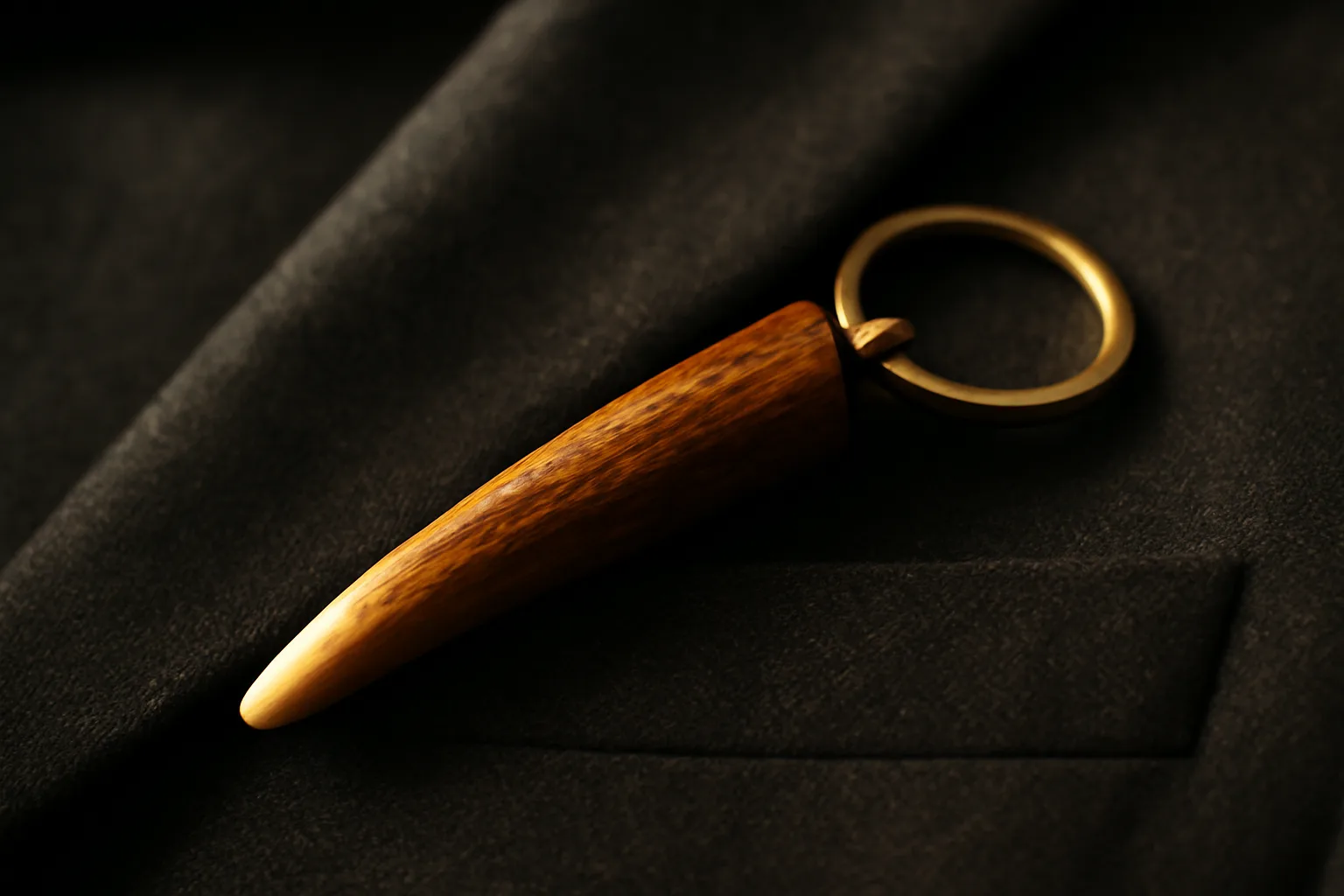
Protecting Garment Linings: The Hardness Scale of Your Key Ring
Why do keys ruin pocket linings? We explore the material science of hardness and friction, and explain how smooth, rounded deer antler offers a fabric-safe, elegant solution.
Read article →
Gifting & Occasions· 6 min read
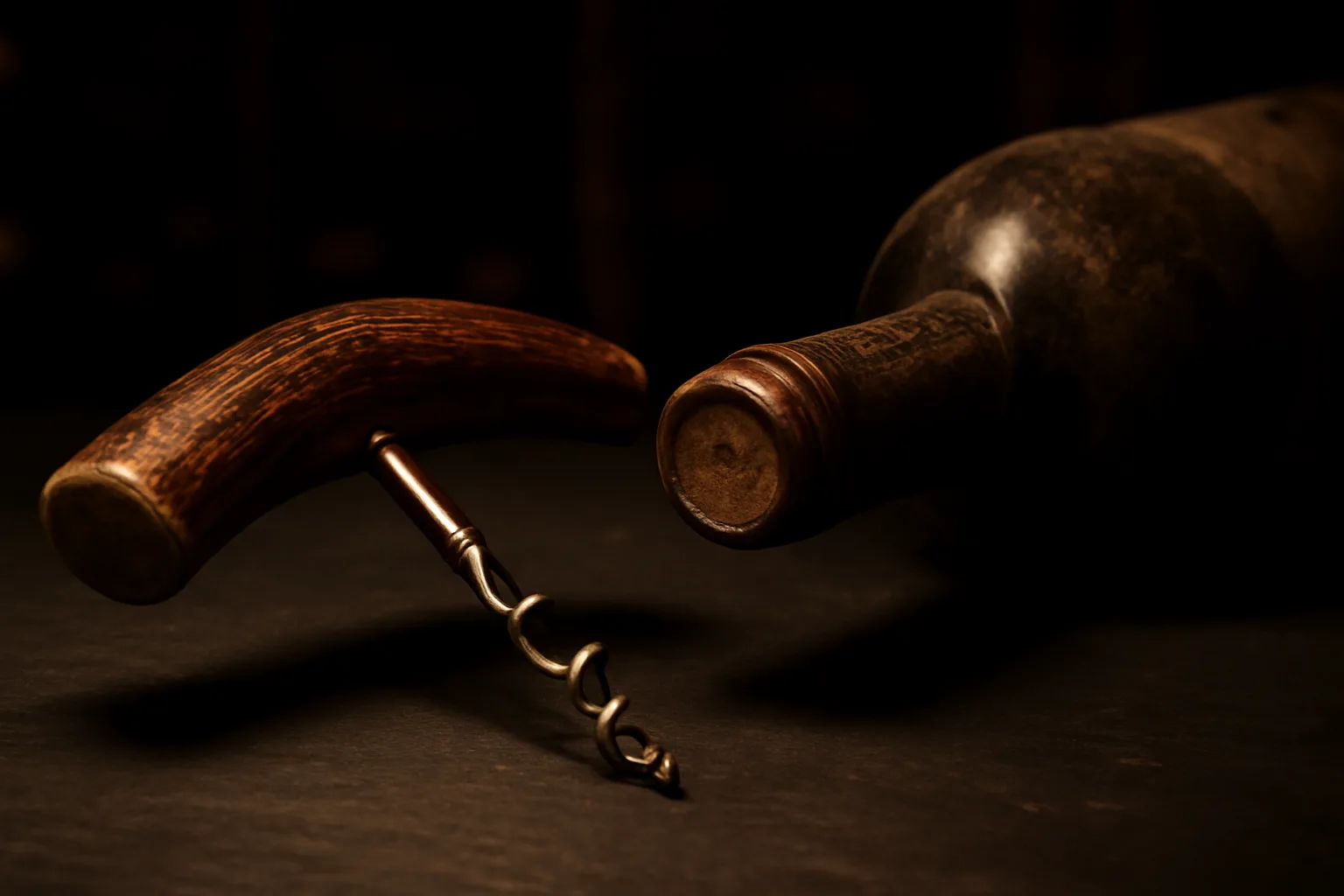
Stabilizing Dry Seals: Extracting Recessed and Stubborn Wine Corks
Learn the expert technique for extracting dry, recessed, and stubborn wine corks without ruining the wine. Discover how grip and tool design are key to success.
Read article →

Gifting & Occasions· 6 min read
Executive Gift Trends: Why High-Level Partners Prefer Tactile Office Art
Corporate gifting is shifting from plastic tech to tactile office art. We explore why modern executives value functional, analog items that serve as premium desk conversation pieces.
Read article →