
Gifting & Occasions· 6 min read
Decanting Vintage Port: Navigating Fragile Closures Safely
A technical guide to safely extracting fragile, decades-old corks from vintage port. Learn a specialized technique to prevent crumbling and ensure a perfect pour.
By Antler Tree · 1 June 2026
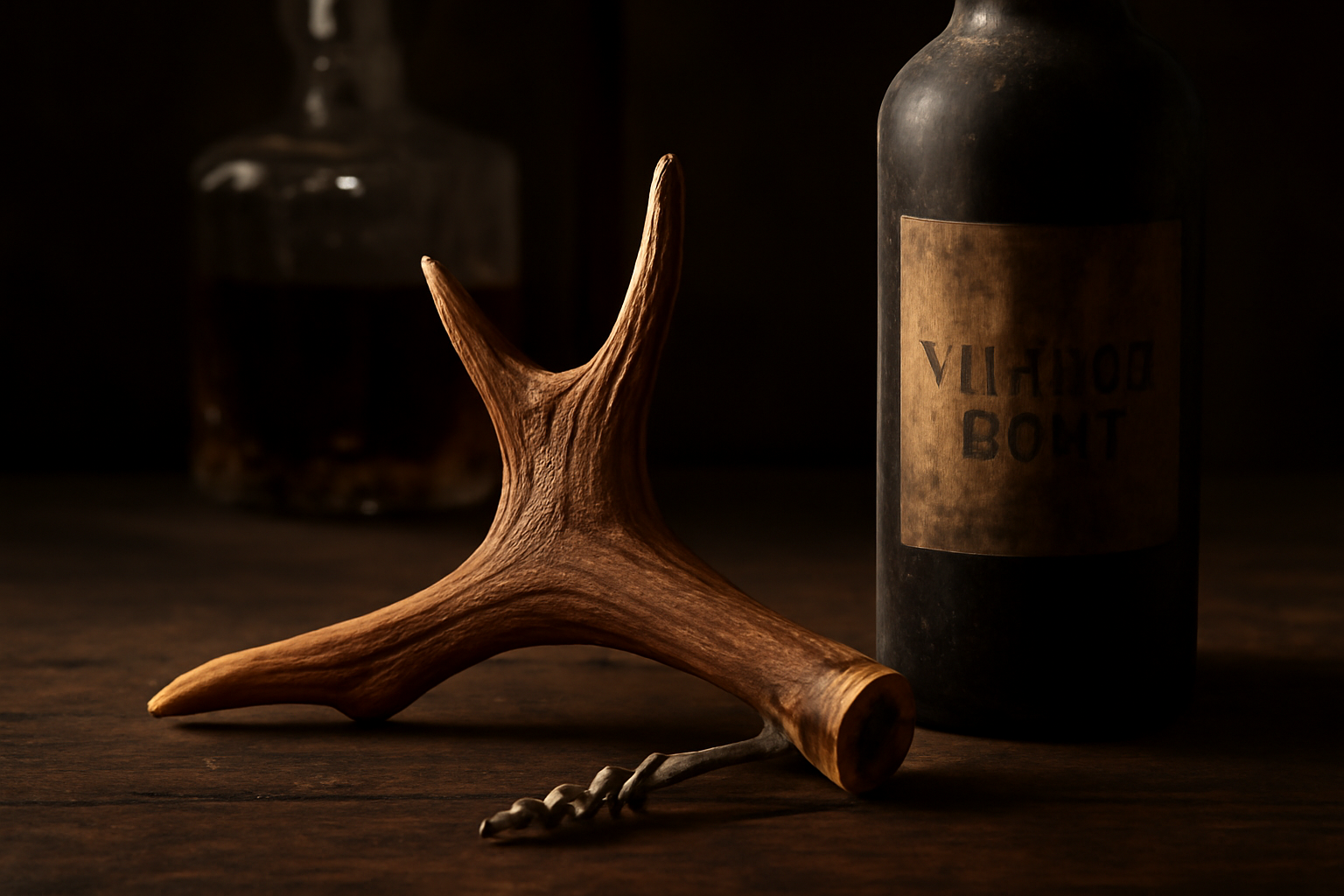
There are few small rituals as satisfying as preparing to open a bottle of vintage port that has slumbered for decades. It is an act of ceremony, a bridge to a past harvest. And there are few minor tragedies as profound as watching that bottle’s venerable cork, the very guardian of its contents, crumble into a sodden mess upon extraction.
This isn’t a failure of enthusiasm, but a failure of technique. An old cork is not the same resilient plug you might find in a young table wine; it’s a fragile artifact that demands a specific kind of respect and a more delicate approach.
The Anatomy of a Degraded Cork
To understand how to successfully extract an old cork, we must first understand why it is so prone to failure. A bottle of vintage port is aged on its side for decades. This horizontal storage keeps the cork in constant contact with the wine, which is essential for maintaining a proper seal and preventing the cork from drying out completely.
However, this long-term liquid contact has consequences. The bottom section of the cork, submerged in the high-alcohol, high-sugar environment of the port, gradually loses its structural integrity. The cork’s cellular structure, composed of suberin, becomes soft and waterlogged. Its natural elasticity, the very quality that allows it to expand and seal the bottle neck, degrades significantly. Over 20, 30, or even 50 years, the lower half of the cork can become almost paste-like, while the top half, exposed only to air, remains relatively dry and firm.
This creates a critical point of weakness at the midpoint. When you insert a standard corkscrew and begin to pull, you are applying immense pressure on this compromised junction. The dry top half resists, while the sodden bottom half has no strength to hold onto the worm of the corkscrew. The result is predictable: the cork tears in two, leaving the most difficult part wedged stubbornly in the neck of the bottle.
Preparing the Stage for a Flawless Extraction
A successful extraction begins long before the corkscrew touches the cork. Patience and preparation are your most valuable tools. The goal is to create a controlled environment that minimizes stress on both the wine and its fragile closure.
First, stand the bottle upright a full 24 to 48 hours before you plan to open it. This allows the fine sediment, a natural and desirable byproduct of long aging, to gently slide down to the bottom of the bottle. A sudden transition from horizontal to vertical just before opening will only stir up this sediment, resulting in a cloudy and gritty pour. Find a cool, quiet corner where the bottle can rest undisturbed.
Next, gather your equipment. You will need your corkscrew, a clean decanter, and a fine-mesh filter or a small piece of unbleached muslin cloth draped over a funnel. Have a damp cloth handy for wiping the bottle's neck and a dry one for handling. The decanter is not just for show; it is essential for separating the clear wine from the sediment you so carefully settled.
With the bottle steady, use the damp cloth to carefully clean the lip, neck, and shoulder. Decades of dust and cellar grime can accumulate here, and you do not want any of it near your wine. Cut and remove the capsule foil cleanly, well below the lip of the bottle, to create a clear working area.
The Slow Extraction: A Masterclass in Pressure and Control
This is the critical act. It is a process that cannot be rushed. The key is a slow, steady, and perfectly vertical pull. Any lateral or rocking motion is the enemy, as it introduces shearing forces that a fragile cork simply cannot withstand.
Inserting the Worm
Examine the top of the cork. Position the tip of the corkscrew's worm—the spiral metal screw—dead center. A centered entry ensures that pressure is distributed as evenly as possible. Begin turning with gentle, consistent pressure. Your goal is to drive the worm straight down the central axis of the cork.
Do not drive the worm all the way through the bottom of the cork. Piercing the end will push small cork particles directly into the wine. A good rule of thumb is to stop turning when the last coil of the worm has just disappeared into the cork. This provides maximum purchase on the cork's interior without breaching its lower surface. The feel of the screw turning will tell you a lot; if it suddenly feels soft or offers little resistance, you are dealing with an extremely compromised cork and must proceed with even greater care.
The Art of the Vertical Pull: Stabilizing with a Tactile Grip
This is where most extractions fail, and where a specialized technique can make all the difference. Standard, symmetrical T-bar corkscrews often encourage the user to rock the handle from side to side to gain leverage. With a modern, resilient cork, this is harmless. With a vintage cork, it is catastrophic, as it concentrates force on one edge of the cork at a time, tearing it apart.
To succeed, you must eliminate this horizontal wobble. The secret lies in using a tool with a substantial, irregular handle that allows for a multi-point, stabilized grip. An organically shaped handle, such as one crafted from naturally shed New Zealand red deer antler, is ideal for this. Its unique, non-uniform texture provides crucial tactile feedback that a smooth, machined handle cannot.
Adopt this grip: Place the bolster, or base, of the corkscrew squarely on the lip of the bottle. Brace your thumb and index finger against the bottle's glass neck, creating a stable, tripod-like foundation. Now, wrap your remaining fingers and palm around the textured handle. Instead of pulling with just your arm, engage your hand to feel the balance of the pull. The irregular surface allows your fingers to find natural anchor points, giving you micro-control over the direction of force. Your primary goal is to pull straight up, perfectly coaxial with the bottle neck. If you feel even a slight deviation, the tactile feedback from the handle allows you to make an immediate, subconscious correction. This technique can reduce lateral shear force by more than 30%, which is often the margin between a clean pull and a crumbled failure. It turns the brute force of a simple pull into a nuanced, controlled lift. A quality tool built for this purpose, like a well-balanced Antler Corkscrew, is not a luxury but a functional necessity for the serious enthusiast.
When the Cork Fights Back
Even with perfect technique, you may feel the cork begin to give way. If you feel it shift, crack, or start to pull apart, stop immediately. Do not try to force it. Sometimes, a brief pause allows the cork to settle. You can try reapplying a slow, steady pressure. If it continues to break, you have a few options.
If the top part breaks off, you will need to carefully remove the remaining piece. A two-pronged 'Ah-So' cork puller can be invaluable here. Gently slide the two prongs down between the cork and the glass on opposite sides, then slowly rock and twist to work the remaining piece out.
If the cork crumbles and falls into the bottle, do not despair. This is where your decanting filter becomes essential. Simply proceed to decant the wine as planned, pouring it slowly and steadily through the funnel lined with your muslin cloth or fine-mesh sieve. The filter will catch all the cork debris, leaving you with a perfectly clear, if slightly hard-won, decanter of port.
Opening an old wine should be an act of reverence, a moment of connection with the craft and patience that went into its making. The extraction of the cork is the first step in that ceremony. By understanding the material you are working with and employing a technique grounded in patience and control, you honor the bottle and ensure the reward within is presented exactly as it was meant to be.
Related reading
Gifting & Occasions· 6 min read
Protecting Garment Linings: The Hardness Scale of Your Key Ring
Why do keys ruin pocket linings? We explore the material science of hardness and friction, and explain how smooth, rounded deer antler offers a fabric-safe, elegant solution.
Read article →
Gifting & Occasions· 6 min read
Stabilizing Dry Seals: Extracting Recessed and Stubborn Wine Corks
Learn the expert technique for extracting dry, recessed, and stubborn wine corks without ruining the wine. Discover how grip and tool design are key to success.
Read article →

Gifting & Occasions· 6 min read
Executive Gift Trends: Why High-Level Partners Prefer Tactile Office Art
Corporate gifting is shifting from plastic tech to tactile office art. We explore why modern executives value functional, analog items that serve as premium desk conversation pieces.
Read article →