Gifting & Occasions· 6 min read
The Material Limits of Steel: Why Weak-Point Welds Fail on Frozen Dairy
A structural engineering look at why spoons break on frozen dairy. Discover how weak-point welds fail and why casting a tool into a dense antler handle creates a superior bond.
By Antler Tree · 1 June 2026
It is a quiet moment of domestic failure, familiar to many. You apply pressure to a spoon, the target is a tub of frozen dessert, and the utensil gives way—bending, or worse, snapping at the neck. This isn't a failure of strength on your part; it's a fundamental failure of material design, engineered into the vast majority of common kitchen tools.
The Anatomy of a Common Kitchen Failure
Take a close look at a standard piece of flatware, particularly one from a large, mass-produced set. It appears to be a single, cohesive object. In most cases, however, it is an assembly of parts. The two main components are the head (the bowl of the spoon or the tines of the fork) and the handle. The economics of mass manufacturing dictate that these are often produced separately and then joined.
The most common method involves stamping the spoon's bowl from a sheet of stainless steel and then joining it to a separately formed handle. This join, usually at the narrowest point known as the neck or shank, is the spoon’s Achilles' heel. The connection is typically made through welding—a process that, while effective for joining metals, fundamentally alters their internal structure and introduces a point of weakness that is almost guaranteed to fail under the right kind of stress.
A Point of Failure: The Mechanics of the Break
When you press a spoon into a hard substance like frozen ice cream, you are not just pushing downwards. You are applying a complex set of forces. The primary force is lateral, or sideways, as you use the handle as a lever to pry a scoop free. This leverage concentrates an immense amount of stress right at the narrowest point: the neck.
Stress Concentration at the Neck
In structural engineering, this phenomenon is known as stress concentration. Imagine a smoothly flowing river. If you place a large, sharp-angled boulder in its path, the water must speed up and churn violently to get around it. The smooth flow of force through a metal object works in a similar way. Any sharp change in geometry—like the transition from a thin neck to a wider bowl or handle—or any internal flaw creates a point where stress 'piles up'.
The slender neck of a spoon is a natural stress concentrator. When you apply leverage, the forces are magnified at this junction. If the material here is uniform and strong, it might withstand the pressure. But in most mass-produced spoons, this is precisely where the weakest link lies.
The Brittleness of a Weld
Welding involves melting metals at a seam to fuse them. While the weld itself can be strong, the process creates what is called a 'heat-affected zone' (HAZ) in the metal on either side of the join. The intense heat and rapid cooling cycle alters the crystalline grain structure of the steel in this zone. It often becomes more brittle and less ductile than the 'parent' metal of the handle and bowl. Ductility is a metal’s ability to deform under stress without fracturing. A brittle material, by contrast, will simply snap when its elastic limit is exceeded.
So, when you lever against that tub of ice cream, you are focusing immense pressure on a surgically precise point that has been made inherently brittle by its own manufacturing process. The spoon doesn't bend; it breaks.
The Unyielding Nature of Frozen Dairy
To be fair to the spoon, its adversary is formidable. Ice cream isn't a simple liquid that has been frozen solid like an ice cube. It is a complex colloidal emulsion of ice crystals, fat globules, air pockets, and a syrupy sugar solution that remains unfrozen.
At a standard freezer temperature of -18°C, the water content is largely frozen into a dense, crystalline lattice. The fat globules become hard and rigid. The entire structure behaves less like a scoopable confection and more like a brittle, composite solid. Pushing a thin piece of metal into this matrix requires displacing and breaking these microstructures, which generates a surprising amount of resistance. Your spoon isn't just scooping; it's performing an excavation on a microscopic, crystalline landscape. This task demands a tool designed not for grace at the dinner table, but for brute-force integrity.
Designing for Strength: The Antler and Steel Monolith
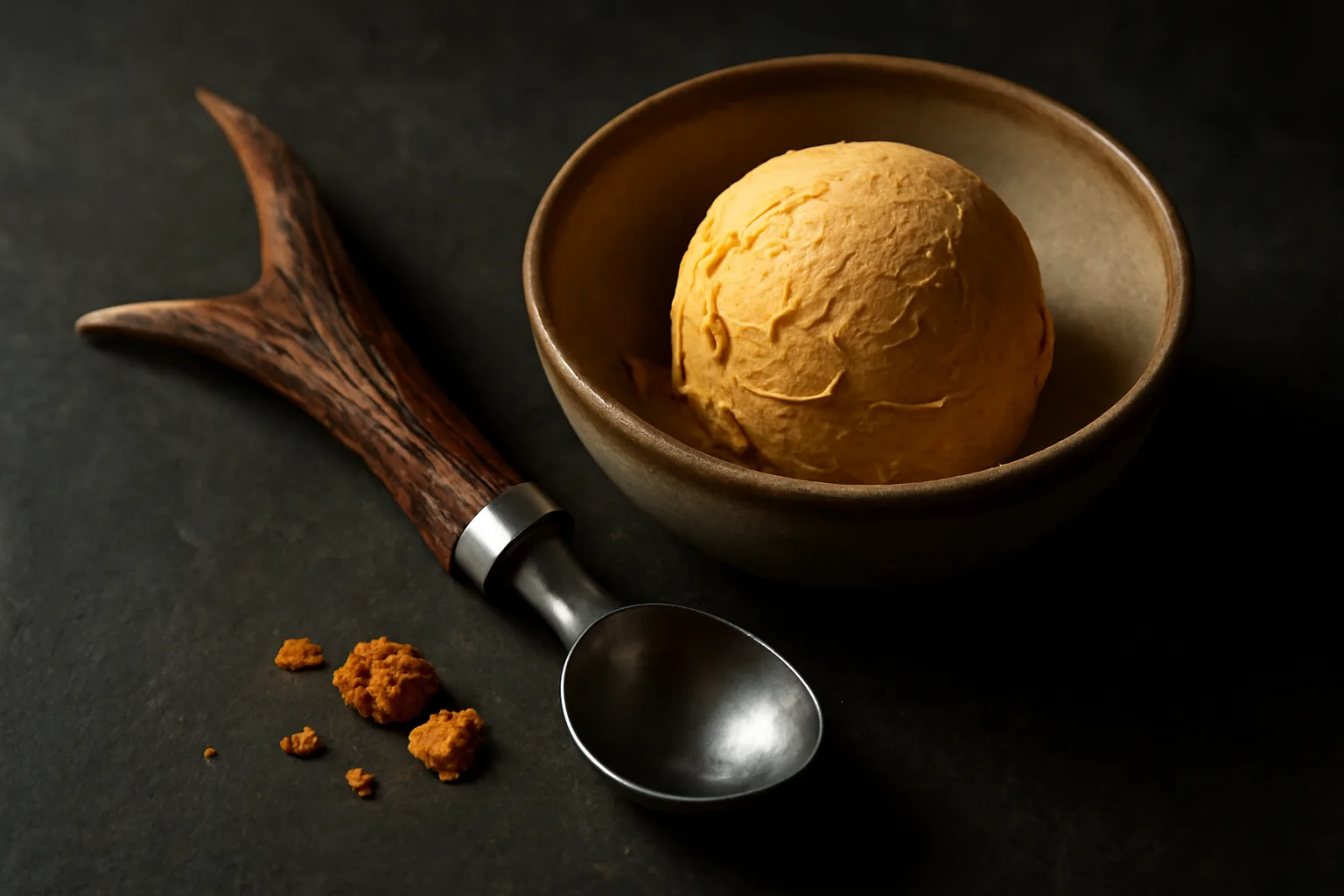
Understanding this material failure is the key to designing a tool that will not break. The solution requires abandoning the concept of a joined assembly and instead creating a single, monolithic structure where forces can be distributed and absorbed harmlessly. This is the principle behind the way we construct our tools at Antler Tree, using a combination of high-grade stainless steel and naturally shed New Zealand red deer antler.
The first step is to eliminate the weak point entirely. Our scoop heads are not welded to a separate shank. Instead, the head and a long, solid steel rod—the tang—are one continuous piece of metal. There are no welds, no seams, and no heat-affected zones. The flow of stress is uninterrupted from the tip of the scoop to the very end of the tang.
This is where the unique properties of antler come into play. A deer's antler is not a horn; it is a solid bone structure, composed of a dense, hard outer layer of cortical bone and a porous, honeycombed interior. This material is designed by nature to withstand incredible impact and torsional stress during the annual rut, when stags clash with immense force. Its composite structure—calcium phosphate crystals embedded in a collagen matrix—is exceptionally good at absorbing and dissipating shock.
To create the handle, we drill a precise cavity into a hand-selected piece of shed antler. The steel tang is set deep within this cavity, and an industrial-grade two-part epoxy resin is cast around it. As the resin cures, it flows into every microscopic pore of the antler's interior and forms a perfect, unbreakable chemical and mechanical bond with both the antler and the steel tang. The result isn't a handle attached to a scoop; it is a single, unified tool. The load is no longer concentrated at a tiny, brittle neck. Instead, the force you apply is distributed along the entire length of the steel tang and absorbed by the shock-dampening structure of the antler handle. The handle and the scoop become one, with the antler acting as a powerful, natural chassis.
A Tool as a Statement
There is a deep satisfaction in using a tool that is fit for its purpose. It moves with a confidence that can only come from intelligent design and an intimate understanding of its materials. When an object is made not just to be sold, but to be used and to last, it carries a different weight in the hand—a sense of permanence and reliability that is missing from the world of disposable conveniences. This philosophy is about more than just avoiding a bent spoon; it's about choosing to own fewer, better things. A tool designed to solve a problem with integrity, like the Antler Ice Cream Scoop, is built on these principles of strength and longevity.
So the next time a utensil fails you, consider the invisible forces at play. Think about the stress, the heat-affected zones, and the simple physics that were ignored in its creation. And perhaps consider what it feels like to hold a tool designed not to fail, but to work, beautifully and reliably, for a lifetime.
Related reading
Gifting & Occasions· 6 min read
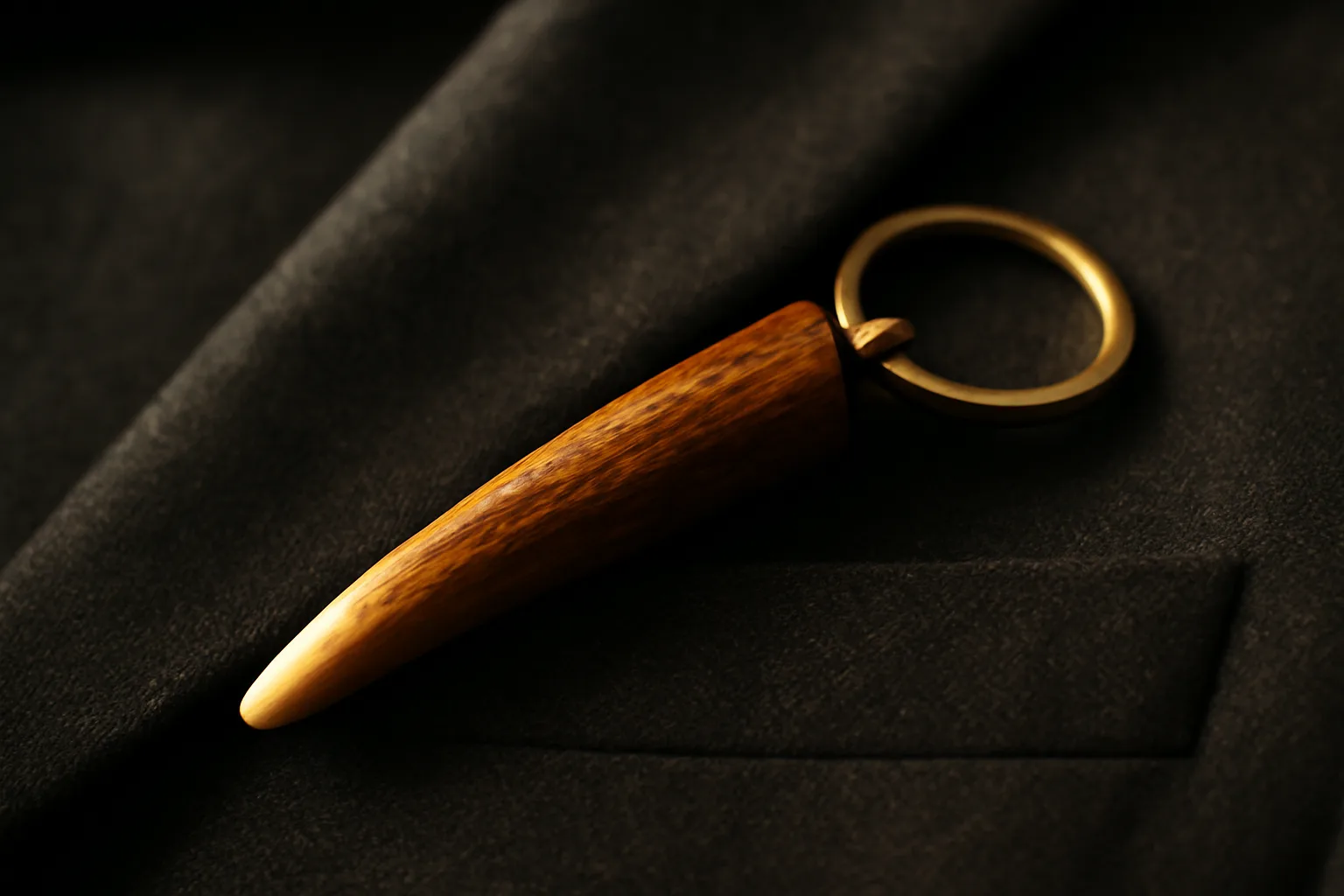
Protecting Garment Linings: The Hardness Scale of Your Key Ring
Why do keys ruin pocket linings? We explore the material science of hardness and friction, and explain how smooth, rounded deer antler offers a fabric-safe, elegant solution.
Read article →
Gifting & Occasions· 6 min read
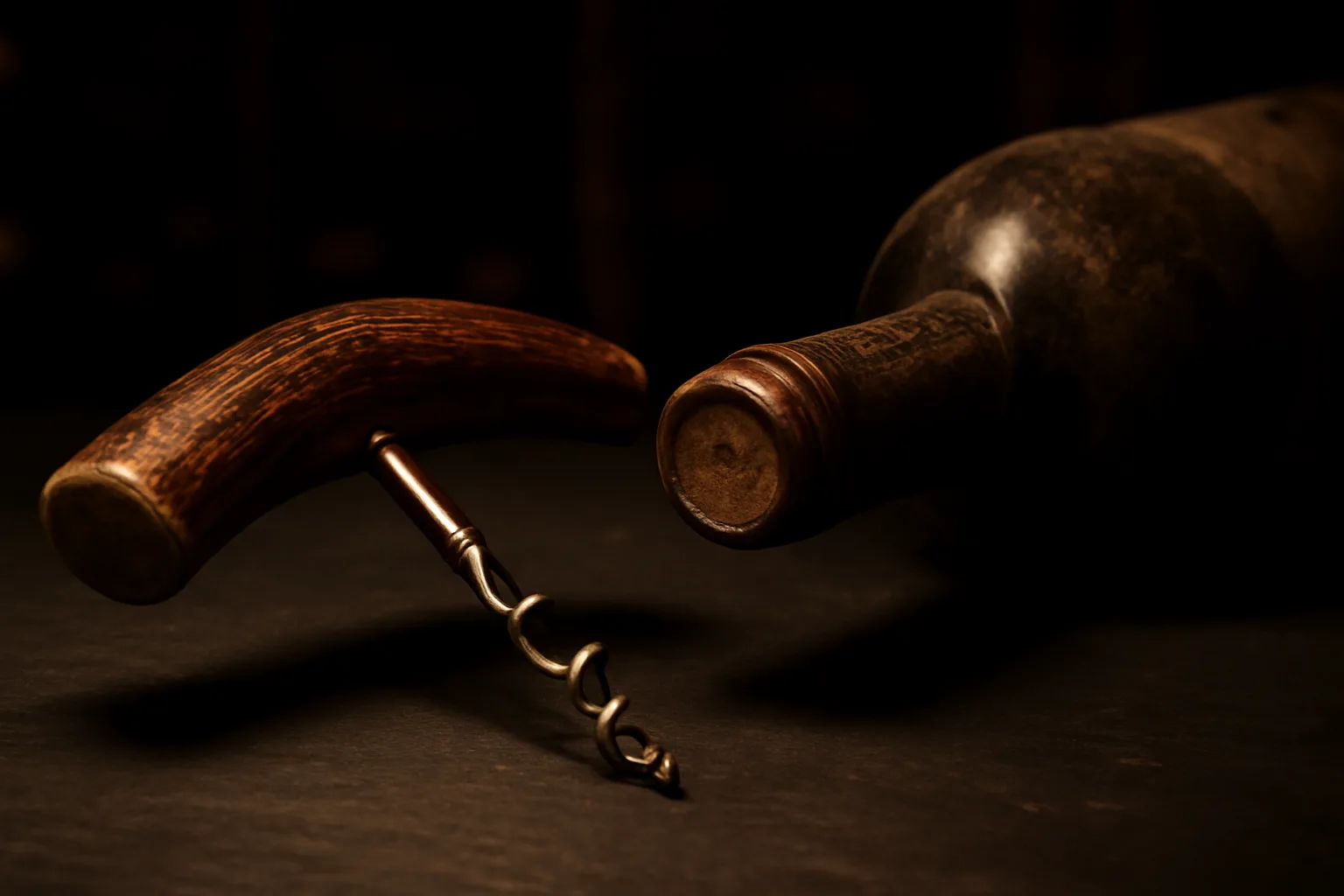
Stabilizing Dry Seals: Extracting Recessed and Stubborn Wine Corks
Learn the expert technique for extracting dry, recessed, and stubborn wine corks without ruining the wine. Discover how grip and tool design are key to success.
Read article →

Gifting & Occasions· 6 min read
Executive Gift Trends: Why High-Level Partners Prefer Tactile Office Art
Corporate gifting is shifting from plastic tech to tactile office art. We explore why modern executives value functional, analog items that serve as premium desk conversation pieces.
Read article →