
Gifting & Occasions· 6 min read
The Thermodynamics of Frozen Dairy: Preventing Thermal Shock While Scooping
Discover how thermal conductivity affects your ice cream. A non-conductive antler handle prevents thermal shock, preserving texture for the perfect, clean scoop.
By Antler Tree · 1 June 2026
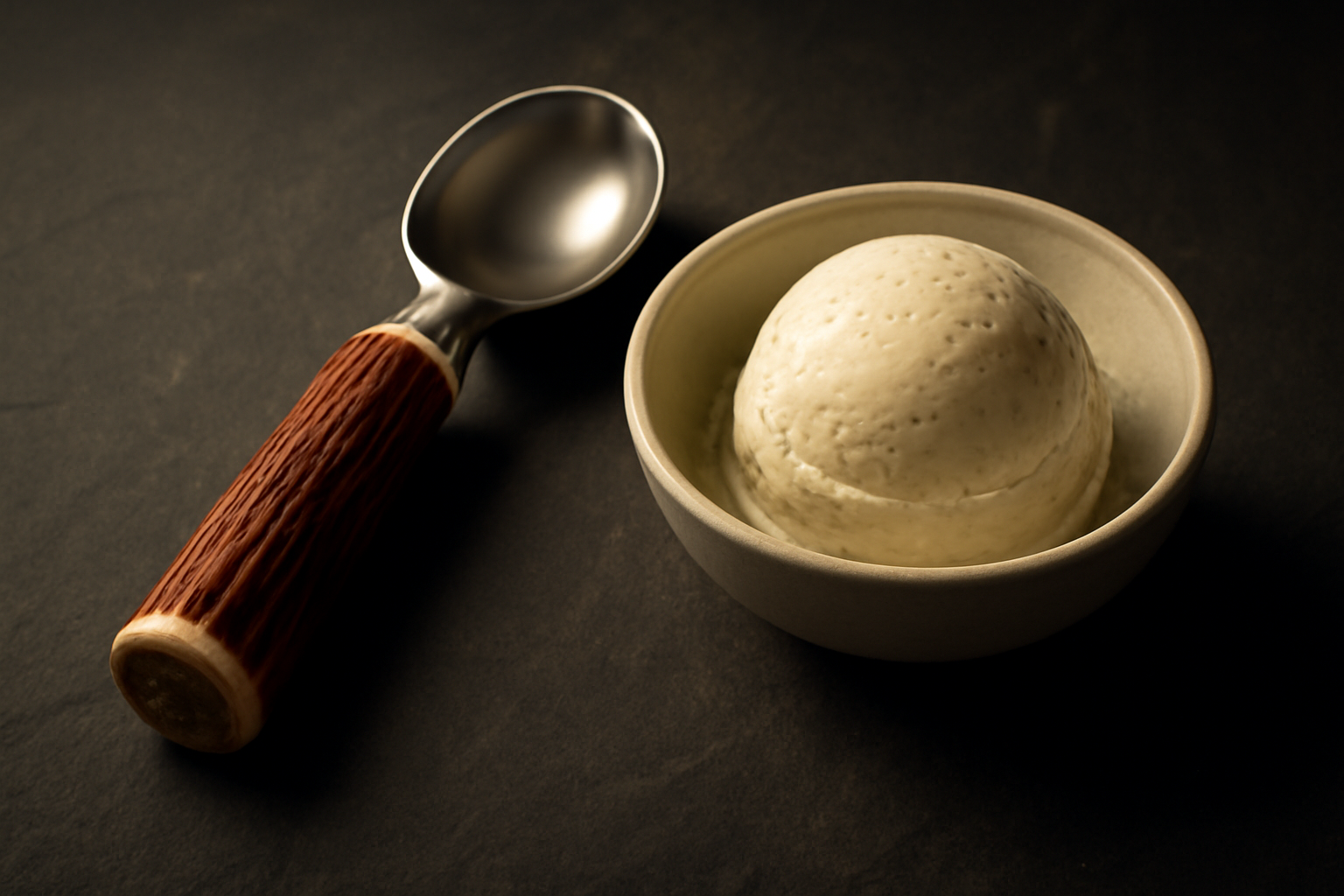
The perfect scoop of ice cream is a quiet achievement, often undone by the very tool designed to create it. It is an act of physics as much as hospitality, a delicate dance between frozen structure and applied warmth. The difference between a clean, elegant sphere and a messy, melting smear lies not in technique, but in thermodynamics.
The Anatomy of a Flawed Scoop
Consider the common struggle: a tub of premium, craft ice cream, frozen to the ideal serving temperature of around -14°C. You take out a standard kitchen scoop—perhaps a single piece of cast aluminium or stainless steel—and begin to press it into the surface. The initial resistance is immense. As you apply more force, your hand warms the handle, and a strange thing happens. The scoop's edge doesn't so much cut the ice cream as it does melt a path through it, leaving a trail of refrozen slush and compromising the texture of the remaining product.
This phenomenon is a form of thermal shock. Premium ice cream's smooth, creamy texture is the result of a carefully controlled freezing process that creates a microscopic lattice of tiny ice crystals, interspersed with fat, sugar, and air. When a warm object, like a conductive metal scoop heated by your hand, makes contact, it rapidly melts these delicate crystals. As you drag the scoop away, the melted layer immediately refreezes against the sub-zero bulk of the ice cream, but it does so quickly and without agitation. This uncontrolled refreezing forms large, coarse ice crystals, which feel crunchy and icy on the palate. You are, in effect, damaging the very quality you paid a premium for with every scoop you take.
A Matter of Conduction: Hand, Handle, and Head
To understand why this happens, we must look at the principle of thermal conduction. This is the process by which heat energy is transferred through a substance when there is a difference in temperature. Some materials are excellent conductors, while others are insulators. Your hand, at approximately 37°C, holds a significant amount of thermal energy relative to a tub of frozen dessert.
The problem with most ice cream scoops is that they are made from materials with high thermal conductivity. A typical aluminium scoop has a thermal conductivity of around 205 watts per meter-Kelvin (W/m·K). Stainless steel is better, but still highly conductive at around 16 W/m·K. When you grip such a scoop, the heat from your hand has an unimpeded pathway straight to the scoop's head. The metal acts as a thermal bridge, efficiently channelling warmth to the cutting edge.
This turns the tool from a precise slicer into a crude heat probe. Instead of leveraging force to shear through a solid, you are using temperature to melt it. The result is a sticky, semi-liquid layer that adheres to the scoop, making it difficult to release a clean portion. The process is inefficient, messy, and fundamentally degrades the integrity of the dessert. While hollow scoops filled with antifreeze liquid attempt to solve this, they often get too warm, exacerbating the melting problem and offering little real control.
Preserving the Crystal Lattice with a Natural Insulator
The solution is not to create a warmer scoop, but to prevent the scoop from warming up in the first place. This requires a thermal break—a material that insulates the cold metal head from the warm grip of the hand. The ideal material for this is one that combines low thermal conductivity with high density and durability. This is where the unique properties of naturally shed deer antler become evident.
Antler is a form of bone, a composite material optimised by nature for structural strength and resilience, not for transferring heat. Its thermal conductivity is remarkably low, typically around 0.5 W/m·K. When you compare this to stainless steel (16 W/m·K) or aluminium (205 W/m·K), the difference is profound. A handle crafted from New Zealand red deer antler is over 30 times less conductive than steel and over 400 times less conductive than aluminium. It functions as a highly effective insulator.
The Mechanism of a Perfect Scoop
When you hold an antler-handled scoop, the heat from your palm is effectively blocked by the handle's material. It cannot travel down to the stainless steel head. The metal, therefore, remains at or near ambient room temperature. When this cold, stable edge meets the hard ice cream, it behaves as a proper cutting tool. It uses the pressure you apply to create a clean fracture along the ice cream's crystalline structure, shearing off a portion rather than melting it. The result is a smooth, satisfying glide through the tub and a neatly formed sphere that releases easily. There is no thermal shock, no surface melting, and no damage to the texture of the ice cream left behind.
Density and Ergonomics
Beyond its insulating properties, antler possesses a satisfying heft and density. This weight provides balance, allowing you to apply firm, controlled pressure without straining your wrist. Unlike a lightweight plastic handle, which can feel flimsy and require excessive force, the substance of an antler handle translates your effort directly to the scoop's head. Each piece of naturally shed antler also has a unique shape and texture, offering a secure and surprisingly warm grip that conforms to the hand over time. This combination of thermal insulation and ergonomic solidity makes the entire process feel more controlled and graceful.
Beyond Function: The Ritual of Serving
Choosing a well-designed tool is about more than just accomplishing a task. It is about appreciating the quality of your ingredients and elevating the experience of preparation and serving. When you have gone to the trouble of sourcing artisanal ice cream, made with care and fine ingredients, it deserves to be served with a tool that respects its craft. A mass-produced, poorly designed scoop undoes that craft, one melted crystal at a time.
Integrating thoughtfully made objects into our daily rituals grounds us in the physical world. The weight, texture, and natural origin of the handle connect us to the wild landscapes of New Zealand from which it came. Choosing a tool crafted with this level of intention, such as a hand-finished Antler Ice Cream Scoop, transforms a simple task into a moment of mindful craft. It is an investment in better experiences, a small detail that communicates care to guests and brings quiet satisfaction to a simple pleasure.
The difference may seem subtle, but it is fundamental. By understanding the simple physics at play, we can ensure that the last touch before tasting is one that preserves, rather than diminishes, the perfect scoop. It is a testament to the idea that the right materials not only perform better but also enrich the rituals of our lives.
Related reading
Gifting & Occasions· 6 min read
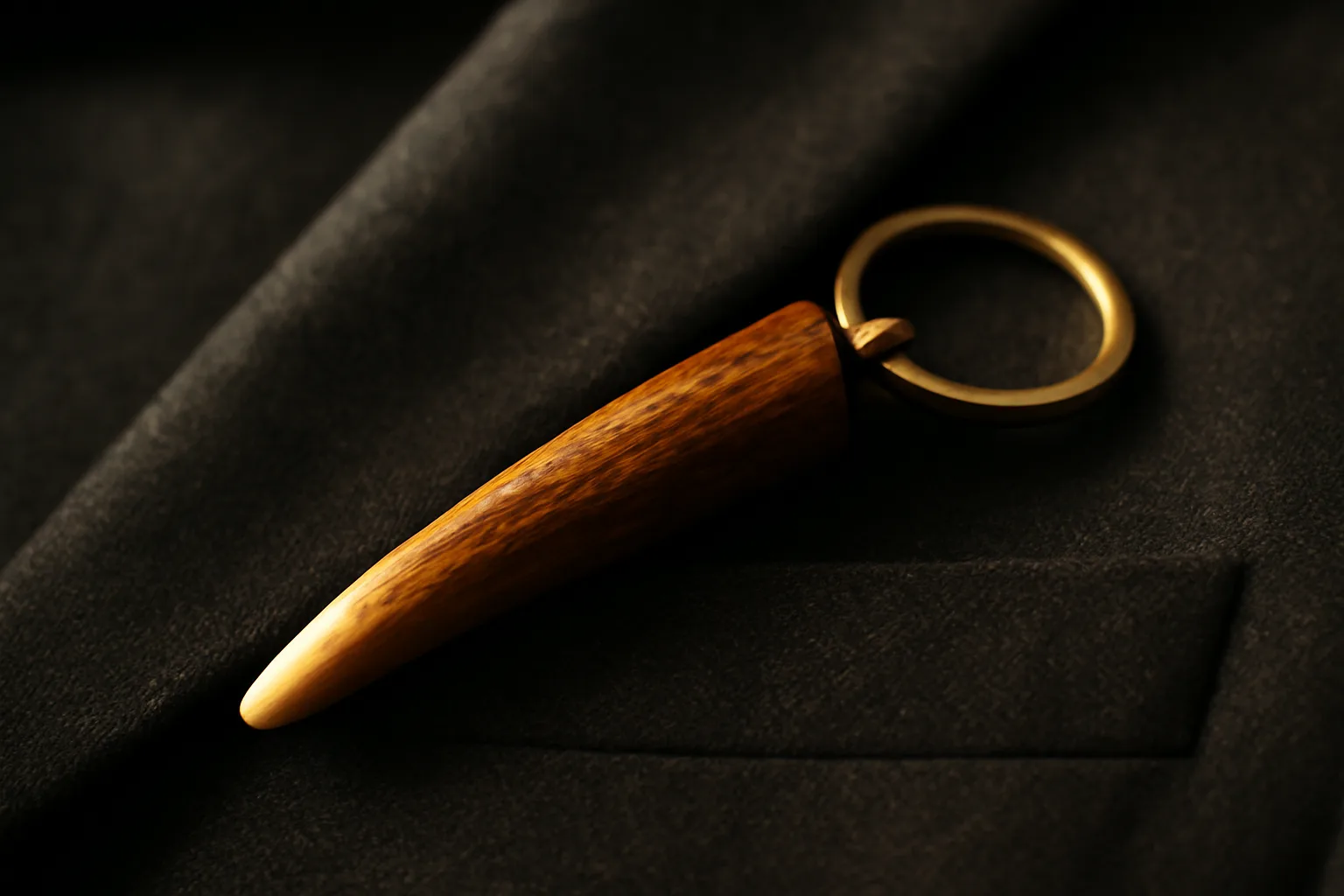
Protecting Garment Linings: The Hardness Scale of Your Key Ring
Why do keys ruin pocket linings? We explore the material science of hardness and friction, and explain how smooth, rounded deer antler offers a fabric-safe, elegant solution.
Read article →
Gifting & Occasions· 6 min read
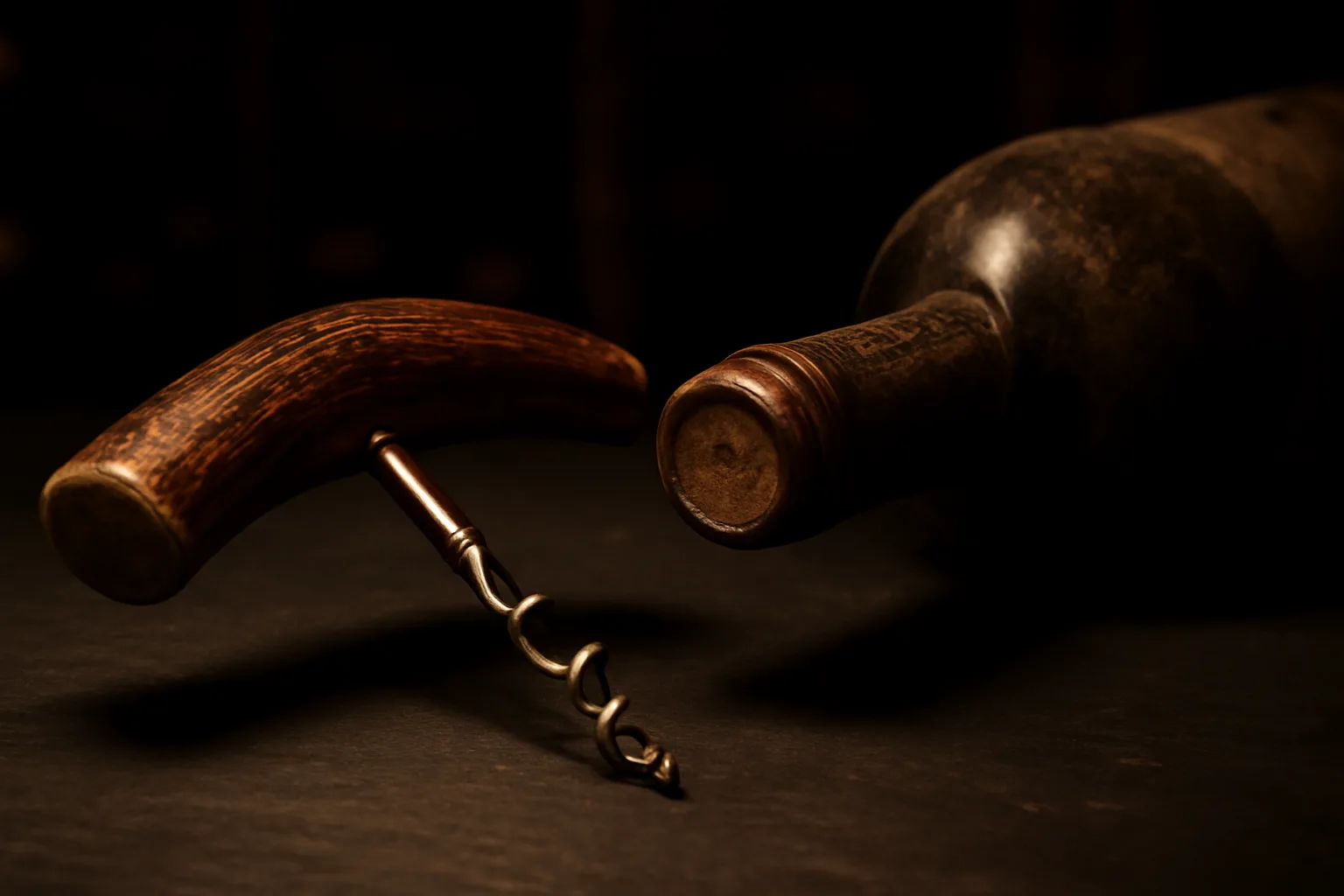
Stabilizing Dry Seals: Extracting Recessed and Stubborn Wine Corks
Learn the expert technique for extracting dry, recessed, and stubborn wine corks without ruining the wine. Discover how grip and tool design are key to success.
Read article →

Gifting & Occasions· 6 min read
Executive Gift Trends: Why High-Level Partners Prefer Tactile Office Art
Corporate gifting is shifting from plastic tech to tactile office art. We explore why modern executives value functional, analog items that serve as premium desk conversation pieces.
Read article →