
Hosting & Entertaining· 6 min read
Authentic Wine Service: Stripping Away Over-Engineered Wine Gadgets
Critiquing the rush of electric wine openers, we explore how the tactile ritual of a manual corkscrew deepens a host's focus and enriches the experience.
By Antler Tree · 1 June 2026
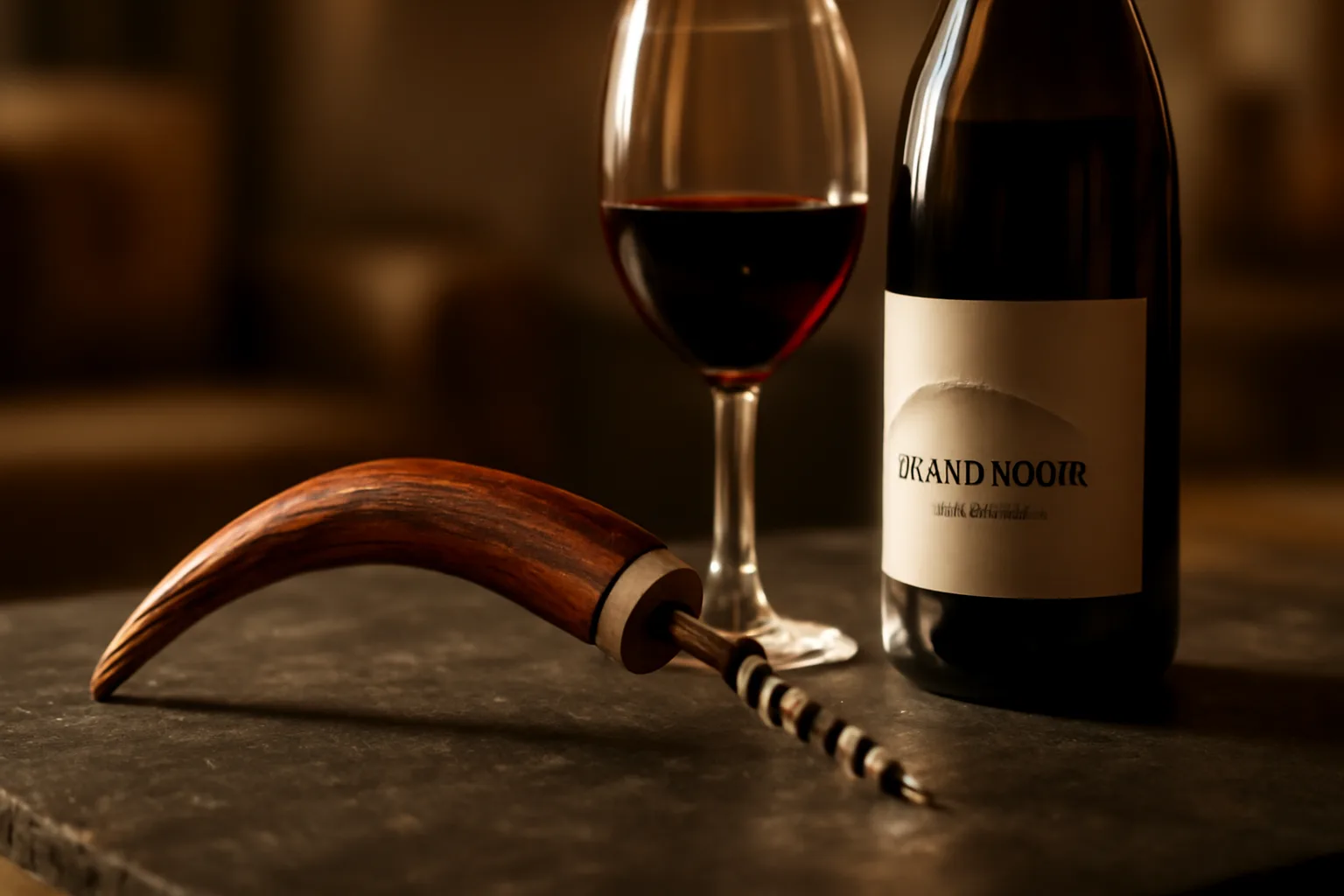
The high-pitched whir of a battery-powered wine opener is the sound of a missed opportunity. It signals a rush to an outcome, forgetting the quiet, tactile satisfaction of the journey. True hospitality is found not in automation, but in mindful, deliberate action.
The Illusion of Effortless
Walk into any high-end homewares store, and you will find them: sleek, charging stands holding monolithic plastic cylinders. These are the automated wine openers, marketed as the pinnacle of effortless entertaining. They promise to transform a potentially clumsy moment into a seamless, one-touch operation. With the press of a button, a motorised worm descends, engages the cork, and extracts it with a determined groan. The appeal is understandable; it taps into a desire for polish, control, and a modern, gadget-forward lifestyle.
However, this promise of 'effortless' is often an illusion. It equates manual action with difficulty and automation with sophistication, a premise that deserves scrutiny. These devices introduce their own complexities: the need for charging, the silent drain of a battery that renders the tool useless at the critical moment, and the mechanical fragility of plastic gears and tiny motors. The 'effort' has not been eliminated; it has simply been displaced into maintenance and the eventual, inevitable replacement of a device not designed to be repaired. More importantly, in the pursuit of this perceived ease, we trade away something far more valuable: the human touch.
Losing the Thread: Automation as Disconnection
Every thoughtful host understands that preparing something for guests is a form of communication. The way you grind coffee beans, chop herbs, or set a table conveys care and intention. Opening a bottle of wine is a key part of this narrative. It is the prologue to the shared experience, the moment the seal is broken and the story of the vintage begins to unfold. Handing this moment over to an impersonal, automated device is like asking a machine to read the first page of the story aloud. It gets the job done, but the nuance, the personality, and the connection are lost.
The automated opener turns a ritual into a transaction. The host becomes a machine operator, pressing a button and waiting for the designated outcome. There is no feel, no feedback, no subtle adjustment. You do not feel the worm bite into the cork, gauge the resistance of a tight seal, or manage the steady extraction yourself. The process removes the host from the very center of the act of hosting, replacing a moment of practiced skill with one of passive observation. The result is a subtle but significant disconnection from the bottle, the wine, and the guests you are serving.
The Ritual of Extraction: A Study in Tactile Focus
The simple, mechanical corkscrew asks more of its user, and in doing so, it gives back far more in return. Holding a classic waiter's friend or a solid, T-shaped corkscrew is to engage in a small, mindful practice. This is not about difficulty; it is about presence.
The Mechanics of Presence
A well-designed manual corkscrew offers a rich stream of tactile information. Consider the classic waiter's friend. The first step is to use the small, integrated blade to cut the foil, a precise action requiring a steady hand. Then, you position the tip of the worm—the spiral—at the center of the cork and apply gentle pressure. As you turn the handle, you feel the screw bite into the material, a satisfying purchase that communicates the health and density of the cork. An old, dry cork feels crumbly; a young, synthetic one offers uniform resistance.
The real elegance lies in the leverage. After screwing the worm to the correct depth (leaving the final spiral showing to avoid piercing the bottom of the cork), you place the first step of the hinged lever on the lip of the bottle. As you lift the handle, you apply a powerful, controlled force. You feel the cork begin to move, a slow, steady release. The two-stage lever, a small but brilliant innovation, allows you to then shift to a second, higher pivot point to complete the extraction without bending or breaking the cork. Every part of this process requires and rewards your full attention.
The Sound of Anticipation
Contrast the grating electric whirr with the sounds of manual extraction. There is the quiet slice of the foil cutter. The soft friction of the worm turning. The subtle creak of the cork as it begins its ascent. And finally, the deeply satisfying, gentle thump as the cork is freed. These are not loud or intrusive noises; they are the organic sounds of a ritual in progress.
For your guests, this creates a focal point. Their attention is drawn not to a noisy gadget, but to the care and skill of their host. The quiet, deliberate actions build a moment of shared anticipation. It telegraphs respect for the wine and for the moment itself. This focused ritual elevates the service from a simple task to a small, graceful performance, setting a tone of consideration and craft that enriches the entire experience to come.
A Tool for Life, Not for Landfill
Beyond the experiential argument is the simple, practical matter of longevity. An automated wine opener is an electronic appliance with a finite lifespan. Batteries degrade, charging ports fail, and plastic components grow brittle. They are, almost by design, disposable.
A quality mechanical corkscrew, on the other hand, is a tool for life. Forged from stainless steel and brass, with a handle made from wood, resin, or another durable material, it is an object of permanence. There are no circuits to fail or batteries to replace. It is a simple machine that, with minimal care, will perform its function flawlessly for decades. It is an investment in quality over novelty, an ethos that feels particularly relevant here in New Zealand, where we value resourcefulness and a connection to enduring, natural materials. The choice is between a fleeting gadget and a future heirloom.
The Weight and Warmth of a Deliberate Choice
A tool should feel good in the hand. The uniform, cold plastic of an electronic opener has no character; it is an anonymous product of a factory mould. A handcrafted corkscrew carries a story in its materials and construction. The heft of solid metal speaks to its reliability. The smooth, organic form of a handle crafted from polished, naturally shed New Zealand red deer antler, like the one found on our own Antler Corkscrew, offers a connection to the wild landscape it came from. Each piece of antler is unique in its texture and colour, ensuring no two are exactly alike.
This is more than just aesthetics. Holding a tool with substance and history grounds you in the task at hand. It is a conversation piece, an object of beauty that is also perfectly fit for its purpose. Choosing such an object is a deliberate act. It says that you value craftsmanship, durability, and the quiet elegance of a task done well with a beautiful tool. It is an extension of the care you put into selecting the wine itself.
Ultimately, the choice of a corkscrew is a small one, but it is not insignificant. It is a decision between passive automation and active participation, between fleeting convenience and lasting quality. To reclaim this ritual is to rediscover the simple, profound satisfaction of opening and sharing a bottle of wine with grace, intention, and a tool that feels as special as the moment itself.
Related reading

Hosting & Entertaining· 6 min read
The Document Archivist’s Toolkit: Reading Faded Inks and Vintage Print
Discover essential preservation methods for historical documents. Learn to decipher faded inks and vintage print with an archivist's toolkit and techniques.
Read article →
Hosting & Entertaining· 6 min read
The Craft Beer Pour: Why the Opening Ritual Influences Taste Perception
Discover how the ritual of opening a craft beer influences taste. This article explores the physics of a perfect pour and why a quality bottle opener matters.
Read article →
Hosting & Entertaining· 6 min read
Passive Harvesting: The Absolute Peak of Ethical Manufacturing
Explore passive harvesting, a zero-harm model of making. Discover how using naturally shed deer antler offers a profound ethical alternative to resource extraction.
Read article →