
Hosting & Entertaining· 6 min read
The Craft Beer Pour: Why the Opening Ritual Influences Taste Perception
Discover how the ritual of opening a craft beer influences taste. This article explores the physics of a perfect pour and why a quality bottle opener matters.
By Antler Tree · 1 June 2026
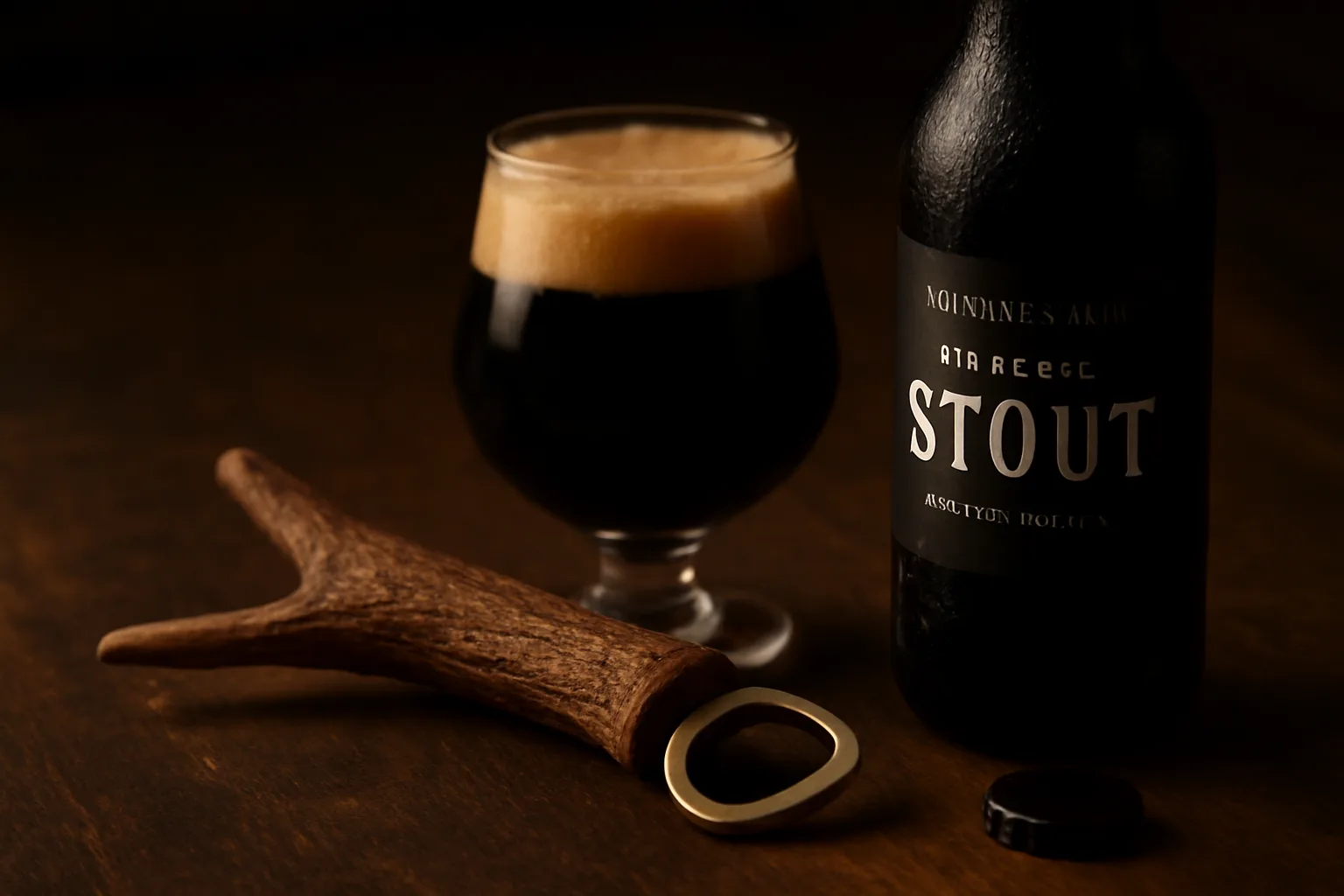
The first sound a great beer makes is not the glug of the pour, but the sharp, satisfying hiss of a cap released from its bottle. This small moment of release is the overture to the entire experience, an act that sets the stage for the flavour, aroma, and texture to follow. We have rightfully learned to appreciate the craft inside the bottle; it is time we gave equal consideration to the tool that lets it out.
The Craft Beer Renaissance and Its Rituals
Not long ago, beer was a simpler affair. The choice was often limited to a handful of mass-produced lagers, and the primary goal was refreshment. The modern beer landscape, however, is a world apart. We are living in a golden age of brewing, a renaissance driven by micro-breweries and discerning drinkers who seek out complexity, novelty, and quality.
This shift has brought with it a new set of rituals. We no longer just grab a cold one. We select a specific brew for a specific mood or meal—a hazy IPA with vibrant citrus notes, a rich imperial stout aged in whisky barrels, or a tart, kettle-soured gose. We pay attention to serving temperature, understanding that a few degrees can dramatically alter a beer's aromatic profile. We invest in specialised glassware—the tulip glass to concentrate the aromatics of a Belgian ale, the tall pilsner glass to showcase clarity and carbonation—because we know that presentation influences perception.
Yet, in this carefully curated process, one critical step is frequently overlooked: the opening. We might store a rare, barrel-aged stout for years in a cool, dark cellar, wait for the perfect occasion, select the ideal glass, and then unceremoniously wrench the cap off with a cheap, flimsy opener from the back of a kitchen drawer. This dissonance breaks the spell. The ritual is compromised, and with it, a small part of the enjoyment.
More Than a Lever: The Psychology of the Pour
The tools we use are not passive objects; they are active participants in our experiences. The weight, texture, and story of an object in our hand informs our state of mind. Think of the difference between writing with a disposable pen and a weighted fountain pen, or drinking wine from a standard tumbler versus a fine crystal glass. The functional outcome may be similar, but the qualitative experience is profoundly different.
When you pick up a poorly made bottle opener—stamped from thin sheet metal, with sharp edges and a plastic handle—it sends a subtle message: this is a mundane task. The action is one of convenience, a chore to be completed. But when you hold an opener that has substance and character, something crafted with intention, the message changes. The act of opening the bottle becomes a moment of intention in itself. It is a tactile acknowledgment of the craft you are about to enjoy. The feeling of a solid, well-balanced tool prepares the mind for a more considered, more appreciative tasting.
This is not about pretension; it is about sensory continuity. The care taken by the brewer—in selecting hops, malting grains, and patiently waiting for fermentation—deserves to be met with a similar level of care from the drinker. The opening is the final gatekeeper to that experience, and the key should feel as worthy as the treasure it unlocks.
The Physics of a Perfect Opening: Protecting Your Collection
The importance of a good bottle opener extends beyond the psychological. For those who appreciate rare and collectible beers, the physical mechanics of the opening are critical. The goal is not just to remove the cap, but to do so cleanly, without damaging it. Many enthusiasts save the caps from memorable bottles as keepsakes. A bent, creased cap is a sign of a clumsy opening, and the fault lies not with the user, but with the tool's poor design.
The Problem with Thin Openers
A typical, inexpensive bottle opener works on the simple principle of a Class 1 lever. Your hand provides the effort, the top of the bottle is the fulcrum, and the opener's tooth lifts the load (the cap). The problem arises from the tool's geometry. A thin, stamped-metal opener concentrates all the lifting force onto a very small point on the underside of the cap's rim. The top edge of the opener, where it rests on the cap, also creates a high-pressure pivot point.
Think of it as trying to push a thumbtack into a piece of wood. A small amount of force from your thumb generates immense pressure at the pin's sharp point. Similarly, the thin metal of a cheap opener focuses the levering force into a sharp line of pressure. This causes the metal of the cap to bend and crease upwards before the seal has even been uniformly broken. The result is the tell-tale dent that ruins the cap for collection.
The Wide-Handle Advantage: Even Leverage, Clean Lift
A well-designed, substantial bottle opener mitigates this problem through superior physics. The key is force distribution. A wide, hand-filling handle, like that of an opener crafted from a piece of deer antler, allows the user to apply torque more smoothly and with greater control. But the most important element is the business end of the tool itself.
A high-quality opener features a wider, thicker prying surface. Instead of concentrating the lifting force on a single, sharp point, it distributes that same force over a much broader area of the cap's rim. The pressure (force per unit area) at any given spot is therefore significantly lower. Instead of a violent, focused pry that bends the metal, you get a gentle, uniform lift across a wider arc of the cap. The top edge that rests on the cap is also typically broader and more rounded, preventing it from denting the crown.
This design allows the entire cap to lift away from the bottle's lip evenly. The seal is broken cleanly and simultaneously around the circumference, rather than being peeled back from one side. The cap comes off flat and pristine, ready to be added to a collection—a perfect memento of a special brew.
A Tool as Crafted as the Brew Itself
If the beer in your hand is a product of natural ingredients, patience, and skilled hands, it makes sense that the tool you use to open it should share the same ethos. This is where materials become as important as mechanics. An opener handcrafted from a piece of naturally shed New Zealand red deer antler is more than just an efficient lever; it is a piece of the wild, a story of nature's cycles and human artistry.
Each piece of antler is unique, shaped by the life of the animal and the landscape it roamed. Its density and heft provide a satisfying weight in the hand, and its textured, organic surface offers a secure grip that mass-produced plastic or metal cannot replicate. When a craftsman takes this raw material and thoughtfully pairs it with a high-grade stainless steel opener, they create something that is both beautiful and highly functional. This considered approach results in a practical tool that also serves as a small sculpture, an object worthy of display on a bar or countertop. Using an Antler Bottle Opener connects the user not just to the craft of the brewer, but to the deeper craft of nature and workmanship.
The next time you select a special bottle of beer, take a moment to consider the tool you'll use. The right opener doesn't just remove a cap; it elevates a ritual, protects a memory, and honours the craft from start to finish. It is the proper beginning for a well-crafted end.
Related reading

Hosting & Entertaining· 6 min read
The Document Archivist’s Toolkit: Reading Faded Inks and Vintage Print
Discover essential preservation methods for historical documents. Learn to decipher faded inks and vintage print with an archivist's toolkit and techniques.
Read article →
Hosting & Entertaining· 6 min read
Passive Harvesting: The Absolute Peak of Ethical Manufacturing
Explore passive harvesting, a zero-harm model of making. Discover how using naturally shed deer antler offers a profound ethical alternative to resource extraction.
Read article →

Hosting & Entertaining· 5 min read
Sizing and Scale: Selecting Statement Pendants for Your Silhouette
Learn how to select the perfect statement pendant. Our guide covers matching necklace length to necklines and using organic shapes to flatter your silhouette.
Read article →