
Lifestyle & Home· 6 min read
Bio-Inert Materials in Jewelry Design: Why Sensitive Skin Demands Natural Elements
Discover the dermal benefits of bio-inert jewelry. We explain why natural, organic materials like antler are kinder to sensitive skin than mass-market metal alloys.
By Antler Tree · 1 June 2026
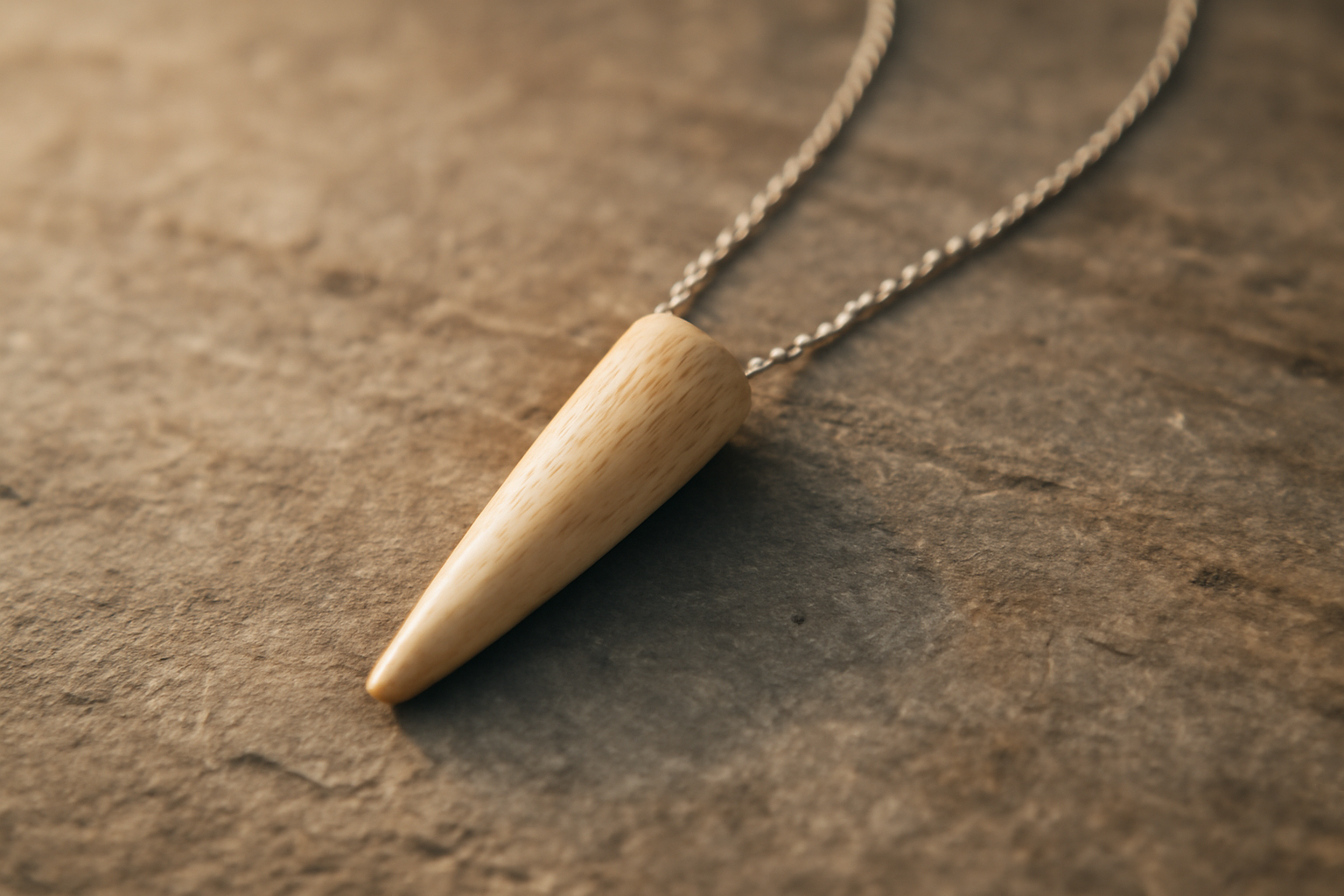
The jewelry we choose becomes part of our daily landscape, a constant presence against our skin. This intimate relationship demands a deeper consideration of material, one that moves beyond simple aesthetics to the unique biology of our bodies. When we select a piece to wear day in and day out, we are choosing a companion, and some companions are far kinder than others.
The Unseen Irritant: Understanding Metal Hypersensitivity
For many, the experience of wearing a new piece of jewelry is followed by an unwelcome surprise: an itchy, red rash. This reaction, known as allergic contact dermatitis, is an incredibly common response to metals used in mass-market accessories. The primary culprit is often nickel, a silvery-white metal prized in industrial manufacturing for its ability to add strength, prevent corrosion, and impart a bright finish to other metals. It is a key ingredient in many common alloys, including some forms of stainless steel, costume jewelry, and even certain formulations of white gold and sterling silver.
When you wear a piece containing nickel, your sweat—which is naturally slightly acidic and salty—can slowly leach microscopic nickel ions from the alloy. For those with a sensitivity, these ions penetrate the outer layer of the skin and are identified by the immune system as foreign invaders. The body then mounts an inflammatory response, leading to the characteristic symptoms of redness, swelling, itching, and sometimes even blistering at the point of contact. This sensitivity is not something one is necessarily born with; it can develop over time with repeated exposure, meaning a necklace that was once worn without issue can suddenly become a source of irritation.
Manufacturers use nickel because it is effective and inexpensive, allowing for the rapid production of trending designs at a low cost. However, this prioritisation of speed and price often comes at the expense of dermal health. While regulations exist in some parts of the world to limit the amount of nickel that can be released from a product, trace amounts are still pervasive. For the discerning wearer, particularly those with known sensitivities, the only truly safe path is to seek out materials that are fundamentally non-reactive.
The Quiet Assurance of Bio-Inert Materials
In the fields of medicine and material science, the term ‘bio-inert’ carries significant weight. It describes a material that, when introduced to a biological system, does not elicit an immune or inflammatory response. These are substances the body essentially ignores, allowing them to exist in close, long-term contact with tissue without causing harm. It is the guiding principle behind the design of medical implants like pacemakers, artificial joints, and dental posts, where materials must perform their function without being rejected by the body.
While the standards for a surgical implant are far more rigorous than for a necklace, the underlying principle is directly relevant to our choices in personal adornment. Materials sourced from the natural world—such as wood, bone, stone, and antler—are largely bio-inert. Their organic composition is familiar to our biology on a fundamental level. They do not contain the reactive metallic ions that trigger allergic reactions. Instead of introducing a foreign, synthetic element, they offer a neutral, stable presence against the skin.
Learning from Nature's Blueprint
Antler, in particular, is a fascinating example of a bio-compatible material. As a form of regenerative bone, it is a complex, mineralised tissue grown and shed annually by deer. Its composition of calcium phosphate and collagen creates a dense, durable structure that is nonetheless organic. When shaped and polished, it does not release volatile compounds or metallic particles. It is, in its very essence, a material designed for biological integration, not for industrial efficiency. Choosing a pendant carved from antler is choosing a material that has a natural precedent for coexisting peacefully with living tissue. It is a quiet assurance of comfort, an implicit promise that the beauty you wear will not come at the cost of your well-being.
Beyond the Cold Touch: The Thermal Signature of Organic Jewelry
There is another, more subtle dimension to material comfort that we often overlook: temperature. Think of the distinct and often jarring sensation of putting on a metal necklace on a cool morning. That initial, sharp coldness is a direct result of the high thermal conductivity of metal. Materials like steel, silver, and gold are excellent conductors, meaning they transfer thermal energy very efficiently. When the colder metal touches your warmer skin, it rapidly draws heat away from your body, creating the sensation we perceive as 'cold shock'.
To be specific, the thermal conductivity of a material is measured in watts per meter-Kelvin (W/m·K). Common metals used in jewelry have relatively high values; for instance, stainless steel is typically around 16 W/m·K, and silver is a powerful conductor at over 400 W/m·K. This is why a silver chain can feel intensely cold for the first few minutes of wear. It is actively and efficiently pulling warmth from your skin until it reaches equilibrium with your body temperature.
Naturally derived materials operate on a completely different thermal principle. Antler, being a form of bone, is a natural insulator. Its thermal conductivity is exceptionally low, generally estimated to be around 0.3 to 0.5 W/m·K. This is more than 30 times lower than steel and hundreds of times lower than silver. Functionally, this means that when a piece of polished antler touches your skin, it does not readily absorb your body heat. It feels neutral to the touch, neither warm nor cold, because the transfer of energy is incredibly slow. The piece quickly and gently adopts the temperature of your skin without the jarring thermal exchange. This property makes for a fundamentally more pleasant and seamless wearing experience. It feels less like an object placed upon you and more like a gentle, integrated part of you from the moment it is worn.
The Sustainable Grace of New Zealand Red Deer Antler
The material at the heart of our workshop is sourced from the majestic Red Deer that roam the high country of New Zealand. Each year, as a natural part of their life cycle, male deer grow and shed a new set of antlers. This is a quiet, harmless, and entirely natural process. We collect these shed antlers from the wild, meaning no animals are ever harmed in the creation of our pieces. This commitment to a sustainable and ethical craft is as foundational to our work as the material itself.
Antler is not merely bone; it is a marvel of natural engineering. It has a dense outer layer and a more porous, honeycomb-like core, a structure that provides incredible strength while remaining relatively lightweight. Once collected, cleaned, and meticulously graded, the antler reveals its inherent character. The grain, colour, and density vary from piece to piece, reflecting the life of the deer and the environment in which it lived. When we carve and polish this remarkable material, we are not imposing a design so much as revealing the beauty that already exists within. Each piece, like the hand-carved Antler Necklace from our collection, carries the story of its wild origin, transformed into a timeless object of personal significance.
An Emblem of Natural Connection
Choosing jewelry made from a natural material is a deliberate act. It is a turning away from the generic and uniform finish of factory production and an embrace of the unique and the imperfect. A polished antler pendant is not cold and unyielding like stamped metal; it is warm to the touch and possesses a subtle texture that connects the wearer to the natural world. It serves as a small, tactile reminder of a world beyond the manufactured.
A Story in Every Piece
The beauty of working with naturally shed antler is that no two pieces can ever be identical. The slight curve of a tine, the specific shade of cream or grey, and the subtle variations in surface texture are all dictated by the individual antler. This inherent uniqueness ensures that the piece you wear is yours alone. It is a story told in a language of grain and form, a one-of-a-kind emblem of considered craftsmanship and natural elegance. In a world of fleeting trends, it offers a connection to something lasting, authentic, and profoundly real.
Ultimately, selecting a piece of jewelry is about more than just aesthetics. It is a choice about what we hold close to our bodies, what materials we allow to become part of our daily lives. By choosing natural, bio-inert materials, we choose comfort, health, and a tangible connection to the wild grace of the natural world. It is an investment not only in timeless design but in our own well-being.
Related reading
Lifestyle & Home· 5 min read
The Forgotten Sensory Axis: Why Product Weight Aligns with Emotional Value
We explore the forgotten sensory axis: the link between a gift's physical weight and its perceived emotional value. Learn how the heft of a handcrafted object creates a deeper memory imprint.
Read article →
Lifestyle & Home· 6 min read
The Connoisseur's Guide to Fine Aged Cheddar: Prep, Temperature, and Tools
Learn to serve fine aged cheddar like an expert. This guide details perfect temperature, preparation, and how the right knife prevents crystalline cheese from shattering.
Read article →

Lifestyle & Home· 6 min read
The Epigenetics of Antler Growth: How a Stag’s Environment Shapes Its Form
Uncover the epigenetics of antler growth. We explore how a stag's life in the wild shapes its antlers and teach you how to spot markers of an authentic heritage.
Read article →