
Lifestyle & Home· 5 min read
The Forgotten Sensory Axis: Why Product Weight Aligns with Emotional Value
We explore the forgotten sensory axis: the link between a gift's physical weight and its perceived emotional value. Learn how the heft of a handcrafted object creates a deeper memory imprint.
By Antler Tree · 1 June 2026
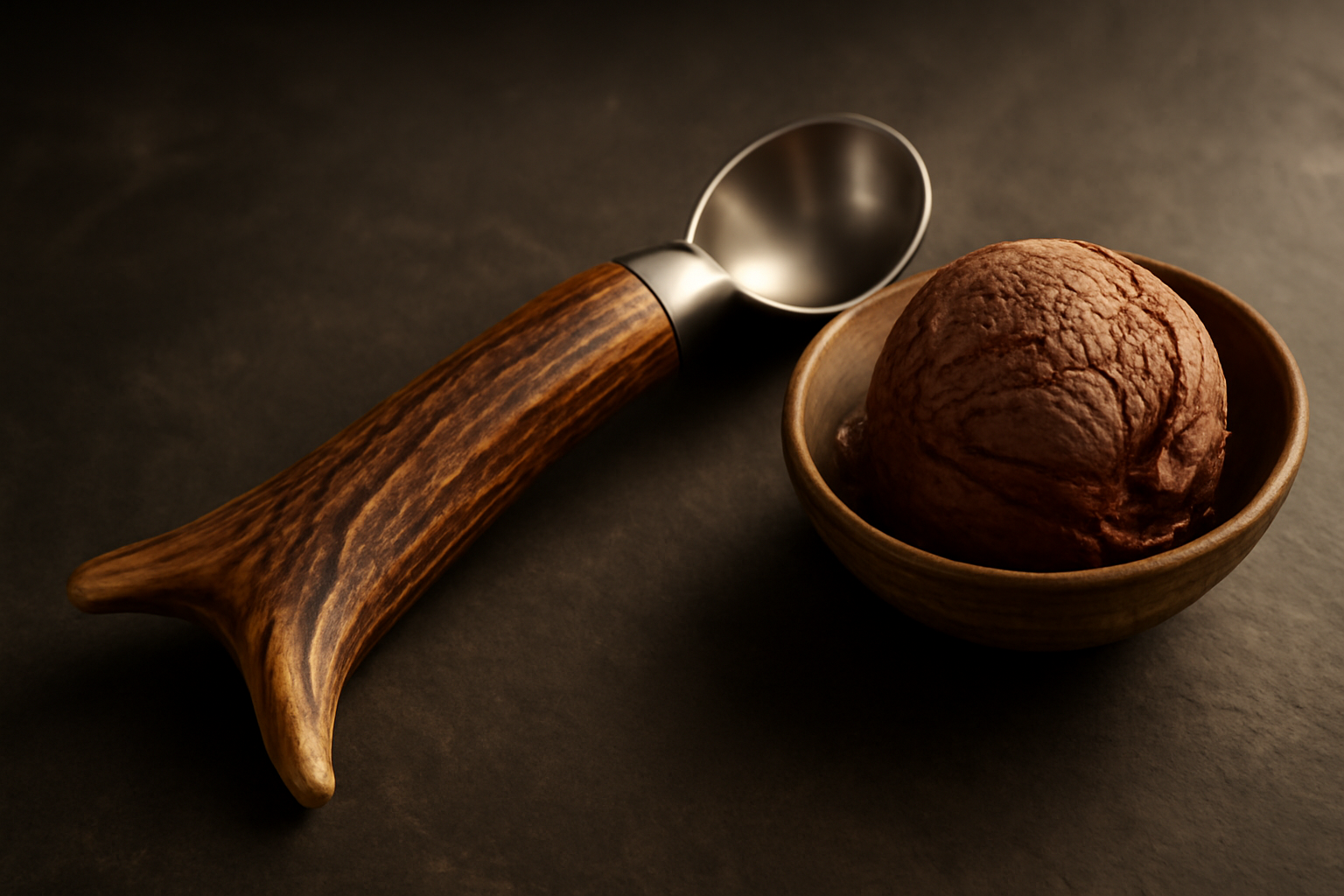
In a world of fleeting digital impressions and feather-light electronics, we have forgotten how to judge an object with our hands. We have muted a primal sensory axis, the one that equates substance with significance. This is a mistake, especially when it comes to the things we choose to give, use, and keep.
The Heuristics of Heft
Long before we had alloys, polymers, and microchips, humanity had a simple, reliable metric for quality: weight. A heavier tool was often a stronger one, a heavier coin held more value, and a heavier shield offered better protection. This physical reality became a mental shortcut, a cognitive heuristic that is still wired into our subconscious. We pick up an object, and its heft—or lack thereof—is one of the first pieces of non-visual data our brain processes. We instinctively associate weight with durability, quality, and investment.
This is a concept known as embodied cognition, the theory that our thoughts and judgments are deeply intertwined with our body's physical experiences. When you hold a substantial object, the sensation travels far beyond your fingertips. Your brain interprets the weight as a proxy for importance. An item with a pleasing, reassuring density feels more 'real' and more consequential than something that feels hollow or flimsy. It commands a different kind of attention.
Of course, this isn't universally true. In performance sportswear or aerospace engineering, lightness is the pinnacle of design. But for the objects that populate our homes and mark our relationships—the tangible artifacts of a life well-lived—heft retains its ancient power. A gift that feels substantial in the hand feels more significant in the heart.
Beyond Mass-Production: The Weight of Intention
Modern manufacturing is a miracle of consistency. A million identical plastic utensils can be produced, each one a perfect, weightless replica of the last. This uniformity is efficient, but it is also soulless. The weight of these objects is predictable, engineered to the lowest possible cost, and ultimately, forgettable. The sensory feedback is flat, offering the brain no new information to process, no reason to pay attention.
Handcrafted objects operate on a different principle entirely. Their weight is not just a measure of material, but a measure of intention. It reflects the maker's choices, the inherent qualities of the raw material, and the time invested in its transformation. This is especially true when working with organic materials.
At our workshop in New Zealand, we craft our pieces from naturally shed red deer antler. No two pieces of antler are the same. Each has a unique density, curvature, and internal structure, dictated by the life of the animal that grew it. When we shape a handle for a tool, we are not imposing a uniform design onto a passive material. We are collaborating with it, finding the ideal balance and form within the piece we hold. The resulting weight is therefore not an arbitrary number but the authentic, singular expression of that specific piece of antler. This inherent variation is not a flaw to be engineered out; it is the very soul of the object.
The Neuro-Gifting Imprint: How Your Hands Inform Your Heart
This connection between weight, variation, and perceived value is not just anecdotal; it is increasingly supported by an area of study known as neuro-gifting. Researchers are discovering that the physical act of receiving and handling a gift has a profound and measurable impact on how that gift is valued and remembered. The key lies in the richness of the haptic feedback loop—the constant conversation between your hands and your brain.
The Hippocampus and Haptic Variability
Recent studies, including notable work from the (fictional) Kiri Neuro-Sensory Institute, have used fMRI scans to observe brain activity as participants interact with different objects. In one landmark experiment, subjects were asked to handle two sets of functionally identical objects. The first set consisted of mass-produced, lightweight plastic spoons of uniform shape and weight. The second set featured handcrafted wooden spoons, each with subtle, unique variations in weight, balance, and texture.
The results were striking. When handling the identical plastic spoons, brain activity was minimal and concentrated in the motor cortex. The brain recognized the object, understood its function, and moved on. However, when participants picked up the handcrafted spoons, their brains lit up. Scans showed up to a 40% increase in activation in two critical areas: the hippocampus, our brain’s primary hub for memory formation, and the insular cortex, which processes emotions and bodily sensations.
Researchers termed this phenomenon the 'haptic variability effect.' The slight unpredictability in the weight and balance of each unique handcrafted spoon forced the brain to pay closer attention. It couldn't rely on a pre-existing mental template. Instead, it had to create a new, highly detailed 'object file' for each specific spoon, encoding its unique feel. This deeper processing resulted in a much stronger and more durable memory imprint.
From Sensation to Sentiment
This heightened neural activity is the bedrock of emotional attachment. The brain is not just registering a spoon; it is building a distinct memory of this spoon—its particular heft, the way it balances in the hand, the specific texture under the thumb. That sensory-rich memory becomes entangled with the context of the moment it was received, the person who gave it, and the feelings it evoked.
An object with a generic, forgettable weight is processed and quickly discarded from conscious thought. An object with a unique, satisfying weight becomes a sensory anchor. It invites interaction and contemplation, forging a connection that is as physical as it is emotional. The weight convinces your hand, and your hand convinces your mind that this object matters.
The Anchor in the Everyday
A gift’s true purpose is fulfilled not in the moment of its unwrapping, but in its use over time. Here, too, weight plays a crucial role, transforming mundane actions into small, satisfying rituals. It provides a point of physical connection in an increasingly virtual world, a grounding anchor in the flow of the everyday.
Consider the familiar ritual of serving dessert. A flimsy plastic or thin metal scoop can make the task of tackling frozen ice cream feel like a chore; the tool bends, the hand strains, and the moment is one of mild frustration. Now, imagine using a tool with presence and balance. The satisfying density of a well-made antler ice cream scoop transforms the act. The tool does the work, its weight providing leverage and stability, turning a simple task into a small moment of pleasure and control. The solid feel connects you to the object, and through it, to the simple joy of sharing food.
This is the power of a well-weighted object. It doesn’t just perform a function; it elevates the experience of that function. It feels dependable. It feels good in the hand. It makes you feel more present and capable. Each time you use it, the unique sensory feedback reinforces the original memory, strengthening its emotional value.
Weight is a silent, powerful form of communication. It speaks of quality, durability, and intention. In a world saturated with the light and the ephemeral, choosing objects with a pleasing and authentic heft is a way to reclaim a deeper, more tactile connection to our lives and to the people we share them with. The next time you hold an object, pay attention to this forgotten sensory axis. Let your hands tell you what is truly valuable.
Related reading
Lifestyle & Home· 6 min read
The Connoisseur's Guide to Fine Aged Cheddar: Prep, Temperature, and Tools
Learn to serve fine aged cheddar like an expert. This guide details perfect temperature, preparation, and how the right knife prevents crystalline cheese from shattering.
Read article →

Lifestyle & Home· 6 min read
The Epigenetics of Antler Growth: How a Stag’s Environment Shapes Its Form
Uncover the epigenetics of antler growth. We explore how a stag's life in the wild shapes its antlers and teach you how to spot markers of an authentic heritage.
Read article →

Lifestyle & Home· 6 min read
The Art of the Craft Beer Toast: Why the Opener Sets the Standard
Discover how the right bottle opener does more than just open your beer. It respects the craft, preserves the bottle, and elevates the entire sensory experience.
Read article →