
Craft & Materials· 6 min read
Biophilic Office Design: Upgrading a High-Tech Desk with Organic Textures
Discover how to combat digital fatigue by balancing your high-tech desk with organic textures. Learn the science behind using natural elements to lower stress and improve focus.
By Antler Tree · 1 June 2026
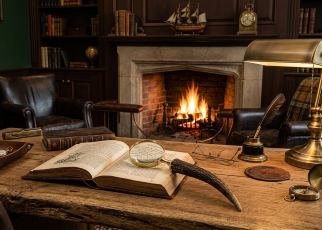
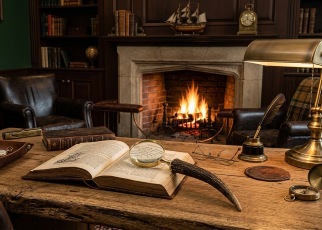
The modern executive desk is a marvel of engineering, a minimalist plane of aluminum and glass designed for peak efficiency. Yet for all its sleekness, it often feels sterile, a landscape devoid of the very things that ground our focus and calm our minds. We have optimised for function at the expense of feel, and this imbalance has a tangible cost.
The Unseen Cost of a Sterile Workspace
The friction-free glide of a mouse on a laminate surface, the cool touch of an anodised aluminum laptop stand, the unrelenting glow of a 4K monitor—these are the sensory inputs of the 21st-century knowledge worker. While each element is a testament to technological progress, together they create an environment that is profoundly unnatural. Our senses, honed over millennia to interpret the subtle textures and temperatures of the natural world, are left understimulated and strangely fatigued.
This is more than an aesthetic complaint. It''s a cognitive one. A workspace devoid of organic texture and form forces our attention into a narrow, digital channel. We spend hours staring at glowing rectangles, our focus locked onto pixels, our hands resting on inert, uniformly manufactured surfaces. The result is a well-documented increase in digital eye strain, mental fatigue, and a low-grade sense of disconnection. Our brains are working hard, but our bodies and their deep-seated sensory needs are left behind. The sleek, modern desk, in its pursuit of minimalism, has inadvertently created a sensory desert.
Biophilia, our innate tendency to seek connections with nature, is often proposed as the antidote. But a truly effective solution goes much deeper than placing a succulent on the corner of the desk. It requires a thoughtful engagement with materials that don''t just look natural, but feel natural.
Biophilia Beyond the Potted Plant
True biophilic design is not about decorating with nature''s likeness, but about integrating its principles. While natural light and living plants are foundational, they primarily engage our visual sense. To truly counterbalance the coldness of technology, we must engage our sense of touch. The modern desk is an ecosystem dominated by smooth, cool, predictable surfaces. The solution is to introduce a counterpoint: objects with texture, warmth, and a hint of organic unpredictability.
This isn''t about creating clutter. It''s about a deliberate curation of the tools and objects we interact with daily. Think of the reassuring heft of a stone coaster, the subtle grain of a wooden pen, or the surprising warmth of polished bone. These materials provide ''sensory anchors''—tactile reference points that pull us out of the digital ether and back into the physical world, even for a moment.
Where modern manufacturing seeks uniformity, natural materials celebrate imperfection. The unique grain in a piece of timber, the fine lines on a river stone, or the beautifully complex surface of deer antler tells a story. Each object is a one-of-a-kind record of its own history, a quiet rebellion against the mass-produced landscape of the typical office. It''s in this interaction with authentic, storied materials that we find a deeper sense of grounding.
The Tactile Anchor: How Natural Textures Reduce Digital Fatigue
A growing body of research in workplace ergonomics and environmental psychology is beginning to quantify what craftspeople and designers have long understood intuitively: regular tactile interaction with natural materials can significantly mitigate the strains of digital work. The key lies in a concept known as ''haptic grounding''.
Recent workplace spatial studies, such as those emerging from bio-architectural research programmes, have shed light on this phenomenon. In one such inquiry focused on high-demand knowledge workers, researchers observed two groups. The control group worked in a standard high-tech office environment. The test group was provided with a single, small, functional object—such as a letter opener, a paperweight, or a magnifying glass—handcrafted from a dense, organic material like polished stone, aged hardwood, or New Zealand red deer antler. Participants were simply told to use the object as needed in their workflow.
The findings were compelling. After a four-week period, the group interacting with the natural objects showed a 15% average reduction in self-reported digital eye strain and a measurable 20% decrease in peak cortisol spikes during high-pressure tasks compared to the control group. The primary variable was not visual exposure to nature, but brief, intermittent moments of physical contact with a natural texture.
The proposed mechanism is a form of sensory shifting. The act of engaging with a complex, non-uniform, organic texture—feeling the smooth, cool density and subtle porosity of an antler handle, for instance—compels the brain to switch from abstract, pixel-based processing to a more primal, sensory-motor mode. This brief cognitive detour, lasting as little as 60-90 seconds, allows the ciliary muscles of the eye to relax from their fixed focal length. It also breaks the mental feedback loop of sustained digital concentration, which is a primary driver of cognitive fatigue.
Curating Your Desk''s Organic Layer
Applying this principle to your own workspace is an exercise in thoughtful curation. It is a search for objects that are not only useful but also invite touch and contemplation. The goal is to replace or supplement sterile, plastic-and-metal tools with counterparts that possess character and a tangible connection to the natural world.
Choosing Functional Heirlooms
Resist the temptation to add decorative objects for their own sake. The most powerful biophilic interventions are those integrated directly into your workflow. An object that serves a purpose is one you will reach for regularly, creating countless small opportunities for haptic grounding throughout the day. It is in usefulness that we find lasting beauty and connection. The goal is to integrate tools that serve a purpose while offering a moment of sensory connection. This could be a leather-bound journal, a stone paperweight, or a beautifully crafted magnifying glass for examining fine print on documents. An object like an Antler Handle Magnifying Glass, with its weighty, smooth handle shaped by nature, brings this principle to life. Its value is twofold: it performs its task flawlessly, and the act of using it is a sensory reward.
Material Palettes and Provenance
Think about your desk as a landscape and consider your palette of materials. The dark, figured grain of an ancient Rimu timber pen box provides a beautiful anchor. The cool, weighty presence of grey slate coasters offers a pleasing contrast to a warm wooden desk. And then there is antler.
Naturally shed New Zealand red deer antler is a remarkable material. Unlike bone, it is dense and solid, and when polished, it takes on a warmth and smoothness that feels incredible in the hand. Each piece carries a unique pattern of colour and texture—a map of its life in the wild. As a material that is shed and regrown annually, it also carries a story of renewal and sustainability. Pairing the primal elegance of an antler handle with the polished brass and precision optics of a high-quality lens creates a perfect synthesis of nature and human ingenuity. It’s an object that bridges the gap between the ancient world and the modern desk.
The most powerful desk is not the most minimal, but the most mindful. By intentionally weaving these small moments of organic reality into our digital workflow, we build an environment that supports not just our productivity, but our humanity and well-being. Take a moment to consider the surfaces you touch throughout your day; a small change there can make all the difference.
Related reading
Craft & Materials· 6 min read
Patio Hosting Mechanics: Selecting Slip-Resistant Tools for Summer Barbecues
A guide to high-durability, slip-resistant barbecue tools. We analyze why natural antler grips better than polymer in wet conditions for confident patio hosting.
Read article →
Craft & Materials· 6 min read
Replacing Greenwashed Corporate Swag with Genuinely Sustainable Luxury
Tired of disposable corporate swag? Discover how naturally shed deer antler offers a truly sustainable, carbon-neutral luxury gift that lasts a lifetime.
Read article →
Craft & Materials· 6 min read
The Psychology of Hosting: How Weighty Bar Tools Change the Guest Experience
Discover the psychology of hosting. We break down the weight-value heuristic, revealing how the heft of quality bar tools subconsciously signals value to your guests.
Read article →