
Craft & Materials· 6 min read
Patio Hosting Mechanics: Selecting Slip-Resistant Tools for Summer Barbecues
A guide to high-durability, slip-resistant barbecue tools. We analyze why natural antler grips better than polymer in wet conditions for confident patio hosting.
By Antler Tree · 1 June 2026
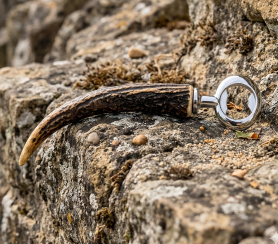
The tools you use for outdoor hosting are not mere accessories; they are an extension of your hands and a reflection of your intent. In the dynamic environment of a summer barbecue, where heat, speed, and impromptu moments reign, the integrity of your equipment is paramount. Choosing well means choosing for feel, for durability, and for the quiet confidence that comes from a tool that will not fail you.
The Unseen Demands of Outdoor Kitchens
The domestic kitchen is a controlled space. Surfaces are level, temperatures are relatively stable, and moisture is managed. The patio, deck, or backyard is anything but. Here, a different set of physical laws seems to apply. A platter balanced on an uneven stone wall, marinades dripping onto handles, condensation beading on a tool just pulled from an ice-filled bucket—these are the elements of the outdoor kitchen.
This environment places unique stresses on your utensils. The intense, radiant heat from a charcoal grill can warp plastic handles and make thin metal too hot to touch. Constant exposure to UV light can degrade polymers, making them brittle over time. The grease and acids from marinades can stain and permeate low-quality wood. Most critically, the constant presence of moisture—from condensation, washing, or drips—creates a persistent risk of slippage at the worst possible moment. A dropped steak or a skewer fumbled over hot coals is more than an inconvenience; it is a break in the rhythm of hosting.
Standard indoor utensils are seldom designed to withstand this combination of thermal shock, moisture saturation, and physical stress. They are built for a world of predictable surfaces and moderate use. The craft of true patio hosting begins with acknowledging this distinction and selecting tools designed not for the pristine countertop, but for the beautiful chaos of the open air.
Material Integrity Under Pressure
When evaluating a tool for its outdoor merits, the handle''s material is as crucial as the function of its head. The tactile interface is where control is won or lost. While many modern tools prioritize sleek, minimalist aesthetics, these often come at the expense of practical performance where it matters most.
Common materials each present their own calculus of compromise:
-
Silicone and Polymer: Often marketed for their heat resistance and ease of cleaning, smooth plastic or silicone handles become exceptionally treacherous when wet or greasy. Their non-porous surfaces offer no purchase, creating a slick, unpredictable grip that demands constant correction and a tighter-than-necessary hold, leading to fatigue.
-
Finished Wood: Aesthetically warm, wood offers a better grip than smooth plastic. However, many finished woods require regular oiling and maintenance to prevent cracking or drying out from sun and heat. Varnishes can chip, and moisture can eventually work its way into the grain, leading to swelling, staining, or rot.
-
Bare Stainless Steel: While supremely durable and hygienic, all-metal tools suffer from poor thermal insulation. A handle left near the grill can quickly become dangerously hot. Furthermore, a smooth, polished steel handle offers even less friction than polymer when wet.
True performance lies in materials that offer a natural advantage. It requires a substance that is inherently durable, thermally stable, and provides a secure grip without relying on synthetic texturing that can wear away. This is where materials shaped by nature, rather than manufactured in a mold, find their purpose.
The Science of Grip: Why Natural Texture Prevails
The difference between a secure grip and a slippery failure often comes down to microscopic details. When a handle gets wet, its performance is dictated by how its surface interacts with that layer of moisture. This is where the organic, intricate structure of naturally shed antler demonstrates a mechanical superiority over mass-produced, uniform materials.
The Hydroplaning Effect of Smooth Polymers
Imagine the surface of a typical smooth plastic spatula handle. Under a microscope, it is a uniform, non-porous plane. When condensation, marinade, or water coats this surface, it creates an unbroken film between your hand and the handle. Your grip is no longer on the tool itself, but on a thin, frictionless layer of liquid.
This is a micro-scale version of a car hydroplaning on a wet road. The pressure from your hand is insufficient to displace the liquid film, and as a result, the coefficient of friction plummets. A tool that felt secure when dry suddenly feels slick and uncontrollable. Manufacturers attempt to mitigate this by adding molded textures or rubber inserts, but these are often shallow and can wear down, or the seams can trap grime.
Antler''s Micro-Topography: A Natural Solution
Antler, by its very nature, is a composite material grown for strength and resilience. The surface of a piece of New Zealand red deer antler is not smooth; it is a complex landscape of ridges, valleys, and textures that actively combat the hydroplaning effect.
This landscape has distinct features. The raised, bumpy texture known as ''pearling'' creates thousands of individual high points. When you grip the handle, the pressure is concentrated on these points, effectively breaking through the surface tension of any liquid film. Water is displaced into the microscopic channels and grooves that run along the antler''s length. These channels act like the treads on a high-performance tire, actively siphoning moisture away from the points of contact between your skin and the handle. The ''corona'' at the base of the antler provides a natural, substantial stop for the hand, further ensuring control.
This inherent, multi-layered texture means that even when wet or greasy, an antler handle maintains a remarkably high coefficient of friction. Your grip remains firm and confident, requiring less force and reducing hand fatigue during a long session at the grill. It is a masterclass in functional design, perfected by evolution rather than a factory.
Beyond the Grip: Durability and Design in Harmony
A tool''s value is also measured in its longevity. The same dense, mineralized composition that gives antler its superior grip also makes it exceptionally durable. It is bone, evolved to withstand incredible stress during the life of the deer. It will not warp from the heat of the grill, grow brittle from sun exposure, or swell and split when wet.
This resilience means a tool built with an antler handle is not a seasonal purchase but a permanent addition to your hosting collection. It ages with grace, developing a unique patina over years of use that tells a story. This principle of enduring quality extends beyond spatulas and tongs to the simpler, yet crucial, tools of hospitality. A well-weighted Antler Bottle Opener, for instance, offers not just a secure grip when pulling a cold beverage from the ice bucket, but also a sense of permanence that disposable tools lack. It feels substantial in the hand, a small but significant anchor of quality in the flurry of activity.
Each piece of naturally shed antler is unique in its curvature, texture, and color. This means every tool is a one-of-a-kind object, perfectly imperfect. The craftsman''s role is not to impose a shape, but to identify the ideal function within the form that nature has provided, uniting it with high-grade stainless steel to create a harmonious and highly functional instrument.
Assembling an Enduring Toolkit
Building a collection of trustworthy outdoor hosting tools is a process of curation. It involves moving past the allure of brightly colored, disposable sets and seeking out items built with intention and superior materials. When you select your next piece, look beyond its primary function.
Consider the construction. Is the steel full-tang, meaning it extends all the way through the handle for maximum strength and balance? Are the components joined by sturdy mechanical fasteners like pins or rivets, rather than just glue that can fail under thermal stress? Run your hand over the handle. Does it offer tactile feedback? Does its shape and weight feel like a natural extension of your arm?
Choosing tools on this basis is an investment in future gatherings. It is a commitment to the idea that the objects we use should be as dependable and memorable as the occasions they serve. These are the tools that get passed down, their antler handles burnished with the stories of countless summer evenings.
When we choose tools with substance, we elevate the act of hosting from a task to a craft. The right equipment gives you the confidence to focus on what truly matters: the food, the fire, and the people you have gathered to share it with. We invite you to explore tools that are designed with this philosophy in mind, built from materials that promise a lifetime of reliable service.
Related reading

Craft & Materials· 6 min read
Replacing Greenwashed Corporate Swag with Genuinely Sustainable Luxury
Tired of disposable corporate swag? Discover how naturally shed deer antler offers a truly sustainable, carbon-neutral luxury gift that lasts a lifetime.
Read article →
Craft & Materials· 6 min read
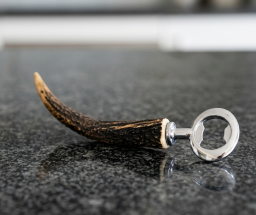
The Psychology of Hosting: How Weighty Bar Tools Change the Guest Experience
Discover the psychology of hosting. We break down the weight-value heuristic, revealing how the heft of quality bar tools subconsciously signals value to your guests.
Read article →
Craft & Materials· 6 min read
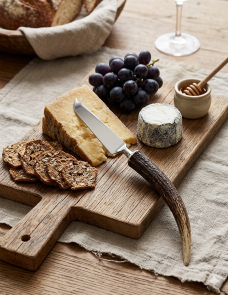
The Ultimate Charcuterie Guide: Density, Texture, and Blade Pairings
A structural guide to hosting. Learn how cheese density, handle weight, and blade geometry interact to create the perfect slice without crumbling or sticking.
Read article →