Craft & Materials· 6 min read
Replacing Greenwashed Corporate Swag with Genuinely Sustainable Luxury
Tired of disposable corporate swag? Discover how naturally shed deer antler offers a truly sustainable, carbon-neutral luxury gift that lasts a lifetime.
By Antler Tree · 1 June 2026
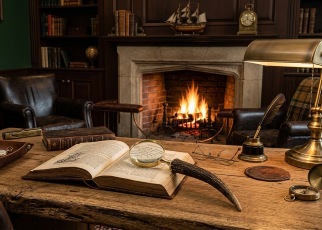
The corporate gift has a profound waste problem. That branded power bank and glossy tote bag, meant as tokens of appreciation, often find their way to a landfill before the year is out. We believe true gratitude is measured not in novelty, but in permanence and integrity.
The Hidden Cost of Convenience Gifting
In the world of corporate relations and personal milestones, the gesture of gifting is meant to solidify a connection. Yet, the vast majority of items chosen for this purpose are designed for immediate obsolescence. Consider the typical contents of a conference swag bag: plastic pens engineered to fail, low-capacity USB drives that are quickly redundant, and polyester lanyards destined for a desk drawer''s tangled graveyard. These are not gifts; they are marketing collateral disguised as such.
The environmental toll of this culture is staggering. The production of cheap plastics and electronics consumes immense fossil-fuel energy and water resources, while their disposal contributes to microplastic pollution and electronic waste, two of the most persistent environmental challenges we face. This practice is often cloaked in the language of sustainability—a phenomenon known as ''greenwashing''. A company might offer a ''reusable'' coffee cup made from bamboo composite, failing to mention that the melamine resin used to bind it renders it non-recyclable and non-compostable.
Beyond the ecological impact is a psychological one. A cheap, mass-produced item feels like a hollow gesture. It communicates that the relationship is transactional and that the recipient is just one of many. It devalues the very appreciation it is supposed to represent. True connection requires a more considered approach, one that honours both the recipient and the material world we inhabit.
From Disposable to Enduring: The Philosophy of a Lifetime Object
How do we shift away from this model of disposability? The answer lies in choosing objects that are intended not for a season, but for a lifetime. This philosophy prioritizes craftsmanship, material honesty, and timeless design over fleeting trends and branded logos.
An enduring gift has several key characteristics:
- It is made from noble materials. This doesn''t necessarily mean precious metals or jewels. It means materials that age with grace—wood that develops a patina, leather that softens, and natural materials like antler that hold the story of their origin.
- It tells a story. Whether it''s the story of the artisan who made it or the story of the material itself, a great gift has a narrative that elevates it beyond mere function.
- It is built for purpose and longevity. It feels solid in the hand. It performs its function flawlessly and is designed to be cared for, not discarded.
When you give an object of this calibre, you are giving more than a simple item. You are offering a piece of craftsmanship, a connection to the natural world, and a tool that will become a part of the recipient''s daily life. It is an act of respect, demonstrating a deep and genuine appreciation.
The Carbon Story of a Naturally Shed Antler
The search for genuinely sustainable materials can be complex, often riddled with misleading claims. At Antler Tree, our work is grounded in a material that is not only renewable but is part of a wild, carbon-neutral cycle: the naturally shed antlers of New Zealand''s red deer.
The Deer''s Role in a Carbon-Sequestering Cycle
To understand the sustainability of antler, we must start with the deer itself. Roaming the remote high country of New Zealand, red deer subsist on a diet of native grasses, shrubs, and forest undergrowth. Through photosynthesis, this vegetation draws carbon dioxide (CO2) from the atmosphere, converting it into complex carbohydrates. This sequestered atmospheric carbon becomes the building block of the entire ecosystem.
As a deer forages, it ingests this plant-bound carbon. Its metabolism converts these nutrients into energy and body mass, including its magnificent antlers. An antler is bone, one of the densest and fastest-growing tissues in the animal kingdom. Over a period of several months, the deer''s body directs a huge amount of calcium, phosphorus, and sequestered carbon to grow its antlers. For its entire growth period, the antler is a living, carbon-storing vessel.
The Shedding Process: A Gift from the Wild
Crucially, this process concludes with a gift. Every spring, as testosterone levels fall after the rut, a layer of cells at the base of the antler, the pedicle, reabsorbs calcium, weakening the connection. The heavy antlers are then cast, or shed, naturally and painlessly. The deer is unharmed, ready to grow a new, often larger, set.
On the forest floor, these sheds become part of a different cycle. Left to the elements, they would be gnawed by smaller animals for their mineral content and would slowly decompose over many years, gradually releasing their stored carbon back into the soil and atmosphere. Our intervention captures this carbon.
From Forest Floor to Workshop: Honoring the Material
Our role in this cycle is one of careful, low-impact stewardship. We source our antlers from a network of foragers who walk the backcountry, collecting these sheds by hand. There is no hunting, no farming, and no industrial machinery involved. This is in stark contrast to the extractive processes of mining metal or drilling for oil to create plastics, which carry an enormous carbon footprint.
By taking this shed antler and transforming it into a lasting object, we are effectively locking away its embodied carbon for the life of the piece. The minimal energy used in our workshop—powering hand tools, lathes, and sanders—is negligible compared to the carbon captured within the material itself. We polish our pieces with natural waxes, avoiding synthetic lacquers. The result is a beautiful, functional object that acts as a permanent carbon sink, a small repository of carbon that was once atmospheric CO2, sequestered by a plant, and shaped by a wild animal.
An Object of Scrutiny and Beauty
A truly remarkable gift invites closer inspection. It has details to be discovered over time—the subtle variations in colour, the unique texture against the skin, the satisfying weight in the hand. It is an object that rewards mindfulness and encourages a pause in a fast-paced world.
This idea is perfectly embodied in a tool designed for observation. Consider the heft and unique grain of an Antler Handle Magnifying Glass, an object designed not for a passing glance but for deliberate use and appreciation over decades. Each piece of antler is entirely unique, shaped by the individual deer, its diet, and the specific terrain it roamed. One handle might be dense and smooth, another more rugged and porous. This inherent individuality ensures that no two pieces are ever identical. It is a one-of-a-kind gift by its very nature.
When someone places such an object on their desk, it is more than a tool. It is a conversation piece, a tactile link to the wild mountains of New Zealand, and a testament to the beauty of natural, unadulterated materials. It becomes an heirloom, passed down through generations, accumulating stories rather than dust.
Redefining Luxury at Every Occasion
This philosophy extends beyond the corporate sphere. Whether as a host gift, a retirement present, or a recognition of a significant personal achievement, the principle remains the same. The modern definition of luxury is shifting from overt branding and expense to quiet quality, narrative depth, and ethical integrity.
Instead of a bottle of wine that is quickly consumed or a bouquet that wilts within a week, a handcrafted object serves as a permanent marker of an important moment. It is a way to tell someone that you see them, you value them, and you wish to give them something as lasting and unique as the relationship you share.
By choosing gifts that are born from a sustainable cycle and crafted with human hands, we reject the throwaway culture that dominates modern life. We choose to surround ourselves, and those we care for, with objects of meaning, beauty, and lasting worth.
Choosing a gift is an opportunity to express your values. By moving beyond the disposable and embracing the enduring, you give a gift that truly keeps on giving—a legacy of thoughtful appreciation, a connection to the wild, and a small but meaningful vote for a more sustainable world. We invite you to explore the texture, weight, and story of these pieces for yourself.
Related reading
Craft & Materials· 6 min read
Patio Hosting Mechanics: Selecting Slip-Resistant Tools for Summer Barbecues
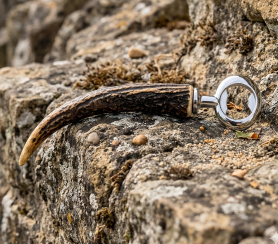
A guide to high-durability, slip-resistant barbecue tools. We analyze why natural antler grips better than polymer in wet conditions for confident patio hosting.
Read article →
Craft & Materials· 6 min read
The Psychology of Hosting: How Weighty Bar Tools Change the Guest Experience
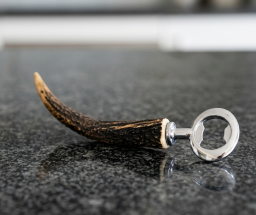
Discover the psychology of hosting. We break down the weight-value heuristic, revealing how the heft of quality bar tools subconsciously signals value to your guests.
Read article →
Craft & Materials· 6 min read
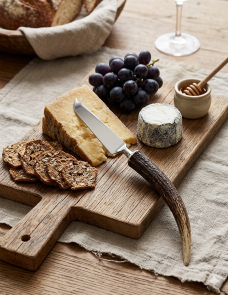
The Ultimate Charcuterie Guide: Density, Texture, and Blade Pairings
A structural guide to hosting. Learn how cheese density, handle weight, and blade geometry interact to create the perfect slice without crumbling or sticking.
Read article →