Craft & Materials· 6 min read
From Survival to Luxury: The Cultural History of Antler Toolmaking
An anthropological overview charting humanity''s use of antler, from Paleolithic survival tools to modern, handcrafted luxury goods rooted in deep material history.
By Antler Tree · 1 June 2026
The objects we surround ourselves with tell a story, connecting us to a lineage of craft and human ingenuity. Long before we had steel or plastic, humanity’s most innovative chapter was written in bone and antler. This ancient material, a gift of the natural world, speaks to both our primal need for survival and our enduring search for beauty.
The Dawn of an Essential Material
To hold a piece of antler is to hold a direct link to our deep past. For early humans in the Upper Paleolithic, the world was a formidable place, and survival depended on the quality of their toolkit. While stone was hard and wood was plentiful, it was antler that represented a monumental leap in material science. Sourced from deer, elk, and stag, this cast-off bone was the era’s advanced composite.
Unlike stone, antler is not brittle. It can absorb shock and stress without shattering, a property that our ancestors observed and exploited with incredible skill. Unlike wood, it does not easily rot or splinter, and it holds a sharpened edge for far longer. It is both tough and elastic—a combination of virtues that made it the preferred medium for the most critical pieces of a hunter''s arsenal.
From the frozen plains of Ice Age Europe to the ancient forests of Asia, our ancestors developed sophisticated techniques to work it. They learned to soften it by soaking it in water and then straighten, shape, or carve it using flint burins. The result was a revolution in technology. They crafted fine, sharp needles for sewing warm clothing, spear-throwers (atlatls) that dramatically increased the power and range of their hunters, and the barbed tips of harpoons that were essential for hunting large game and fishing.
The Enduring Genius of Ancient Engineering
Modern analysis of archaeological finds confirms what our ancestors knew intuitively: antler is a marvel of natural engineering. Its unique properties are not accidental; they are the result of its composite structure. A dense, hard outer layer of cortical bone protects a lighter, spongy interior of cancellous bone. This combination provides a supreme resistance to impact while remaining lightweight and workable.
Nowhere is this better illustrated than in the specific, complex tools that archaeologists have unearthed. These objects are not just ''primitive'' artefacts; they are evidence of a deep, empirical understanding of material properties.
The Precision Harpoon
Consider the Magdalenian harpoon heads, crafted some 17,000 years ago and found in sites across Western Europe. These were not simple, sharp points. Many were intricate, detachable ''toggling'' harpoons. Upon striking an animal, the barbed antler head would detach from the main shaft but remain connected by a cord. It would then turn sideways under the skin, securely anchoring the prey. For this mechanism to work, the head needed to withstand the violent initial impact without breaking. Bone would have been too brittle, shattering on contact with a large animal''s hide or bone. Wood would have been too weak. Only antler possessed the precise combination of hardness, elasticity, and compressive strength to make this sophisticated hunting technology possible.
The Enigmatic ''Bâton''
Another telling example is the ''bâton de commandement'', or perforated baton. These T-shaped or Y-shaped pieces of reindeer antler, carved and often decorated, have been found throughout Upper Paleolithic sites. While their exact purpose is debated and may have varied, a leading theory holds that they were tools for straightening spear and arrow shafts. By passing a softened wooden shaft through the hole and using the baton as a lever—perhaps after warming the shaft over a fire—a craftsperson could work out kinks and create a perfectly true projectile. This task requires a tool that is immensely strong and able to endure significant torque. Antler was the only non-mineral material of the era that could stand up to such force, demonstrating a deliberate choice based on mechanical understanding.
These discoveries, from the barbed points at the UK''s Star Carr site to the elegant carvings of the French Pyrenees, show us that antler was never a ''second-best'' material. It was a premium and highly sought-after resource, central to the most advanced technologies of its time.
From Function to Symbol
As human societies grew and specialized, the role of antler expanded beyond the purely utilitarian. Its deep connection to the stag—a powerful, majestic animal revered in cultures across the globe—imbued the material with symbolic weight. The annual cycle of shedding and regrowth transformed the antler into a potent symbol of regeneration, nature''s cycles, and life itself.
We see this transition in the ceremonial objects left behind. The famous antler frontlets from Star Carr, dated to around 9,000 BCE, are modified deer skulls and antlers that were likely worn as headdresses in ritual practice. Here, the material is no longer just for making a tool to hunt the deer, but for embodying its spirit. This symbolic power endured through the ages, with antler appearing in folklore, mythology, and art as an emblem of wildness, vitality, and chieftainship.
The Modern Revival of a Primal Material
In our contemporary world, saturated with synthetic plastics and mass-produced goods, antler is experiencing a quiet renaissance. Artisans and discerning buyers are drawn to it for the very same reasons our ancestors were, though our needs have changed. We seek its durability not for survival, but as an antidote to a disposable culture. We admire its unique texture and grain not just for its function, but as a connection to the natural world.
Here in New Zealand, where Red Deer roam freely, the annual shedding of their antlers provides a sustainable, cruelty-free source for this remarkable material. Each piece is a found object, a story of a year in an animal''s life, shaped by its environment. For the modern craftsperson, working with antler is a continuation of an ancient practice. It requires patience, an intimate knowledge of the material, and a respect for its origins. Each piece is entirely unique, with a density, colour, and curvature that cannot be replicated by a machine.
The Poetics of a Handcrafted Object
To choose an object made from antler today is to participate in this long and storied history. It is an appreciation for things that are made slowly, with intention and skill. The hand-sanded finish, the subtle variations in hue from cream to deep brown, the satisfying weight in the hand—these are the qualities that separate a simple tool from a cherished heirloom.
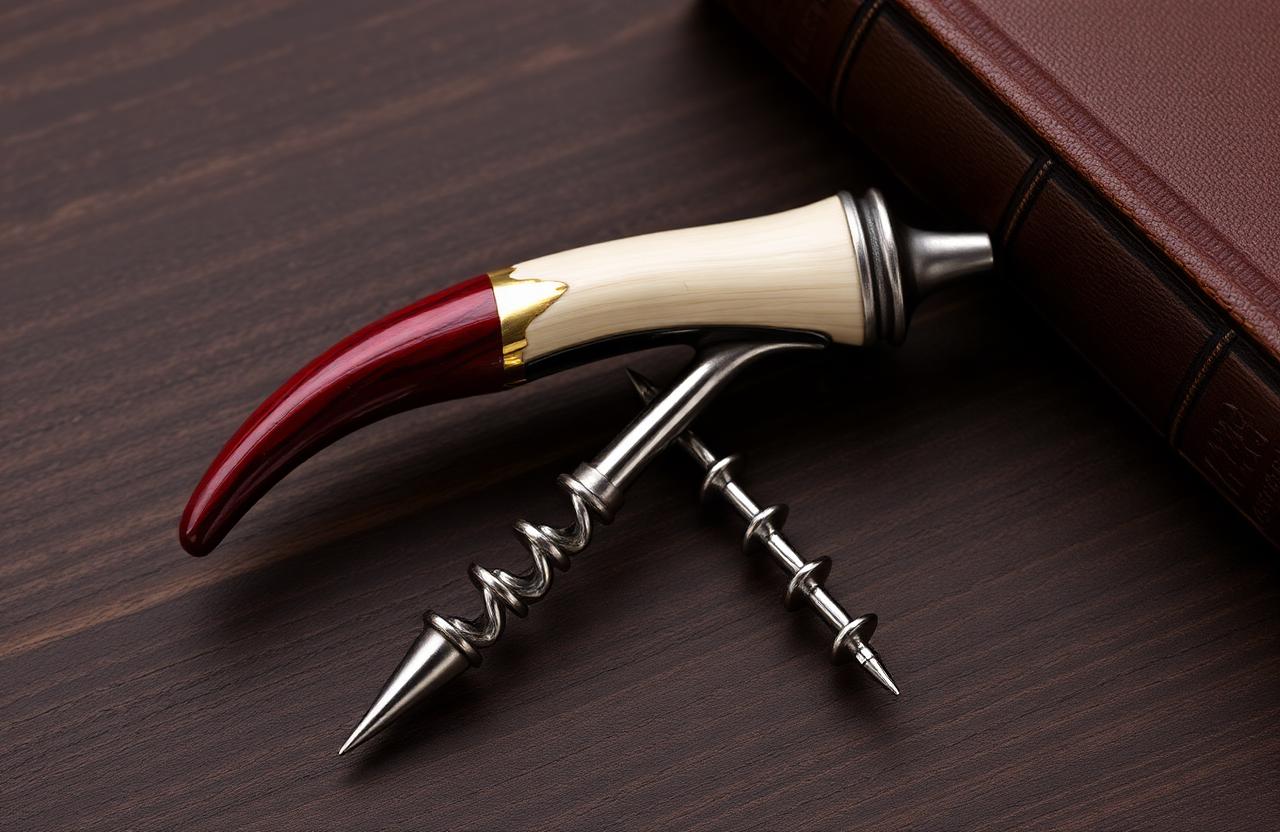
It is about elevating daily rituals with objects that carry meaning. Consider the simple, celebratory act of opening a bottle of wine; a task transformed by the heft and unique pattern of a polished antler corkscrew, connecting a modern moment to an ancient lineage of craft. It becomes more than a functional item; it’s a conversation piece, a small piece of natural art that carries within it an echo of the forest and the touch of the maker’s hand.
When we hold an object made from this incredible material, we are holding a piece of cultural history. It is a reminder that the most enduring luxury is often found in the things that are real, natural, and crafted with a deep understanding of the past. Each curve and contour tells a story of survival, ingenuity, and a timeless appreciation for the beautiful and the useful.
Related reading
Craft & Materials· 6 min read
Patio Hosting Mechanics: Selecting Slip-Resistant Tools for Summer Barbecues
A guide to high-durability, slip-resistant barbecue tools. We analyze why natural antler grips better than polymer in wet conditions for confident patio hosting.
Read article →

Craft & Materials· 6 min read
Replacing Greenwashed Corporate Swag with Genuinely Sustainable Luxury
Tired of disposable corporate swag? Discover how naturally shed deer antler offers a truly sustainable, carbon-neutral luxury gift that lasts a lifetime.
Read article →
Craft & Materials· 6 min read
The Psychology of Hosting: How Weighty Bar Tools Change the Guest Experience
Discover the psychology of hosting. We break down the weight-value heuristic, revealing how the heft of quality bar tools subconsciously signals value to your guests.
Read article →