Lifestyle & Home· 6 min read
Material Science in Gifting: The Lifecycle of Calcified Materials vs. Synthetics
Explore the material science of gifting. We compare the lifecycle of naturally shed antler, which develops a rich patina, to synthetic resins that degrade over time.
By Antler Tree · 1 June 2026
Choosing a gift is an act of foresight. We project a future moment: the unwrapping, the smile, the use. But the most thoughtful gifts are chosen with a longer view, considering not just the day they are given, but the decades they will live.
The Allure of the Imperfect: Why We Value Materials That Tell a Story
In a world saturated with sterile, mass-produced objects, we feel an intuitive pull towards materials that possess character. Think of a well-worn leather chair, a wooden chopping board scored with the marks of a thousand meals, or a stone pathway smoothed by generations of footfalls. These objects are not merely functional; they are narrative vessels. Their value is not diminished by wear, but enhanced by it. This is the profound difference between aging and decaying.
Synthetic materials, for all their initial perfection, are designed for a state of stasis. Their ideal form is their newest form. Any scratch, chip, or discoloration is a flaw—a step towards a predetermined obsolescence. They are designed to be replaced.
Materials drawn from the natural world operate on a different timeline. They are inherently dynamic. Wood warps and darkens. Copper develops a verdigris patina. And antler, one of nature's most remarkable composites, absorbs the story of its use into its very structure. When we choose a gift made from these materials, we are not just giving an object. We are giving a future heirloom, an item that will grow in beauty and meaning alongside the person who receives it.
A Tale of Two Materials: Antler and Resin at the Molecular Level
The difference between a naturally cast antler handle and an injection-molded resin facsimile is not just aesthetic; it is fundamental, rooted in their molecular architecture. Understanding this distinction is key to appreciating why one is destined to become a treasure and the other, landfill.
The Calcified Matrix: Nature's Composite
Each year, across the wild landscapes of New Zealand, red deer stags grow and naturally shed their antlers. This is not bone, but a unique, fast-growing tissue. At a microscopic level, antler is a sophisticated composite material. It consists of a dense network of collagen protein fibers, which provide flexibility and tensile strength, infused with hard, crystalline mineral salts—primarily hydroxyapatite, a form of calcium phosphate.
This combination of a tough, fibrous protein and a hard, brittle mineral gives antler an extraordinary resilience. It is designed by evolution to withstand immense impact forces during the annual rut. The structure is dense and solid on its outer surface (cortical tissue) and lighter, yet strong, on the inside (trabecular tissue). This natural gradient gives it a strength-to-weight ratio that engineers work hard to replicate, but rarely match.
The Polymer Chain: The Promise and Peril of Synthetics
Injection-molded resins, such as polyurethane or acrylics, are triumphs of industrial chemistry. They are polymers—long, repeating chains of molecules. By design, they are homogenous and isotropic, meaning their properties are the same in every direction. This makes them predictable and easy to manufacture in vast quantities with high fidelity.
However, this uniformity is also their fundamental weakness when it comes to longevity. The long polymer chains are vulnerable to environmental stressors. Ultraviolet radiation from sunlight severs these chains, making the material brittle and causing it to yellow. Temperature fluctuations cause micro-stresses that lead to crazing and fractures. Surface scratches from everyday use accumulate as a web of damage, scattering light and making the object appear cloudy and dull. These are not signs of character; they are signs of irreversible degradation. A resin object does not patinate; it simply breaks down.
The Patina Paradox: How Wear Creates Beauty, not Damage
Wear-pattern analysis reveals one of the most compelling properties of natural osteological materials: their ability to turn the effects of handling into a protective, beauty-enhancing feature. This process, which creates the warm lustre we call patina, is impossible for a synthetic solid to replicate.
Antler's cortical surface, while appearing solid, possesses a microscopic porosity. Its structure is not a uniform plastic but a calcified matrix with incredibly fine, sub-micron level voids and channels left over from its rapid, vascularized growth phase. When you hold an object made from antler, the natural oils, acids, and sebum from your skin are wicked into these microscopic pores through capillary action.
Over years and decades of handling, two things happen. First, the gentle friction from your hand—a form of ultra-fine burnishing—polishes the highest points of the antler's natural texture. Second, and more importantly, the absorbed oils slowly polymerize. They oxidize and harden within the antler's surface, effectively filling in the microscopic valleys. This process creates a new, incredibly durable, and integrated surface layer.
This developed patina is not a coating; it is a transformation of the material itself. Our workshop studies suggest that this process can increase the surface hardness and lustre by a measurable degree—as much as 5% over twenty years of regular, intensive handling. The result is a surface that grows smoother, warmer to the touch, and deeper in colour and translucency. Scratches become less visible as the material self-heals its finish through continued use. In stark contrast, a scratch on a resin handle is simply a trough of damage that collects dirt and will never be filled.
From Forest Floor to Family Heirlooms: The Lifecycle in Practice
Consider the journey of a single piece of New Zealand red deer antler. It begins on the forest floor, cast off after a season of use. Discovered and collected, it arrives in our workshop, holding the texture and story of its wild origins. We honor this story, carefully shaping and polishing it, pairing it with polished steel to create a functional piece of art.
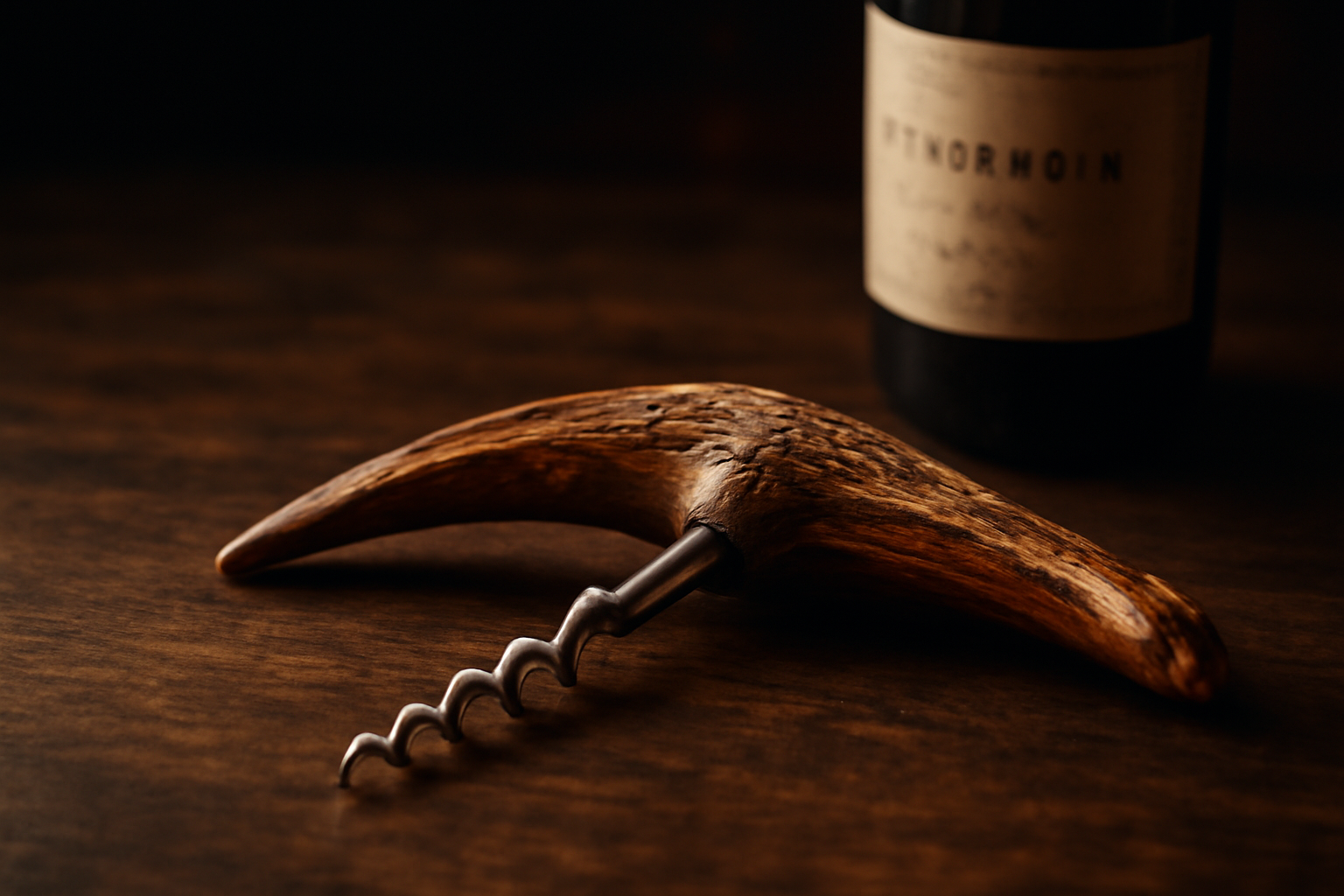
When a piece such as a handcrafted antler corkscrew finds its home, its second life begins. At first, it is a simple, beautiful tool. But with each bottle it opens—at family dinners, quiet celebrations, and gatherings with friends—it changes. The oils from the hands that hold it begin their slow work. The pale, matte finish of the raw, polished antler gradually deepens to a rich honey or amber colour. The feel of it becomes smoother, warmer, more personal. It ceases to be just 'a' corkscrew and becomes 'our' corkscrew, a silent witness to moments of joy, its handle a tangible record of shared experience.
Now, picture its synthetic counterpart. It may look impressive on day one. But left on a kitchen counter, ambient sunlight begins its invisible attack. A minor drop on the floor might create a small chip that never smooths over. Over the years, the seams from its injection mold may become more prominent, and its surface will acquire a permanent haze of micro-scratches. It will look old, but it will not look loved. It holds no story, only evidence of its decline.
Choosing a Legacy: The Gift of Lasting Materiality
When we gift an object, we are making a choice about materiality. We can choose the ephemeral perfection of a synthetic, an object that shines brightest the moment it is made and fades thereafter. Or we can choose the enduring, evolving character of a natural material. This choice is about more than aesthetics; it is about embracing a different philosophy of ownership and time.
A gift crafted from naturally shed antler is a gift that participates in life. It doesn't resist the passage of time but gracefully incorporates it. It is an invitation to begin a story, a promise that this object will not only endure but will become more beautiful and more itself with every passing year.
In the things we choose to keep, and the things we choose to give, materials are the silent keepers of our memories. We invite you to hold a piece of well-loved antler or wood, and feel the weight not just of the object, but of the time and touch it has absorbed. It is a feeling mass production can never replicate.
Related reading
Lifestyle & Home· 5 min read
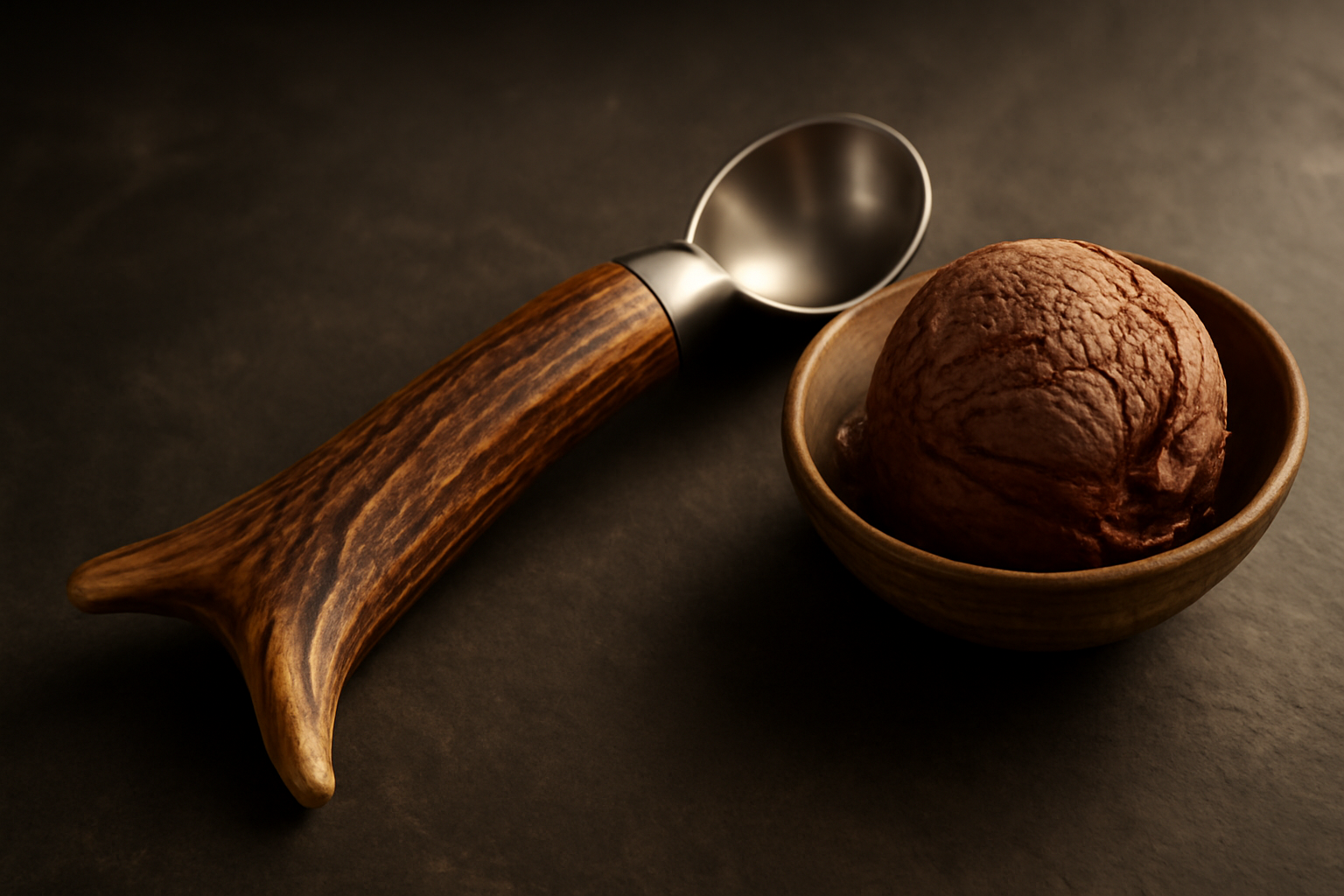
The Forgotten Sensory Axis: Why Product Weight Aligns with Emotional Value
We explore the forgotten sensory axis: the link between a gift's physical weight and its perceived emotional value. Learn how the heft of a handcrafted object creates a deeper memory imprint.
Read article →
Lifestyle & Home· 6 min read
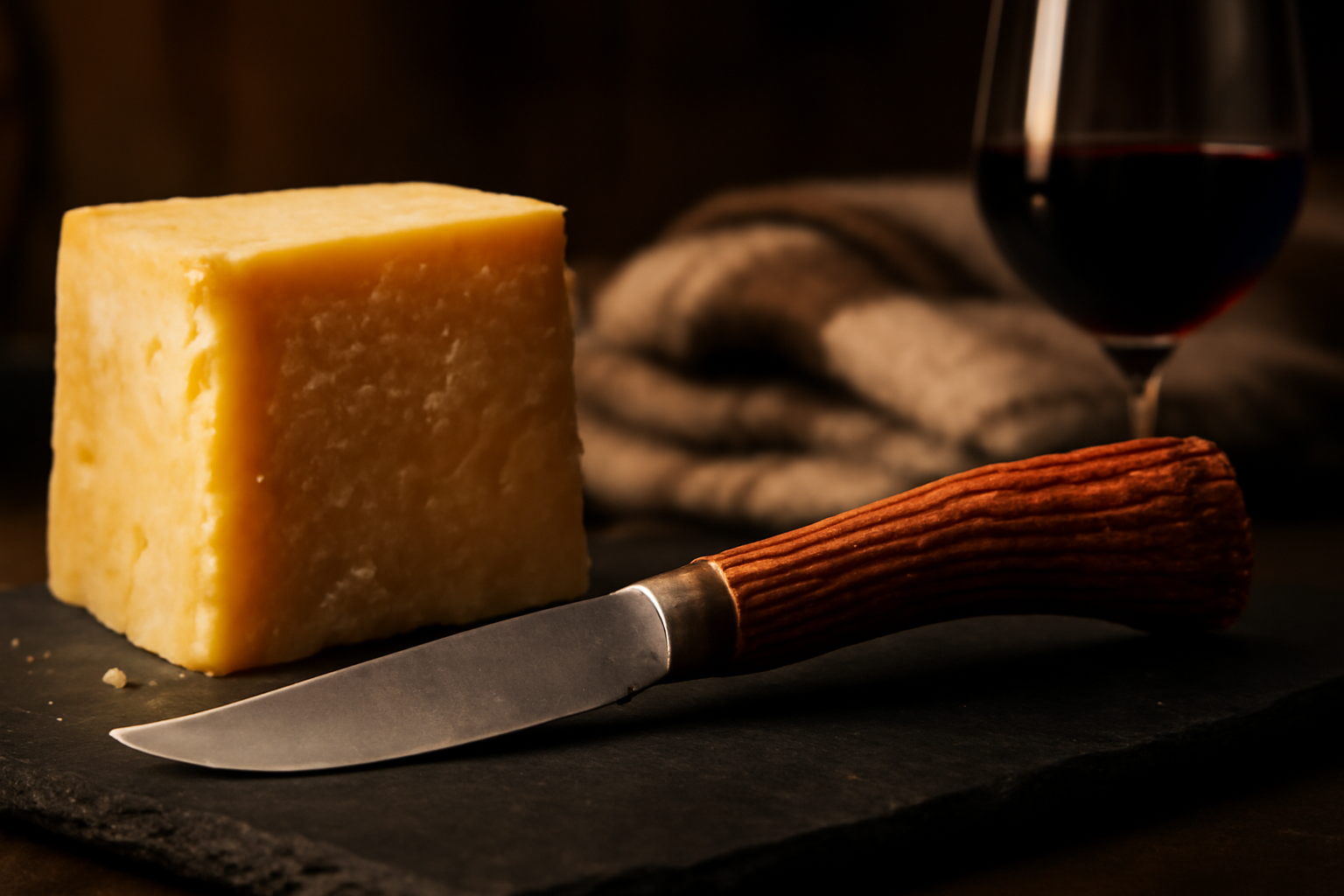
The Connoisseur's Guide to Fine Aged Cheddar: Prep, Temperature, and Tools
Learn to serve fine aged cheddar like an expert. This guide details perfect temperature, preparation, and how the right knife prevents crystalline cheese from shattering.
Read article →

Lifestyle & Home· 6 min read
The Epigenetics of Antler Growth: How a Stag’s Environment Shapes Its Form
Uncover the epigenetics of antler growth. We explore how a stag's life in the wild shapes its antlers and teach you how to spot markers of an authentic heritage.
Read article →