
Hosting & Entertaining· 6 min read
Mindful Cooking: Transforming Daily Kitchen Prep into a Ritual
Discover how artisan kitchen tools can transform daily meal prep from a hurried chore into a mindful ritual. Learn to cultivate focus and presence in the kitchen.
By Antler Tree · 1 June 2026
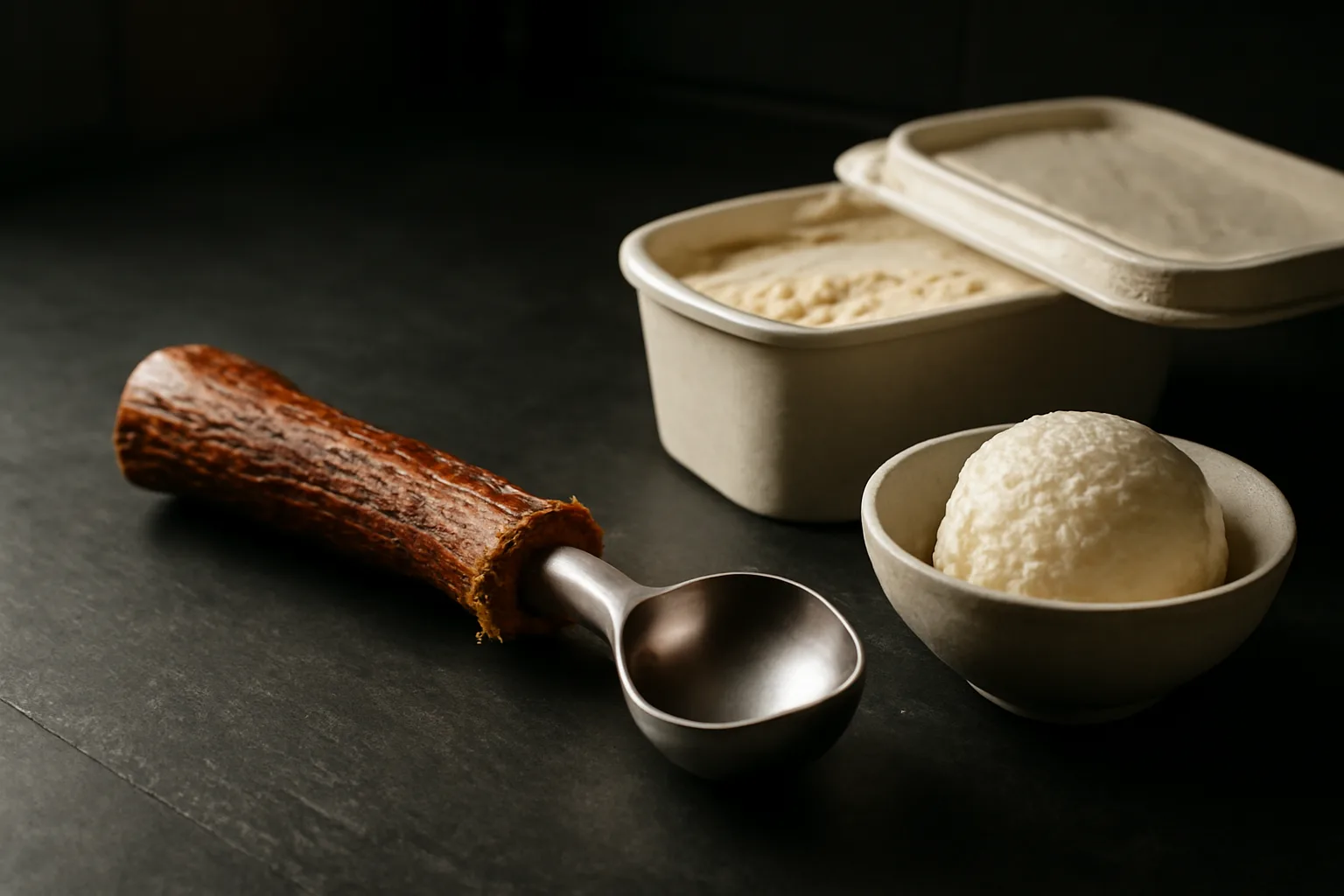
The modern kitchen has been optimized for efficiency, but not for presence. We’ve unwittingly traded the deep satisfaction of craft for the fleeting advantage of speed, severing a vital connection to the very food we prepare and share. This shift has turned the heart of the home into just another station on the assembly line of a busy day.
The Unseen Toll of Utilitarianism
Think of the common kitchen drawer. It is likely a jumble of plastic-handled utensils, feather-light and mass-produced. A flimsy spatula that bends under the weight of a pancake, a vegetable peeler with a handle that feels hollow and anonymous, a set of measuring spoons that clatter with a tinny, unsubstantial sound. These are objects of pure utility, designed to perform a function at the lowest possible cost. They are not designed to be held, felt, or considered.
While functional, these tools subtly shape our experience. Their lack of weight and texture offers minimal sensory feedback, encouraging our minds to wander. We chop the carrots for the soup while mentally composing an email; we stir the risotto while scrolling through our phones. The physical act of cooking becomes background noise rather than the main event. Our hands perform the task on autopilot because the tools themselves give them no reason to pay attention.
This is the unseen cost of convenience: a disconnection from the physical world. We lose the grounding rhythm of routine, the small moments of focus that can anchor a scattered mind. The joy of process is sacrificed for the obsession with outcome, and the kitchen, a place of potential nourishment for the soul, becomes a space of hurried transaction.
Reclaiming the Kitchen as a Sanctuary
Mindful cooking is not about mastering complex culinary techniques or spending hours over a hot stove. It is an invitation to be fully present during the simple, repetitive acts of preparation. It is the conscious choice to transform a chore into a ritual. This transformation begins not with the recipe, but with the tools.
When you pick up an object crafted with intention, something shifts. A knife with a handle carved from a piece of native timber, a serving spoon forged from heavy-gauge steel, a mortar and pestle hewn from stone—these objects demand your attention. Their weight, balance, and texture communicate a sense of permanence and purpose. They are not disposable; they are partners in the act of creation.
Engaging with such a tool encourages you to slow down. The simple act of slicing an onion becomes a study in precision and form. The weight of the knife guides your hand, its balance making each cut feel deliberate. You notice the crisp snap of the vegetable, the pungent aroma it releases, the translucent layers you reveal. You are not merely dicing an onion; you are participating in a sensory experience, fully grounded in the present moment.
The Weight of Awareness: How Organic Materials Foster Flow
The feeling of becoming completely absorbed in an activity, where time seems to fade and your actions feel effortless and fluid, is often called a 'flow state.' While commonly associated with artists, musicians, or athletes, this state of deep focus is accessible to anyone, even in the midst of daily kitchen prep. The key lies in engaging our senses in a way that quiets the mind's incessant chatter, and the tools we use are the most direct conduit for this engagement.
From Sensory Input to Focused State
Our hands are incredibly sensitive instruments, dense with nerve endings that constantly send information to the brain. This is the mechanism of haptic feedback—the sense of touch through which we feel and manipulate objects. A mass-produced plastic utensil, weighing perhaps 50 grams, offers very little haptic information. It is too light to require conscious muscle control and its uniform, smooth surface provides no novel texture for your nerves to interpret. Your brain quickly registers it as 'uninteresting' and diverts your focus elsewhere.
Contrast this with a handcrafted tool, such as one featuring a handle of naturally shed New Zealand red deer antler. An antler handle is significantly heavier and more dense, bringing the total weight of a tool like an ice cream scoop or a cheese knife to between 150 and 250 grams. This added mass provides substantial proprioceptive feedback—your body's ability to sense its own position and movement. Your muscles must engage more deliberately to control the tool, an act which requires and holds your brain's attention.
The surface of the antler itself is a rich tapestry of tactile information. Unlike the monotony of injection-molded plastic, each antler has a unique grain, a subtle porosity, and a form shaped by the life of the animal. The coronet, the burred, intricate base of the antler, provides a complex and grounding texture against the palm. This constant, nuanced stream of sensory data keeps the brain's tactile processing centers engaged. It effectively occupies the mental bandwidth that might otherwise be consumed by intrusive thoughts, anxieties, or the digital siren song of a nearby phone. The tool becomes a focusing object, its organic properties gently demanding your presence and making it easier to slip into a state of culinary flow.
The Story Held Within the Hand
Beyond the ergonomic and neurological benefits, artisan tools carry something more ephemeral: a story. A handcrafted object is a vessel of time, skill, and material provenance. When you hold it, you are connected to the hands that made it and the place it came from.
Our materials at Antler Tree are sourced from the majestic ranges of New Zealand, where red deer shed their antlers each spring as part of a natural, yearly cycle. No animal is ever harmed. These antlers are then gathered, cleaned, and meticulously shaped by our craftspeople. Each curve and colouration is a testament to the deer's life in the wild, a unique map of its existence.
To use a tool with such a history is to layer your own story on top of it. The faint patina that develops on an antler handle over years of use—serving celebratory meals, scooping ice cream for your children, slicing cheese for friends—becomes part of its narrative. The everyday act of preparing food is imbued with a deeper sense of connection, not only to the meal itself but to a cycle of nature, craft, and family. The kitchen transforms from a mere workspace into a curated gallery of functional objects, each with a past and a future written in its use.
Cultivating Your Kitchen Ritual
Embracing mindful preparation does not require a complete overhaul of your kitchen. The most profound changes often begin with a single, deliberate choice. Start by identifying one small, repeatable moment in your culinary routine that you can elevate from a task to a ritual.
Perhaps it is the act of grinding peppercorns for a salad dressing, the slicing of bread for the table, or the final, joyful flourish of serving dessert. Choose one moment and dedicate a special tool to it. Pay attention to how it feels in your hand. Notice its weight, its texture, its temperature. Allow the physical sensations to anchor your awareness. Even a small, repeated pleasure, like serving ice cream after a family dinner, is transformed when the tool itself is an object of beauty and substance. The satisfying heft of a well-made Antler Ice Cream Scoop cutting through a frozen dessert provides a moment of deliberate, tactile satisfaction that a flimsy plastic scoop simply cannot replicate.
By focusing on these small, sensory-rich moments, you begin to rewire your relationship with your kitchen. You learn to find stillness in motion and joy in the fundamentals. This practice gradually expands, turning the once-hurried minutes of food preparation into a restorative and grounding part of your day.
Mindfulness in the kitchen is, ultimately, an act of reclamation. It is about reclaiming your time, your focus, and your connection to the simple, profound act of making and sharing food. By choosing tools that engage our senses and honour the process, we transform the mundane into the meaningful, finding a quiet sanctuary in the heart of our own homes.
Related reading

Hosting & Entertaining· 6 min read
The Document Archivist’s Toolkit: Reading Faded Inks and Vintage Print
Discover essential preservation methods for historical documents. Learn to decipher faded inks and vintage print with an archivist's toolkit and techniques.
Read article →
Hosting & Entertaining· 6 min read
The Craft Beer Pour: Why the Opening Ritual Influences Taste Perception
Discover how the ritual of opening a craft beer influences taste. This article explores the physics of a perfect pour and why a quality bottle opener matters.
Read article →
Hosting & Entertaining· 6 min read
Passive Harvesting: The Absolute Peak of Ethical Manufacturing
Explore passive harvesting, a zero-harm model of making. Discover how using naturally shed deer antler offers a profound ethical alternative to resource extraction.
Read article →