
Hosting & Entertaining· 6 min read
Neurological Grounding: How Tactile Variation Lowers Daily Cortisol
Explore the science of neuro-haptics and how the unpredictable, natural texture of objects like antler can calm the nervous system and lower daily stress.
By Antler Tree · 1 June 2026
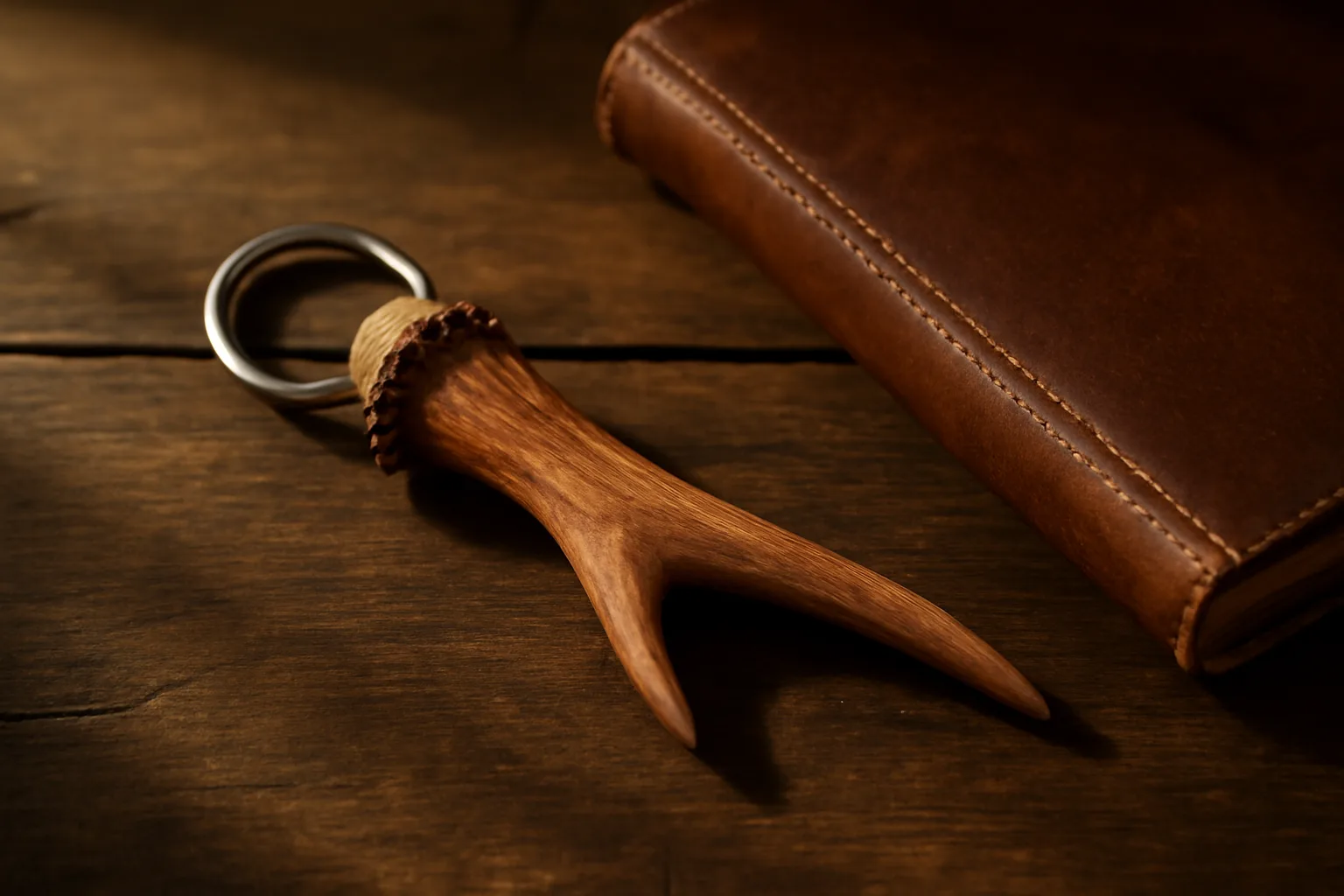
Our hands crave a language richer than the sterile glass of a smartphone. This innate need for varied texture is not a mere preference, but a neurological imperative for grounding ourselves in a digitally saturated world. It is a quiet rebellion against the tyranny of the smooth, a return to a sensory dialogue that our nervous system is wired to understand.
The Age of Unvarying Surfaces
Take a moment to notice the surfaces your hands will touch today. The polished screen of your phone, the molded plastic of your mouse, the laminated surface of a desk, the cool metal of a door handle. Our modern environment is an ecosystem of manufactured smoothness. These materials are efficient, clean, and predictable. But in their uniformity, they offer our peripheral nervous system a startlingly monotonous diet.
For millennia, human hands engaged with a world of immense tactile variation: the rough bark of a tree, the gritty texture of soil, the fibrous weave of a basket, the complex hide of an animal. Each surface provided a stream of complex, novel data to the brain. This constant, varied input is not just a relic of our past; it is a fundamental component of our sensory health.
When we are deprived of this rich tactile diet, our nervous system can become subtly starved. We exist in a state of low-grade sensory deprivation, where the primary input is visual and cognitive. Our hands, one of our most powerful tools for interacting with and understanding the physical world, are left tracing the same smooth, predictable paths, day after day. This repetition fails to engage the deeper, more ancient parts of our neurological hardware responsible for emotional regulation and a sense of presence.
Your Skin as a Second Brain
Our skin is far more than a protective barrier. It is our largest sensory organ, a vast network of receptors that functions almost like a second brain, constantly feeding information about our environment to the central nervous system. This is the domain of haptics—the science of touch—and it holds profound implications for our mental state.
Beneath the surface of our skin lie various types of mechanoreceptors, each tuned to different stimuli like pressure, vibration, and texture. One of the most fascinating among these are the C-tactile (CT) afferents. These are slow-conducting, unmyelinated nerves found only in hairy skin that respond optimally to gentle, stroking touch—the speed and pressure of a caress.
Unlike other receptors that primarily report physical data like 'hot,' 'sharp,' or 'rough,' CT afferents are linked directly to the brain's emotional centres, including the insular and cingulate cortices. Their job is not just to feel, but to interpret the emotional significance of that feeling. They are the physiological hardware of affective touch, signalling safety, social bonding, and comfort. When activated, they help down-regulate our stress response, creating a cascade of neurochemical changes that produce a state of calm. The smooth, cold, and inert surfaces of our digital devices and synthetic environments rarely, if ever, activate these crucial pathways.
Neuro-Haptics: Interrupting the Anxious Mind
Beyond the emotional response to gentle touch, the very act of engaging with complex, irregular textures has a direct and measurable effect on our cognitive state. This is where emerging neuro-haptic research provides a powerful insight into why natural objects feel so grounding. The key lies in interrupting the frantic thought loops that characterize states of anxiety and digital overload.
Breaking the Cycle of the Default Mode Network
When our minds are wandering, ruminating, or worrying, a specific brain circuit known as the Default Mode Network (DMN) is highly active. This network is essential for self-reflection and planning, but in our always-on culture, it can become overactive, locking us into cycles of anxious or repetitive thoughts. We scroll through our phones, our minds elsewhere, trapped in a cognitive spin.
Neuro-haptic studies exploring tactile perception reveal a powerful mechanism for breaking this cycle. In experiments where subjects trace different shapes with their fingers while their brain activity is monitored, a clear pattern emerges. Tracing a simple, predictable shape like a perfect circle or a straight line requires minimal cognitive effort. The task can be done automatically, allowing the DMN to remain dominant.
However, when a subject is asked to trace the unpredictable, organic contour of a natural object—like the edge of a leaf, the grain of a piece of wood, or the crenellations of a deer antler—something remarkable happens. The brain must dedicate significant resources from the somatosensory cortex and motor planning regions to process the constant, novel tactile information. The fingertips become explorers, sending a high-fidelity stream of data that demands the brain's full attention. This focused sensory processing effectively 'borrows' neurological resources, pulling energy away from the overactive DMN. The frantic inner monologue is quieted, not through force of will, but by giving the brain a more compelling, tangible task. The anxiolytic effect is a direct result of this cognitive resource reallocation.
The Restorative Power of Natural Imperfection
This neurological shift has a direct impact on our hormonal stress response system, primarily the hypothalamic-pituitary-adrenal (HPA) axis, which governs our body's production of the stress hormone, cortisol. Chronic stress, fueled by digital notifications and the cognitive load of modern life, keeps the HPA axis in a state of high alert.
The tactile engagement we've been exploring provides a twofold antidote. First, the activation of CT afferents through gentle, mindful touch sends direct signals of safety and pleasure to the brain, which can help to down-regulate the HPA axis. Second, the cognitive focus required to trace an irregular contour acts as a form of mindfulness meditation, grounding us in the present moment and interrupting the obsessive thought patterns that fuel cortisol production.
The human nervous system did not evolve in a world of perfect right angles and polished planes. It evolved to find comfort and information in the complex, fractal patterns of the natural world. An object that is perfectly smooth is, in a sensory context, silent. An object with texture, variation, and organic imperfection speaks a rich, complex language that our brains are uniquely wired to understand and find soothing.
From Forest Floor to Fingertips
Here in New Zealand, the annual cycle of the red deer provides a perfect example of this principle. Every spring, stags naturally shed their antlers, leaving behind these remarkable pieces of biological architecture on the forest floor. An antler is not a uniform material. It is a story told in texture. The base, or coronet, is rugged and burred where it attached to the skull. The main beam is smoother but still subtly undulating, scored with channels that once housed blood vessels. Its form is asymmetrical, unpredictable, and unique.
To hold a piece of worked antler is to engage in a direct dialogue with these natural variations. Running a thumb over its surface offers a cascade of novel sensory input. It’s an unconscious act of neurological grounding, a way to anchor a scattered mind to a single, tangible point. Transforming a piece of this raw material into a small, portable object turns this principle into a daily practice. Carrying a piece of this wild, imperfect architecture, such as a simple Antler Key Ring, transforms a mundane object into a tool for quiet contemplation. It becomes a small, haptic anchor in a sea of digital noise.
In a world that increasingly values the flawless and the synthetic, there is a deep, restorative power in embracing the imperfect and the organic. The objects we choose to keep close can be more than just functional; they can serve as gentle, persistent reminders to come back to our senses, to ground ourselves in the physical world, and to give our nervous systems the rich, varied diet they crave.
Explore how a simple, handcrafted object can serve as your daily anchor. Touching something real interrupts the digital haze, offering a moment of genuine presence and calm in the palm of your hand.
Related reading

Hosting & Entertaining· 6 min read
The Document Archivist’s Toolkit: Reading Faded Inks and Vintage Print
Discover essential preservation methods for historical documents. Learn to decipher faded inks and vintage print with an archivist's toolkit and techniques.
Read article →

Hosting & Entertaining· 6 min read
The Craft Beer Pour: Why the Opening Ritual Influences Taste Perception
Discover how the ritual of opening a craft beer influences taste. This article explores the physics of a perfect pour and why a quality bottle opener matters.
Read article →
Hosting & Entertaining· 6 min read
Passive Harvesting: The Absolute Peak of Ethical Manufacturing
Explore passive harvesting, a zero-harm model of making. Discover how using naturally shed deer antler offers a profound ethical alternative to resource extraction.
Read article →