Craft & Materials· 6 min read
Preserving Organic Artifacts: How to Care for Antler, Horn, and Bone
Learn to preserve your antler, horn, and bone heirlooms. Our expert guide details conservation-grade cleaning, oiling, and display to prevent cracking and aging.
By Antler Tree · 1 June 2026
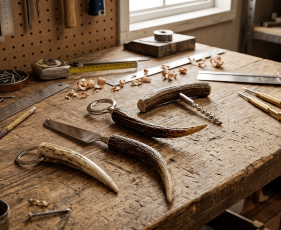
Objects made from antler, horn, and bone possess a warmth and texture that synthetics can never replicate. They are intimate ties to the natural world, carrying stories in their grain and heft. To care for them is not a chore, but an act of stewardship that honours their origin and ensures their longevity.
The Living Nature of Static Objects
Unlike glass or steel, organic materials like antler, horn, and bone are not inert. They were once part of a living creature, and their microscopic structure retains a “memory” of that biological function. This composition is the key to understanding how to care for them properly. Antler and bone are composites, primarily made of a mineral component (calcium phosphate) for rigidity and a protein matrix (collagen) for toughness and flexibility. Horn, found on animals like cattle and sheep, is different; it is composed of keratin, the same fibrous protein that makes up our hair and fingernails.
Because of their organic makeup, these materials are hygroscopic, meaning they absorb and release moisture from the air. This constant, subtle exchange with their environment is the primary driver of ageing. If they dry out too quickly, the collagen in bone and antler becomes brittle, and the keratin in horn shrinks. If they absorb too much moisture, they can swell, warp, or become a host for mould. The goal of preservation, therefore, is not to hermetically seal these objects, but to manage their interaction with the environment in a slow, controlled manner.
The Cardinal Rules of Placement and Display
Before you ever reach for an oil or cloth, the most effective conservation tool is thoughtful placement. Where an organic piece lives in your home will determine more than half its battle for longevity. The core principle is stability—avoiding rapid fluctuations in temperature and humidity.
Light and Heat
Direct sunlight is the adversary of organic artifacts. Its ultraviolet (UV) radiation breaks down the complex molecules of collagen and keratin, leading to bleaching, brittleness, and eventual disintegration. A prized piece of antler, like those we select for our Antler Tree wares, will lose its rich, earthy patina and become chalky and fragile if left on a sunny windowsill. Similarly, avoid placing these items near active heat sources such as fireplaces, radiators, heating vents, or even powerful incandescent lamps. The intense, dry heat will rapidly pull moisture from the material, causing it to shrink unevenly and develop cracks.
Humidity''s Double-Edged Sword
While dryness is a danger, so is excessive dampness. A consistently humid environment (above 65% relative humidity) encourages the growth of mould and mildew, which can permanently stain and weaken the material. Conversely, a very dry environment—common in centrally heated homes during winter—will desiccate the piece. The ideal environment for antler, horn, and bone is a stable relative humidity between 45% and 55%. You do not need a museum-grade climate control system. Simply keeping these items in a living area away from windows, exterior walls, and bathrooms is often sufficient. The key is avoiding the attic or basement, where temperature and humidity swings are most extreme.
A Gentle Hand: Cleaning Protocols
Cleaning should be performed with a minimalist''s approach: use the gentlest method that achieves the desired result. For most well-cared-for pieces, this means little more than routine dusting.
Use a soft, natural-bristle brush (an unused watercolour or makeup brush is perfect) to gently whisk dust from crevices and textured surfaces. A clean, dry microfibre cloth can be used for smoother areas. Avoid feather dusters, which can snag on rough surfaces and often just move dust around.
For more significant grime—perhaps on a piece that has been handled often—a slightly more involved method may be needed. Dampen a soft, lint-free cloth with de-ionised or distilled water. These pure water sources are preferable to tap water, which can leave behind mineral deposits as it evaporates. Wring the cloth out until it is almost dry; it should feel cool to the touch but not leave visible droplets of water behind. Gently wipe the surface to lift the grime. Immediately follow with a clean, dry cloth to remove any residual moisture. Under no circumstances should you ever soak or submerge an antler, horn, or bone item in water. This will cause it to swell rapidly and can lead to irreversible warping and splitting as it dries.
The Science of Suppleness: Preventing Micro-Fractures
This is where we move from passive preservation to active care. The fine network of cracks, often called “crazing” or micro-fractures, that can appear on the surface of older bone and antler items is the most common form of damage. These are not the result of a single event, but of thousands of cycles of microscopic expansion and contraction. As humidity and temperature fluctuate, the material swells and shrinks. When these changes happen too quickly, the outer surface responds faster than the inner core, creating stress that is relieved by forming a crack.
Preventing this requires keeping the material''s internal protein matrix pliable. A desiccated collagen network is brittle and will fracture under stress, while a properly conditioned one can flex. The secret is not to create an impenetrable surface barrier, but to periodically reintroduce a stable, non-oxidising oil that mimics the natural lipids once present in the living tissue. This oil penetrates the porous structure and acts as a buffer, slowing moisture exchange and keeping the organic fibres supple.
Choosing Your Elixir: The Right Oil Makes All the Difference
The market is flooded with polishes and sealants, most of which are harmful to organic artifacts. A thick varnish or polyurethane, for example, creates a plastic shell on the surface. While it may look shiny initially, it traps the material underneath. As the antler continues to breathe and move with environmental changes, this inflexible coating will eventually flake off, often taking part of the artifact’s surface with it. Furthermore, it prevents any future conditioning.
Instead, choose a pure, simple, and penetrating oil. The best and safest option for home use is food-grade mineral oil. It is chemically stable, non-acidic, will not turn rancid, and will not discolour the material over time. It effectively displaces moisture and lubricates the collagen fibres. Another excellent, though more specialised, choice is 100% pure tung oil. Unlike mineral oil, tung oil is a polymerising oil, meaning it cures to form a durable but flexible and breathable matrix within the material''s pores. For truly valuable museum-quality pieces, conservators often use products like Renaissance Wax, but for functional homewares and decor, mineral or tung oil is ideal.
What to avoid is just as important. Never use vegetable oils like olive or canola oil. They will oxidise over time, becoming rancid, sticky, and acidic, which actively damages the material you’re trying to protect. Avoid petroleum-based solvents and lubricants like WD-40, which can degrade the organic structure.
The Method of Application
The goal is nourishment, not saturation. Apply a very small amount of your chosen oil to a clean, lint-free cloth. Work it into the surface of the antler or bone with gentle, circular motions. You will notice the material’s colour deepen slightly as it drinks in the oil. Let the piece sit for 20-30 minutes, allowing the oil to penetrate beneath the surface. Now, the most critical step: take a fresh, clean cloth and buff the entire piece vigorously until it feels dry to the touch. You must remove all excess oil from the surface. A correctly oiled piece should have a deep, lustrous satin sheen, not a wet or glossy finish. A sticky surface means too much oil was left behind, which will only attract dust and dirt.
This process only needs to be done infrequently—perhaps once every one to two years for a displayed object, or slightly more often if an item is in a very dry environment or shows signs of looking chalky or thirsty.
The Special Case of Functional Art
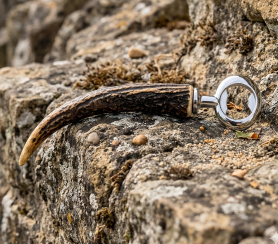
Objects designed for use, such as knife handles, bowls, or serving pieces, have slightly different needs. They are subject to the oils and acids from our skin, as well as potential contact with food and drink. The dense, less porous antler found at the base, or crown, is what we use at Antler Tree for tools that require strength and frequent handling. For an item like a handcrafted Antler Corkscrew, its robustness is part of its design.
The natural oils from your hands can help keep the material conditioned, but it''s wise to wipe it down with a soft, dry cloth after use to remove any residue. The periodic oiling routine described above is particularly important for these handled objects to replenish their conditioning and protect them from the increased exposure to moisture and wear. This small ritual of care ensures a functional tool an heirloom and a centrepiece for a lifetime of gatherings and celebrations.
These materials are a tangible link to the wild landscapes of New Zealand, a record of a life lived. Their grain tells a story of seasons, their weight a story of strength. By understanding their nature and caring for them thoughtfully, we become part of their ongoing story, preserving not just an object, but a piece of the natural world for generations to come.
Related reading
Craft & Materials· 6 min read
Patio Hosting Mechanics: Selecting Slip-Resistant Tools for Summer Barbecues
A guide to high-durability, slip-resistant barbecue tools. We analyze why natural antler grips better than polymer in wet conditions for confident patio hosting.
Read article →
Craft & Materials· 6 min read
Replacing Greenwashed Corporate Swag with Genuinely Sustainable Luxury
Tired of disposable corporate swag? Discover how naturally shed deer antler offers a truly sustainable, carbon-neutral luxury gift that lasts a lifetime.
Read article →
Craft & Materials· 6 min read
The Psychology of Hosting: How Weighty Bar Tools Change the Guest Experience
Discover the psychology of hosting. We break down the weight-value heuristic, revealing how the heft of quality bar tools subconsciously signals value to your guests.
Read article →