
Craft & Materials· 6 min read
The Anatomy of a Wine Opener: Leverage vs. Tactile Feedback
Beyond simple leverage, the right wine opener provides crucial tactile feedback. Discover how a tool''s design connects you to a vintage and why natural handles excel.
By Antler Tree · 1 June 2026
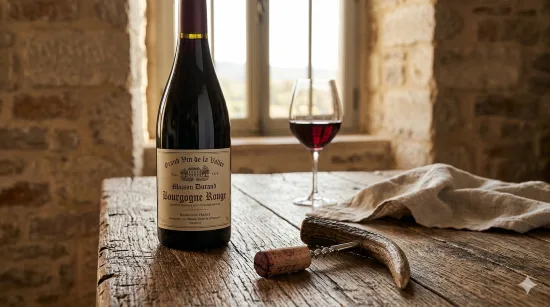
Opening a bottle of wine should be a moment of quiet ceremony, not a wrestling match with a gadget. The tool you choose dictates not just the ease of extraction, but the very quality of the experience. It is the first point of contact with a vintage you may have been cellaring for years—a handshake that sets the tone for everything that follows.
The Spectrum of Extraction: From Brute Force to Finesse
The world of wine openers is a broad one, spanning from fully automated electric devices to the humble waiter''s friend. At one end of this spectrum lies pure, detached leverage. Electric corkscrews, for example, require only the push of a button. They apply consistent, motorized torque and pulling force, removing the cork with zero effort and zero feel. Similarly, the popular lever-style or "rabbit" openers use a complex system of gears and handles to multiply human effort, gripping the bottle and extracting the cork in a single, swift motion. These tools are masters of efficiency.
Moving along the spectrum, we find winged corkscrews. With their twin levers that rise as the worm descends, they offer a more hands-on process. The user feels the initial bite of the screw into the cork and provides the downward pressure that ultimately extracts it. Yet, the mechanics are still largely doing the work. The force is distributed evenly, and the feedback is dampened by the gearing.
At the far end of the spectrum is the tool of the professional: the sommelier knife, or waiter''s friend. Here, leverage is present but minimal, applied with skill through a one or two-step fulcrum. The connection is direct. Every bit of resistance, every subtle shift of the cork within the bottleneck, is transmitted directly to the user''s hand. This is the realm of tactile feedback, where opening a bottle becomes a conversation rather than a command.
Leverage: The Promise of Effortless Opening
There is an undeniable appeal to the high-leverage opener. For those who open many bottles in a commercial setting or who may have difficulty with the strength and dexterity required for a manual tool, they are a practical solution. The physics are simple: a long lever arm or an electric motor can generate a pulling force far greater than the unaided hand. This brute force is highly effective on modern, dense corks or synthetic closures, which are designed for a tight seal and consistent performance.
However, this power comes at a cost: information. The very mechanics that make extraction effortless also create a buffer between the user and the cork. You cannot feel the screw sinking, assess its purchase, or sense if the cork is dry and brittle. The opener operates as a black box—you apply force, and a result occurs, with little insight into the process. For a simple weeknight bottle, this is of no consequence. But for an older, more delicate vintage, this lack of communication can be disastrous. Applying immense, sudden force to a fragile, 20-year-old cork is a common way to snap it in half, leaving a portion stubbornly wedged in the neck of the bottle and creating a far greater problem than a little effort would have presented.
Tactile Feedback: A Dialogue with the Bottle
For the wine collector, opening an aged bottle is the culmination of a long and patient journey. The cork is the final guardian of that history, and its condition is often a mystery. Over decades, it may have dried slightly at the top, become soft, or adhered firmly to the glass. This is where tactile feedback is not just a preference but a necessity.
A manual corkscrew, particularly a well-made waiter''s friend, acts as an extension of the hand. As you twist the worm, you feel it engage. Is the cork firm and accommodating, or is it soft and yielding? That initial resistance tells a story. As you begin the pull, you feel the seal break—a subtle release of pressure. You can sense the friction of the cork against the glass. If part of the cork begins to crumble, or if the pull feels uneven, you know immediately. This constant stream of sensory information allows you to adjust your technique on the fly. You can slow down, change the angle of your pull, or apply pressure more gently to coax the cork out whole.
This dialogue is impossible with a high-leverage device. By the time a rabbit opener has ripped a fragile cork in two, it is too late. The tactile approach turns a simple mechanical action into a diagnostic process. It respects the age of the wine and acknowledges the fragility of its closure, allowing the user to act as a careful custodian rather than a blunt instrument.
The Ergonomics of Control: How a Handle Shapes the Experience
If the metal components of a corkscrew are its voice, the handle is the ear. It is the primary interface between the tool and the user''s sensory system. Standard corkscrew handles—often made of polished wood, smooth plastic, or cold, uniform steel—are designed for predictability. They are smooth and consistent, but in their uniformity, they limit the richness of the information being transmitted.
The Advantage of Irregular Contours
A handle with an irregular, natural contour offers a profound ergonomic advantage, especially when dealing with the delicate task of extracting an old cork. The surface of a naturally shed piece of New Zealand red deer antler, for example, is not a perfect cylinder. It has subtle swells, ridges, and variations in texture that map to the natural asymmetry of the human hand.
This complex topography does two things. First, it dramatically increases the surface area in contact with your skin, engaging a greater number of mechanoreceptors in your palm and fingers. This heightens proprioception—your innate sense of the tool''s position and movement. You receive a higher-fidelity signal, allowing for more nuanced control. Second, these natural contours provide countless micro-anchors for your grip. A smooth, cylindrical handle requires significant clamping force to prevent it from twisting in your hand during a difficult pull. An antler handle, by contrast, nests into the palm, allowing the fingers to find natural purchase against its form. This secure, comfortable grip allows for a more relaxed hand, which is paradoxically far more sensitive to subtle feedback than a tense one.
When a vintage cork offers uneven resistance, this stability becomes critical. It allows you to make micro-adjustments to the angle of your pull without the tool slipping. You can counteract a slight crumbling on one side by subtly shifting force, a feat nearly impossible with a slick, uniform handle. This principle of enhanced feedback is central to tools crafted from organic materials, where every piece is unique. A well-balanced Antler Corkscrew, for instance, harnesses the inherent texture and form of the antler to transform the user''s hand into a more sensitive and capable instrument.
The Waiter''s Friend: Perfecting a Classic Design
The classic waiter''s friend design is the embodiment of this philosophy: maximum feedback with just enough leverage. Its genius lies in its simplicity and efficiency. The fold-out foil cutter is precise. The worm, or screw, is typically slender with a sharp point, designed to pierce the cork cleanly without tearing it. The most crucial element is the two-step fulcrum.
This hinged lever allows the user to perform the extraction in two distinct stages. The first placement on the lip of the bottle provides the leverage to pull the cork halfway out. The second, lower step then provides the ideal angle to complete the extraction with a straight, vertical pull. This prevents the cork from being bent or strained sideways, a common issue with single-hinge models that can cause older corks to break.
This design is the choice of professionals not because it is the fastest, but because it offers the ultimate degree of control. It demands a small amount of skill but rewards the user with an intimate connection to the process. When paired with a handle that prioritizes sensory feedback, the waiter''s friend becomes more than a tool; it is a finely tuned instrument for a cherished ritual.
Ultimately, the choice of a wine opener is a statement of intent. It is about deciding whether to simply complete a task or to participate in an experience. For those who appreciate the story in a bottle, who understand that patience is part of the reward, the right tool honors the wine, the maker, and the moment of enjoyment. A thoughtful corkscrew does not just open a bottle; it elevates the entire occasion.
Related reading
Craft & Materials· 6 min read
Patio Hosting Mechanics: Selecting Slip-Resistant Tools for Summer Barbecues
A guide to high-durability, slip-resistant barbecue tools. We analyze why natural antler grips better than polymer in wet conditions for confident patio hosting.
Read article →

Craft & Materials· 6 min read
Replacing Greenwashed Corporate Swag with Genuinely Sustainable Luxury
Tired of disposable corporate swag? Discover how naturally shed deer antler offers a truly sustainable, carbon-neutral luxury gift that lasts a lifetime.
Read article →
Craft & Materials· 6 min read
The Psychology of Hosting: How Weighty Bar Tools Change the Guest Experience
Discover the psychology of hosting. We break down the weight-value heuristic, revealing how the heft of quality bar tools subconsciously signals value to your guests.
Read article →