
Craft & Materials· 5 min read
The Architecture of an Artisanal Dessert Night
A guide to plating artisanal desserts. We explore the architecture of a dessert experience, from plating composition to the thermal science of a perfect scoop.
By Antler Tree · 1 June 2026
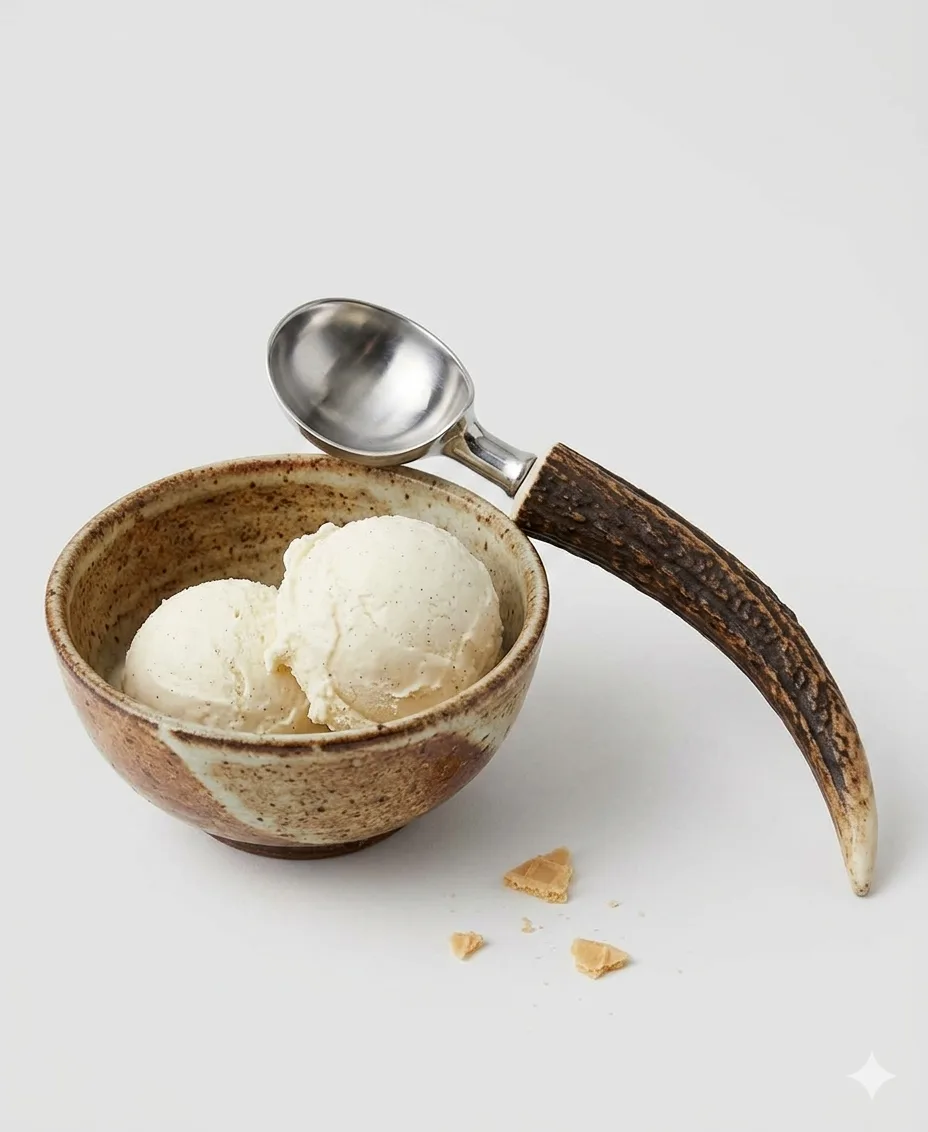
A beautifully crafted dessert deserves more than a passing thought. It represents the culmination of an evening, a final, lingering note of hospitality and care. How it arrives at the table is as much a part of the experience as the taste itself.
The Foundation: More Than Just a Plate
The act of plating is the first step in building your dessert''s narrative. Before a scoop is lifted or a crumb is sprinkled, the serving vessel sets the stage. Consider it the landscape upon which your culinary story will unfold. A wide, flat plate offers a broad canvas, ideal for deconstructed recipes or compositions that rely on negative space. A dark slate can create dramatic contrast for a vibrant berry sorbet or a dusting of pale icing sugar.
A deep, heavy-bottomed bowl, conversely, creates a sense of comfort and concentration. It cradles its contents, focusing the eye and hand inward. This is the choice for simpler, more rustic pleasures: a rich bread pudding, an affogato with its slowly melting island of vanilla gelato, or stewed winter fruits. The material matters, too. The cool, smooth surface of ceramic feels different from the organic texture of wood or the sleekness of glass. Choose a foundation that not only complements the colours and forms of your dessert but also feels right in the hand, adding a tactile dimension to the final course.
Composing the Experience: From Scoop to Serve
Transitioning the dessert from its container to the plate is a critical moment. This is where poise and control are paramount, and where the right tool transforms a simple action into a graceful gesture. A frantic hack with a common kitchen spoon can shatter a delicate tart or mangle a perfectly frozen gelato. An artisanal serving experience is about deliberate, fluid movements that honour the dessert''s structure.
Think about the geometry of the serve. Are you aiming for a perfect sphere, a clean-edged slice, or a rustic quenelle? Each shape requires a different approach and a different instrument. The weight, balance, and material of your serving tool are not incidental details; they are functional components that dictate the quality of the result. A well-designed server feels like an extension of your hand, enabling you to execute your vision with precision. It is in this mindful act of serving that a host''s attention to detail truly shines, communicating a deep respect for both the food and the guest.
The Physics of a Perfect Scoop: Understanding Thermal Transfer
A common frustration when serving frozen desserts is the speed at which they soften. While we often blame the room temperature, a significant-and often overlooked-factor is the serving tool itself. The science at play is thermal transfer, and understanding it is the key to mastering the serve, particularly for ice cream and gelato.
Your hand is a constant source of heat, averaging around 37°C (98.6°F). Metals, like the stainless steel found in most scoop heads, are excellent thermal conductors. This is why a metal pot heats up quickly on the stove. Stainless steel has a thermal conductivity value of approximately 15 W/(m·K). When you grip a scoop with an all-metal handle, the heat from your hand travels rapidly along the handle to the head of the scoop. This transmitted warmth begins to melt the ice cream on contact, resulting in a messy, slushy serve and a dessert that softens prematurely in the bowl.
This is where material intelligence becomes crucial. The handle of a superior scoop should act as a thermal insulator—a barrier that prevents heat from reaching the dessert. Dense, organic materials are exceptionally poor conductors of heat. The naturally shed red deer antler we use at our Antler Tree workshop in New Zealand, for instance, has a thermal conductivity of around 0.5 W/(m·K). That is thirty times less conductive than steel. This means that when you hold one of our antler handles, the heat from your palm is effectively stopped in its tracks. The handle remains comfortable in your hand while the polished steel scoop head remains cold, allowing it to slice cleanly through the frozen dessert without melting it. This principle of insulation is the hidden architecture behind every perfect, slowly melting sphere of gelato.
Pairing Tools and Tastes: A Sensory Guide
Just as a chef selects specific knives for specific tasks, a discerning host should pair serving tools with the texture and form of the dessert. This alignment of tool and taste enhances both the serving process and the final presentation.
Gelato and Sorbet: The Art of the Roll
For frozen desserts, the goal is often a clean, round scoop that showcases its smooth texture. This requires a tool with a sharp leading edge to cut through the hardened surface and a deep, curved bowl to encourage the dessert to roll into a sphere. The satisfying motion of creating that perfect globe is made effortless by a purpose-built Antler Ice Cream Scoop with a polished edge and a weighted, thermally insulated handle. The handle''s heft provides control and leverage, while its organic materialism prevents premature melting, ensuring each scoop is as firm and pristine as the last.
Tarts and Cakes: The Clean Slice
A slice of intricate tart, layered cake, or dense cheesecake demands a clean extraction that preserves its structure. A blunt or poorly shaped tool will compress delicate layers and leave a messy trail of crumbs. For these, a flat, rigid server with a fine, bevelled edge is essential. Slide the server cleanly under the slice and lift with a steady hand. The tool should be long enough to support the entire slice, preventing the dreaded crumble and drop on the way to the plate. The focus here is less on temperature and more on structural integrity.
Finishing Touches: Garnishes and Negative Space
The final act in constructing your dessert experience lies in the details. A thoughtful garnish should add a complementary flavour, texture, or aroma, not just visual noise. A single mint leaf, a light dusting of cocoa powder, a few toasted nuts, or a delicate drizzle of sauce can elevate the entire composition. Apply these touches with precision; sometimes, what you leave out is as important as what you put in.
Embrace negative space on the plate. An off-centre placement can create a dynamic, professional look that draws the eye. Avoid overcrowding the vessel, as this can make the dessert feel chaotic rather than curated. The empty space provides a moment of visual rest, allowing each element—the main dessert, the garnish, the sauce—to be appreciated on its own terms before being enjoyed as a whole.
Ultimately, the architecture of a dessert night is about intentionality. It is a quiet demonstration of craft and consideration, where every element, from the plate to the garnish, and especially the tool that bridges the two, is chosen with purpose. It is an invitation to slow down and savour the final, beautiful moment of a shared meal.
Related reading
Craft & Materials· 6 min read
Patio Hosting Mechanics: Selecting Slip-Resistant Tools for Summer Barbecues
A guide to high-durability, slip-resistant barbecue tools. We analyze why natural antler grips better than polymer in wet conditions for confident patio hosting.
Read article →

Craft & Materials· 6 min read
Replacing Greenwashed Corporate Swag with Genuinely Sustainable Luxury
Tired of disposable corporate swag? Discover how naturally shed deer antler offers a truly sustainable, carbon-neutral luxury gift that lasts a lifetime.
Read article →
Craft & Materials· 6 min read
The Psychology of Hosting: How Weighty Bar Tools Change the Guest Experience
Discover the psychology of hosting. We break down the weight-value heuristic, revealing how the heft of quality bar tools subconsciously signals value to your guests.
Read article →