
Lifestyle & Home· 6 min read
The Art of the Craft Beer Toast: Why the Opener Sets the Standard
Discover how the right bottle opener does more than just open your beer. It respects the craft, preserves the bottle, and elevates the entire sensory experience.
By Antler Tree · 1 June 2026
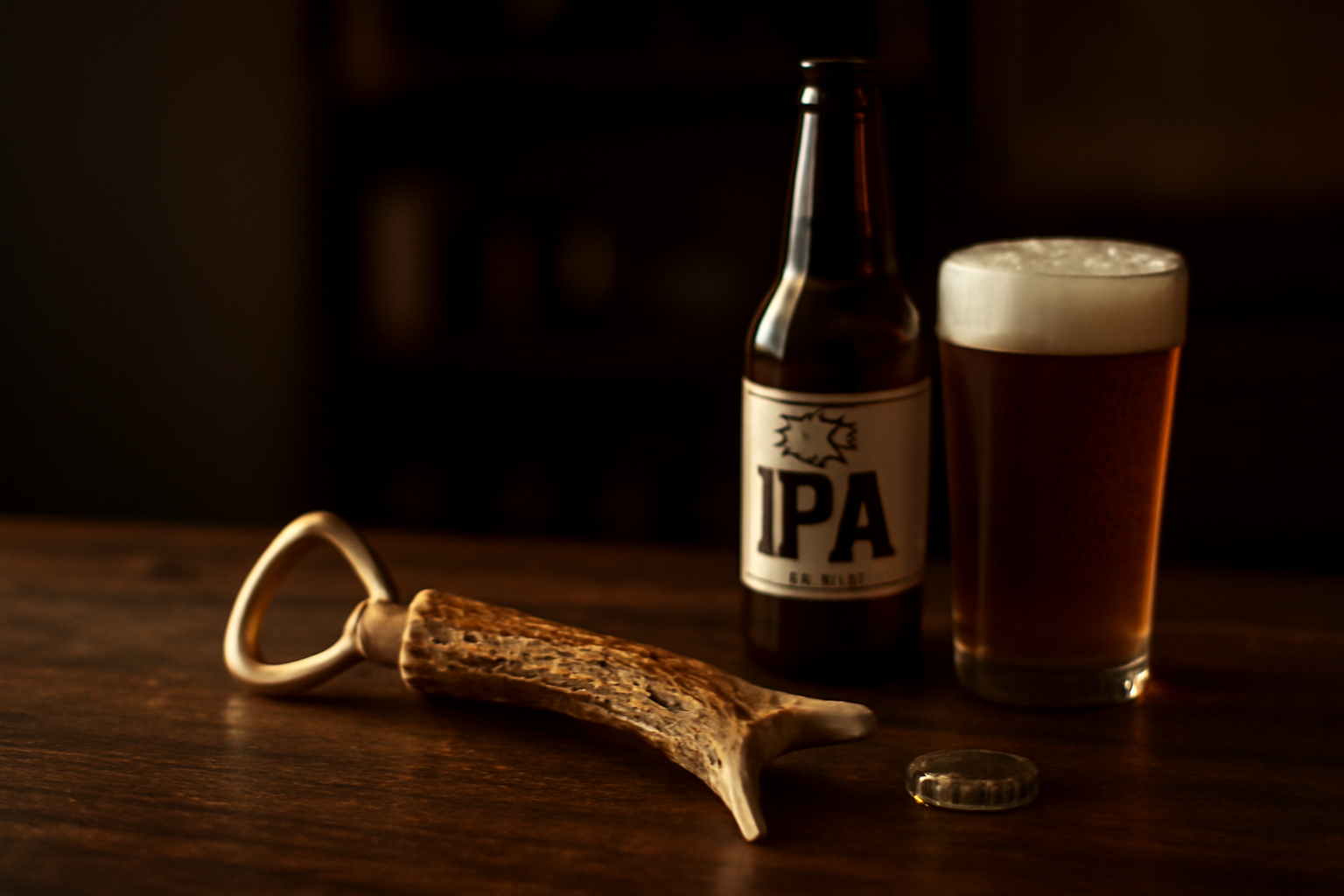
The first sound of a truly great beer is not the hiss of the gas, but the quiet, firm purchase of metal on metal. The humble bottle opener is the gatekeeper to the experience, and the quality of that tool sets the standard for everything that follows. A thoughtfully chosen opener does more than grant access; it participates in the ritual.
More Than a Lever
There is a profound disconnect in enjoying a beer that took weeks or months of patient fermentation and opening it with a flimsy, thoughtless piece of stamped metal. Craft brewers are artisans. They obsess over water chemistry, hop varietals, and yeast strains. They create nuanced layers of flavour and aroma intended to be discovered, not just consumed. The experience they have bottled deserves an overture that respects the effort within.
A cheap opener, clipped to a keychain or pulled from a drawer of forgotten utensils, performs a single, brutish function: it pries. It does so without grace, often requiring a second or third attempt that scrapes at the glass and contorts the cap. It is a tool of convenience, not of consideration.
Conversely, a well-made opener is an object of intent. It has been designed, weighted, and finished. It feels balanced and purposeful in the hand. Its use is not a struggle but a smooth, single action. This tactile introduction is the first sensory note of the experience, a moment of physical satisfaction that precedes the gustatory pleasure. It signals that what is about to happen is an occasion, however small. It is a moment to be savoured, not rushed.
The Language of Materials
We connect with the world through touch. The feel of an object—its texture, temperature, and heft—sends a cascade of information to our brains long before we can articulate its purpose. This is why a ceramic mug feels more comforting than a paper cup, and why a heavy-bottomed pan inspires more confidence than a thin one. Tools are no different.
When you grasp a bottle opener crafted from natural materials, you are holding a story. An opener with a handle carved from a piece of naturally shed New Zealand red deer antler, for instance, is more than just a functional object. It carries the texture of the wild, the history of a season lived in the high country. Each piece of antler is unique, a product of its environment, with its own grain, colour, and density. It is warm to the touch, its organic form fitting naturally into the palm.
This stands in stark contrast to the cold, impersonal feel of plastic or cheap zinc alloy. Mass-produced items are sterile by design, engineered to be identical and anonymous. They are devoid of character. A crafted object, however, invites you to notice its details. It encourages a slower, more mindful interaction. The weight of the steel, the smooth transition to the antler, the subtle imperfections that prove its authenticity—these details enrich the simple act of opening a bottle, transforming it from a binary action into a moment of tactile appreciation.
The Physics of a Flawless Open
Beyond aesthetics and feel, the design of a high-quality bottle opener has a direct mechanical impact on its performance, particularly in how it treats the bottle and its cap. The difference between a clean lift and a mangled crown comes down to simple physics, specifically the principles of leverage and pressure distribution.
The Problem: Concentrated Force
A standard, thin bottle opener—especially the kind stamped from a flat sheet of metal—operates as a Class 2 lever. Your hand applies effort to the handle, the opener pivots on the top of the cap (the fulcrum), and the lip of the opener lifts the edge of the cap (the load). With a thin opener, the fulcrum point is incredibly small, sometimes no more than a few square millimetres.
This small point of contact concentrates the entire force of the lever into one tiny spot on the crown. The formula for pressure is simple: Pressure = Force / Area. When the area is minuscule, the resulting pressure is immense. This is what causes the deep, sharp dent in the top of the bottle cap. For collectors of unique crowns from small-batch breweries, this is a disaster. For the rest of us, it is a subtle mark of brute force, an indelicate start to a delicate experience.
The Solution: Distributed Pressure
A well-designed opener, particularly one with a robust, forged stainless steel head, approaches the problem differently. The top edge of the opener—the fulcrum—is designed to have a much wider and sometimes slightly curved surface area where it rests on the bottle cap. While the overall force required to lift the cap remains the same, that force is now distributed over a significantly larger area.
By increasing the surface area of the fulcrum by a factor of 10 or more, the pressure exerted on any single point of the cap is reduced by the same factor. Instead of a high-pressure point that dents and deforms, you get a low-pressure surface that lifts. The opener effectively cradles the crown as it levers it off. The result is a cap that is removed cleanly, with its shape and artwork almost perfectly preserved. It’s a small detail, but it is the signature of superior engineering and a respect for the entire package the brewer has presented.
A Bond with the Land
Choosing a tool made from sustainable, natural materials forges a connection not just with the craftsperson, but with the place of origin. Antler is a remarkable resource. Unlike horn, it is not a permanent part of the animal. Red deer, which roam the vast landscapes of New Zealand, naturally shed their antlers each year in a cycle of renewal. These shed antlers are then carefully collected from the forest floor, meaning no animal is ever harmed.
This process imbues the final object with a sense of place and ecological integrity. The journey from the mountainsides of Fiordland to a workshop where it is hand-cut, shaped, and polished becomes part of its value. This connection to the wild landscape is palpable, making a simple tool like an antler bottle opener feel like a part of a larger story. It is a small piece of the New Zealand wilderness, shaped by hand to become a permanent fixture in your home and your traditions.
The Mark of a Considered Host
In the context of hosting, the details matter immensely. They communicate care and a consideration for the guest's experience. When you have selected interesting beers to share, presenting them as a thoughtful host means carrying that consideration through to the very end. Placing a beautiful, functional object in your guest’s hand to open their drink is a quiet statement of quality.
It becomes a talking point, an object of curiosity. Its unique material and evident craftsmanship invite questions and compliments. It is a far more memorable and engaging experience than fumbling with a generic gadget. As a gift, it transcends the category of a simple 'gadget'. It becomes a keepsake for the person who appreciates the intersection of design, nature, and function. It is a gift for the craft beer enthusiast, the design lover, the home entertainer, and anyone who believes that the small rituals of life are worth celebrating with beautiful, well-made things.
Ultimately, the tool we use to begin a shared pleasure should reflect the value we place on it. It is the first physical interaction with the craft and care sealed inside the bottle. A great bottle opener is not an accessory; it is a component of the experience, and a testament to the belief that how we do things is just as important as what we do.
Related reading
Lifestyle & Home· 5 min read
The Forgotten Sensory Axis: Why Product Weight Aligns with Emotional Value
We explore the forgotten sensory axis: the link between a gift's physical weight and its perceived emotional value. Learn how the heft of a handcrafted object creates a deeper memory imprint.
Read article →
Lifestyle & Home· 6 min read
The Connoisseur's Guide to Fine Aged Cheddar: Prep, Temperature, and Tools
Learn to serve fine aged cheddar like an expert. This guide details perfect temperature, preparation, and how the right knife prevents crystalline cheese from shattering.
Read article →

Lifestyle & Home· 6 min read
The Epigenetics of Antler Growth: How a Stag’s Environment Shapes Its Form
Uncover the epigenetics of antler growth. We explore how a stag's life in the wild shapes its antlers and teach you how to spot markers of an authentic heritage.
Read article →