
Craft & Materials· 6 min read
The Cost-Per-Use Equation: Why Everyday Essentials Are the Real Luxury
True luxury isn''t a status symbol. It''s the profound daily value of well-made essentials. Discover the cost-per-use equation for a higher emotional ROI.
By Antler Tree · 1 June 2026
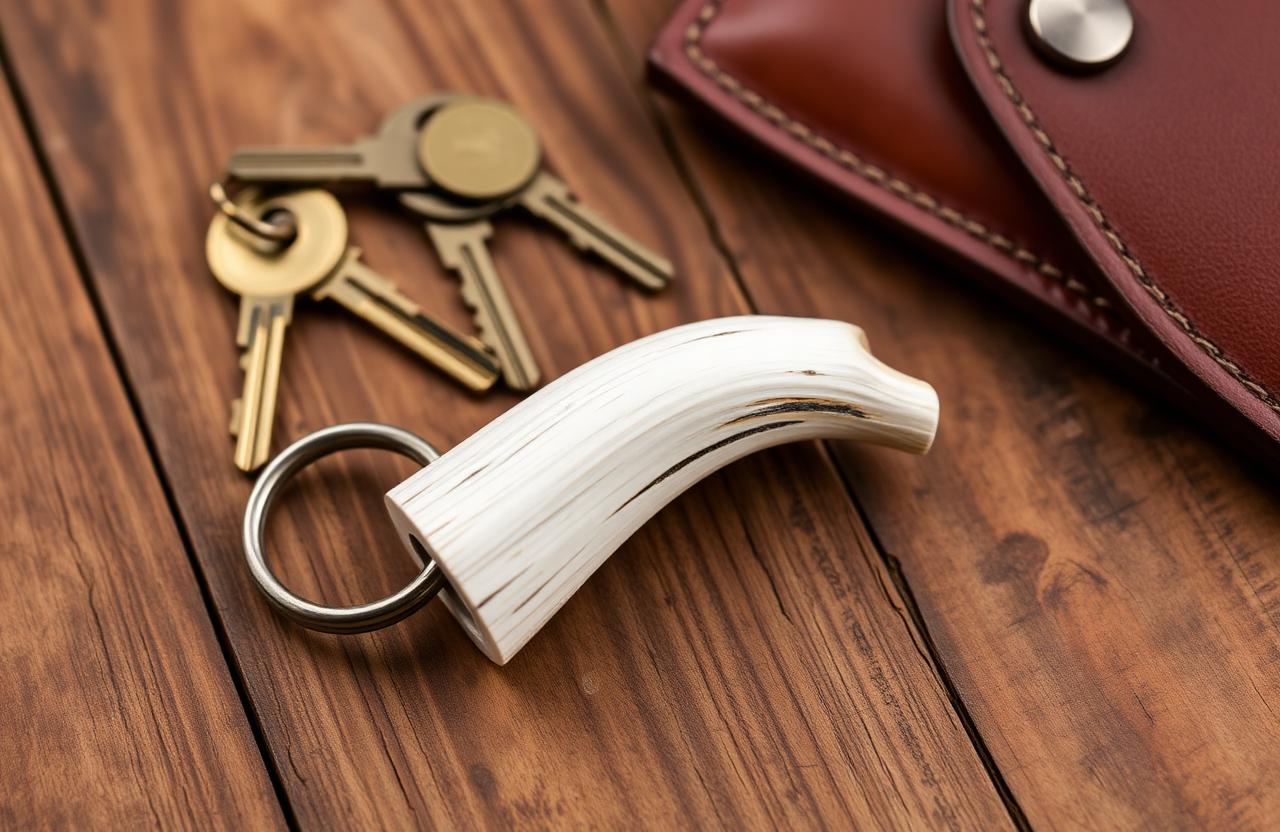
The prevailing definition of luxury feels increasingly hollow, a relic of a less thoughtful time. True value is shifting away from the display case and into the palm of your hand. It is measured not in price tags but in the frequency of quiet, satisfying, daily interactions.
The Fatigue of the Fleeting
We are surrounded by objects, yet starved for substance. The cycle of trend-driven consumption has left many with a sense of fatigue—a closet full of clothes but nothing to wear, a drawer full of gadgets that promise convenience but deliver complexity. This is the endpoint of a culture built on the disposable. Fast fashion, flimsy electronics, and factory-made homewares have promised accessibility but have delivered a quiet, creeping dissatisfaction. The thrill of the new fades almost instantly, leaving behind little more than plastic packaging and a faint sense of regret.
There is a growing counter-current, a quiet rebellion against the transient. It is a movement toward permanence, quality, and meaning. It is the recognition that the things we own should serve us, enrich our lives, and endure. This is not about asceticism or rejecting material goods. Rather, it is about being far more selective, choosing fewer but better things. It is about understanding that an object''s worth is not in its acquisition, but in its lived-in, ongoing presence in our lives. We are beginning to seek out items that tell a story, that carry the mark of a maker, and that promise to age with grace alongside us.
Redefining Value Through Cost-Per-Use
The most common way to justify a purchase is to consider its price. A more sophisticated approach is to consider its value. But how is value truly calculated? In the world of practical economics, one of the most powerful and clarifying metrics is ''cost-per-use''.
In its simplest form, the equation is straightforward:
Total Cost of Item ÷ Total Number of Uses = Cost-Per-Use
A $200 pair of well-made leather boots worn 400 times over five years has a cost-per-use of $0.50. A $40 pair of trendy sneakers that falls apart after 20 wears has a cost-per-use of $2.00. The boots, despite their higher initial price, are demonstrably the more economical choice. This logic is sound, but it remains incomplete. It only accounts for the financial side of the equation; it ignores the emotional dimension, which is often far more significant.
We must expand the concept to include what we might call ''cost-per-positive-interaction''. Every time you use an object, you have an experience with it. An ill-fitting handle, a frustratingly slow interface, or a cheap-feeling material all create micro-moments of friction and annoyance. Conversely, a smooth, weighty, and beautifully crafted object creates micro-moments of pleasure, satisfaction, and calm. These moments, compounded over days and years, have a profound impact on our daily psychological state. The real luxury, then, is not the expensive object, but the object that consistently delivers a positive experience, day after day.
The Micro-Economics of Everyday Joy
Let’s make this tangible. The modern idea of a ''luxury good'' is often tied to ostentatious, event-specific items. Think of a designer clutch or a pair of statement heels. These items are defined by their high price and infrequent use, serving more as signals of status than as functional tools. Let''s compare the real, lived-in value of such an item with a small, masterfully crafted daily essential.
A Tale of Two Objects
Imagine a designer handbag that costs $4,000. It is a beautiful piece, but its delicacy and overt branding make it suitable only for special occasions—perhaps it is used 20 times a year. Each time it is used, its owner might handle it a dozen times: picking it up, opening it, setting it down. That''s 240 interactions per year.
Now, consider a different kind of object: a simple key ring, handcrafted from a piece of naturally shed New Zealand Red Deer antler. It costs, say, $60. This object is used every single day, without fail. You handle it when you leave your home, when you start your car, when you check the mail, and when you return at the end of the day. A conservative estimate might be six direct interactions daily. That''s 2,190 interactions per year.
Calculating the Emotional Return on Investment (eROI)
Let''s apply our expanded cost-per-use metric. The handbag''s financial cost per interaction is approximately $16.67 ($4000 ÷ 240). The key ring''s financial cost per interaction is just under three cents ($60 ÷ 2190). The difference is staggering, but the financial aspect is the least interesting part of the analysis.
The critical factor is the quality of each interaction. The handbag provides a feeling of status, but its use is performative. The key ring provides a moment of simple, tactile pleasure. Every time you touch it, you feel its unique texture—the smooth, polished surface, the solid, organic heft. It connects you to a story of place, of nature, of craft. This is a quiet, private, and deeply personal form of luxury.
This is its Emotional Return on Investment (eROI). Each of those 2,190 yearly interactions is a small deposit of positive sensory feedback into your neurological account. It''s a brief, grounding moment of mindfulness in an otherwise hectic day. The handbag''s 240 interactions are infrequent and loaded with the pressure of the ''special occasion''. The eROI of the everyday object, through sheer volume and authenticity of experience, utterly eclipses that of the aspirational luxury item. It is an investment in the quality of your daily life, not just the appearance of it.
The Ripple Effect of Thoughtful Objects
When you intentionally upgrade a single, high-touch everyday item, a fascinating phenomenon occurs. The integrity of that one object begins to cast a new light on the others around it. The mundane act of leaving the house, for example, is subtly transformed when the tool you use for the task is a thing of beauty and substance.
This is where the choice of material is paramount. Antler, a material we work with every day in our workshop, is a perfect example. It is not manufactured; it is grown, shed, and gathered. Each piece has a unique density, curvature, and story. The experience of holding a key ring carved from this remarkable resource is fundamentally different from holding a piece of mass-produced plastic. An Antler Key Ring is not just a device for holding keys; it is a small, tangible connection to the wild landscapes of New Zealand. Its satisfying weight in your pocket or the smooth, warm feel in your palm becomes a reliable, calming touchstone in your daily routine.
This small upgrade creates a positive ripple effect. You begin to notice other points of friction or dissatisfaction in your daily life. The flimsy vegetable peeler, the leaky travel mug, the pen that always skips. The joy derived from one well-chosen object inspires a more mindful approach to all the others. It teaches you to value durability, tactility, and the quiet confidence that comes from using tools that are not only fit for purpose, but a pleasure to use.
From Tools to Totems
Take a moment to audit your own daily rituals. What are the first objects you touch in the morning and the last you put down at night? Consider your wallet, your favourite mug, your reading glasses, your house keys. These are the unsung heroes of your life, the items whose reliability and function you depend on absolutely.
Too often, these are the very items we neglect. We accept the default, the generic, the mediocre, while saving our financial and emotional investment for things we barely use. The shift toward everyday luxury is about reversing this equation. It is about honouring the significance of these high-touch tools by choosing them with intention and care.
When chosen well, an everyday object transcends its function. It becomes a personal totem, an item imbued with meaning that provides a sense of continuity and comfort. It is a small anchor of quality and intention in a world of flux. This is the ultimate luxury: a life surrounded not by clutter, but by a curated collection of beautiful, dependable tools that enrich every small moment.
Investing in the everyday is an investment in the very fabric of your life. It is a practical philosophy that pays dividends not just in financial longevity, but in daily, repeated moments of quiet satisfaction. We invite you to consider the humble, high-touch objects in your own life and explore the profound joy that comes from choosing them well.
Related reading
Craft & Materials· 6 min read
Patio Hosting Mechanics: Selecting Slip-Resistant Tools for Summer Barbecues
A guide to high-durability, slip-resistant barbecue tools. We analyze why natural antler grips better than polymer in wet conditions for confident patio hosting.
Read article →

Craft & Materials· 6 min read
Replacing Greenwashed Corporate Swag with Genuinely Sustainable Luxury
Tired of disposable corporate swag? Discover how naturally shed deer antler offers a truly sustainable, carbon-neutral luxury gift that lasts a lifetime.
Read article →
Craft & Materials· 6 min read
The Psychology of Hosting: How Weighty Bar Tools Change the Guest Experience
Discover the psychology of hosting. We break down the weight-value heuristic, revealing how the heft of quality bar tools subconsciously signals value to your guests.
Read article →