
Hosting & Entertaining· 5 min read
The Revival of Curiosity Cabinets: Interactive Natural Elements in Home Decor
Explore the revival of curiosity cabinets. Learn how interactive natural objects, like handcrafted tools, can transform your home from a passive display to an engaging space.
By Antler Tree · 1 June 2026
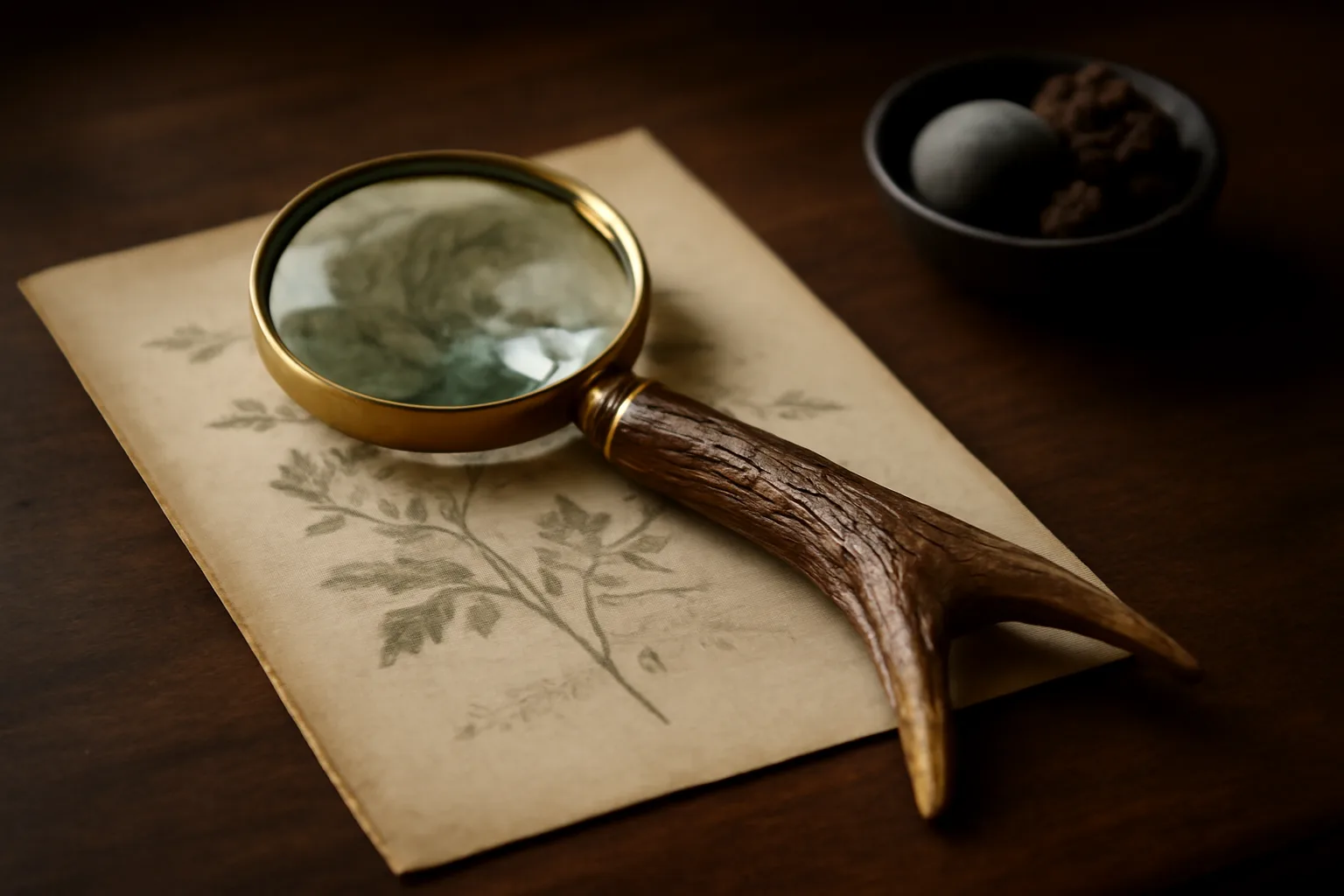
The modern home is undergoing a quiet revolution, turning away from sterile, impersonal aesthetics. We are increasingly seeking spaces that tell a story, that ground us in history and nature. This is not just about what we display, but about creating an environment that invites curiosity and interaction.
From Wunderkammer to Modern Living Room
The concept of curating a personal collection of fascinating objects is far from new. It traces its lineage back to the Renaissance Wunderkammer, or 'cabinet of curiosities'. These were rooms or pieces of furniture filled with a mixture of natural history specimens, geological finds, archaeological relics, and works of art. A Wunderkammer was a microcosm of the world, an attempt by its owner to catalogue, understand, and marvel at the breadth of natural and human creation.
These were not merely decorative displays. They were active spaces for study and conversation, blending science and art. A spiralled nautilus shell was admired for its mathematical perfection, a piece of intricate clockwork for its human ingenuity, and a strange mineral for its mysterious origins. The purpose was to spark wonder and intellectual discussion, to present objects that challenged perception and demanded a closer look.
Today, this spirit is being revived, but it has moved from the private study of scholars and aristocrats into the heart of the home. The modern curiosity cabinet is not a formal piece of furniture but an ethos. It's found in the thoughtful arrangement of objects on a mantelpiece, the composition of a bookshelf, or a collection displayed on a console table. It’s a direct response to mass-produced decor, a way of embedding personal narrative and a sense of wonder into our daily lives.
The Allure of the Tangible in a Digital Age
Why is this trend resonating so deeply now? A significant part of the answer lies in our increasingly digital existence. We spend hours interacting with smooth, cold glass screens, our worlds mediated through pixels. This saturation creates a deep-seated craving for the tactile, the textured, and the real. We yearn for objects that engage more than just our sense of sight.
The weight of a sea-smoothed stone, the rough bark of a piece of driftwood, the complex texture of a bird's nest—these things ground us. They connect us to the physical world and its unhurried rhythms. Materials with inherent character and history become anchors in a fast-paced, ephemeral culture. This is why natural materials like reclaimed wood, hand-thrown ceramics, patinated metals, and organic forms are so central to this design movement.
Here in New Zealand, this connection feels particularly potent. An object like a piece of naturally shed red deer antler carries the story of a specific animal, of a season in the rugged high country. Each piece is unique, shaped by the life of the deer. Its heft, colour, and texture are impossible to replicate, offering a tangible piece of the wild that can be held and contemplated. It’s an antidote to the homogeneity of mass production.
Beyond Decoration: The Shift to Interactive Curiosities
Herein lies the most profound evolution of the Wunderkammer concept for the modern home. The most compelling curated displays are moving beyond passive decoration to embrace interactive engagement. A static object, no matter how beautiful, eventually becomes part of the scenery. The eye glides over it, the mind registers its presence, and the moment passes. The home becomes a gallery to be observed.
But what happens when an object invites you to pick it up and use it? It fundamentally changes your relationship with the space. The shift is from a passive viewer to an active participant. An object with a function—even a simple one—poses a gentle challenge. It asks, "What can you discover with me?" This small cognitive step transforms a decorative item into a tool for exploration, creating a micro-moment of engagement for family and guests alike.
Consider the difference between a decorative glass orb and a functional, beautifully crafted magnifying glass. The orb is purely aesthetic. The magnifying glass, however, is a prompt. A guest might pick it up to examine the fine print in an old book on your shelf, to marvel at the intricate veins on a dried leaf in a vase, or to discover the hidden patterns in the grain of your wooden coffee table. In that moment, they are no longer just a guest in your home; they are an explorer. This simple act creates a small, memorable experience directly tied to your space. A well-designed tool like a beautiful Antler Handle Magnifying Glass serves a dual purpose: it is an object of beauty in its own right, and a catalyst for curiosity.
This principle extends to other objects. A sculptural hourglass isn't just for looking at; it can be turned to mark a two-minute steep for a pot of tea. A brass barometer on the wall isn't just a nostalgic touch; it becomes a point of daily conversation about the coming weather. A vintage compass can be picked up, its needle quivering as it finds north, connecting the room to the wider world outside. These items weave curiosity into the fabric of the home, encouraging moments of pause, observation, and shared discovery.
Curating Your Own Cabinet of Wonder
Creating a space that feels both curated and personal doesn't require a grand budget or a collector's obsession. It requires a shift in mindset from decorating to storytelling.
Start with a Story
Resist the urge to buy a collection of 'curiosities' all at once. The most meaningful collections are built over time. Begin with what you already have that tells a story: a collection of shells from a favourite beach, a beautiful feather found on a bush walk, a watch passed down from a grandparent. These are your foundational pieces. They provide the personal context that makes your collection uniquely yours.
Layer with Functional Art
Once you have your personal anchors, begin to layer in objects that combine form with function. Think about tools that encourage a closer look. This is where handcrafted items shine, as they bring their own story of material and making. An item crafted from naturally shed antler, for instance, is not just a functional tool; it’s a piece of sculpture shaped by nature and refined by a craftsman's hand. It bridges the gap between the wild and the domestic, the raw and the refined. Seek out pieces that you will not only love to look at but will also delight in using.
The Enduring Beauty of Natural Materials
The most successful curiosity displays create harmony through contrast. They balance different textures, materials, and provenances. The raw, bone-like texture of an antler handle next to the smooth, cool perfection of a glass lens. The organic irregularity of a found object next to the clean lines of a turned wooden bowl.
By sourcing materials responsibly, we add another layer to the object's story. Using naturally shed antler from New Zealand's red deer means that no animal was harmed. It is a material that is gifted by nature, a sustainable cycle that respects the wildlife it comes from. This knowledge deepens our appreciation for the object. It ceases to be a mere commodity and becomes a part of a larger, more conscientious story about our relationship with the natural world.
Bringing these elements into our home does more than just enhance its appearance. It infuses our living spaces with narrative, with texture, and with opportunities for discovery. It transforms our homes from static displays into living, breathing environments that reflect who we are and spark the imagination of those we welcome inside.
Creating a home that is truly alive is about curating moments of wonder. By choosing objects that invite touch, thought, and interaction, you build a space that is not just to be looked at, but to be truly experienced. It’s an invitation to yourself and your guests to slow down, look closer, and rediscover a sense of curiosity.
Related reading
Hosting & Entertaining· 6 min read
The Document Archivist’s Toolkit: Reading Faded Inks and Vintage Print
Discover essential preservation methods for historical documents. Learn to decipher faded inks and vintage print with an archivist's toolkit and techniques.
Read article →

Hosting & Entertaining· 6 min read
The Craft Beer Pour: Why the Opening Ritual Influences Taste Perception
Discover how the ritual of opening a craft beer influences taste. This article explores the physics of a perfect pour and why a quality bottle opener matters.
Read article →
Hosting & Entertaining· 6 min read
Passive Harvesting: The Absolute Peak of Ethical Manufacturing
Explore passive harvesting, a zero-harm model of making. Discover how using naturally shed deer antler offers a profound ethical alternative to resource extraction.
Read article →