Craft & Materials· 5 min read
The Structural Density of Antlers: Nature's Toughest Fast-Growing Matrix
Explore the science behind antler''s incredible strength. We dive into its unique cellular matrix, from soft cartilage to dense bone, to reveal its natural durability.
By Antler Tree · 1 June 2026
There''s an inherent contradiction in a piece of handcrafted antler. It feels both ancient and alive, a testament to the wild forests of New Zealand, yet refined and purposeful in the hand. Understanding its structure reveals a material that is not simply found, but engineered by nature on an astonishingly rapid timescale.
More Than Just Bone: A Unique Biological Marvel
Many people mistakenly group antler with horn or even simple bone. While they share a bony composition, antler occupies a unique category in the biological world. Unlike horn, which is a permanent layer of keratin encasing a living bone core (like that of a goat or sheep), antlers are true bone structures that are grown and shed every single year. In fact, deer are the only mammals to regenerate an entire appendage.
This annual cycle is a feat of metabolic engineering. For the New Zealand red deer, from which we source all our naturally shed antler, this process begins in late spring. A surge of testosterone triggers rapid cell division at the pedicles—the bony bumps on the deer''s skull. What follows is the fastest known rate of tissue growth in any mammal, with some species capable of growing over two centimetres of antler per day.
This isn''t slow, steady bone accretion. It is a biological explosion, a temporary organ built for a specific purpose and then discarded once that purpose—primarily displaying fitness and sparring for mates—is fulfilled. It’s this cycle of natural shedding that allows us to collect this material without any harm to the animal, gathering a resource that would otherwise return to the forest floor.
The Blueprint for Strength: From Velvet to Solid Form
Before an antler hardens, it exists in a surprising state known as ''velvet''. This temporary, skin-like covering is rich with a dense network of blood vessels and nerves, making it warm and highly sensitive. The name comes from its soft, furry texture, but its function is purely industrial: it is the life support system for the furious growth happening within.
The velvet acts as a conduit, delivering a massive supply of proteins and minerals to a rapidly expanding cartilaginous scaffold. Think of it as nature’s 3D printing process. A soft, flexible cartilage model of the antler is laid down first, defining its final shape, from the main beam to the individual tines. This cartilage core is not weak; it’s a highly organized matrix of collagen fibres, providing the blueprint upon which the final, hardened structure will be built. This foundational stage is critical, as the integrity of this cartilage framework dictates the integrity of the final, ossified antler. The entire structure grows from the tip, with new cartilage being added daily while the lower sections concurrently begin the hardening process.
The Great Transformation: Calcification and Core Density
The transition from soft, pliable cartilage to a material strong enough to withstand the immense impact of two stags colliding is where the true genius of antler resides. This process, called endochondral ossification, is a masterclass in material science, resulting in a composite structure of remarkable toughness. It begins as the antler reaches its full size. A hormonal shift cuts off the blood supply to the velvet, which then dries, dies, and is rubbed off by the deer, revealing the pale, hard bone underneath.
Internally, a dramatic cellular transformation is underway. The cartilage cells that formed the initial scaffold undergo apoptosis, or programmed cell death. Their demise leaves behind a porous, collagen-rich framework. This empty matrix is then invaded by specialized bone-forming cells called osteoblasts. These cells work tirelessly, depositing minerals—primarily calcium and phosphorus in the form of hydroxyapatite crystals—onto the collagen scaffolding. It''s akin to reinforcing a fibrous web with concrete, creating a ceramic-polymer composite.
The result isn''t a uniform block of bone. Instead, nature creates a sophisticated gradient of density, which is the secret to its unparalleled resilience. The exterior of the antler develops into extremely dense, compact cortical bone. This outer shell is incredibly hard, providing surface durability and resistance to abrasion. It has to be tough enough to handle scrapes, clashes, and the general rigours of life in the wild.
A Gradient of Toughness
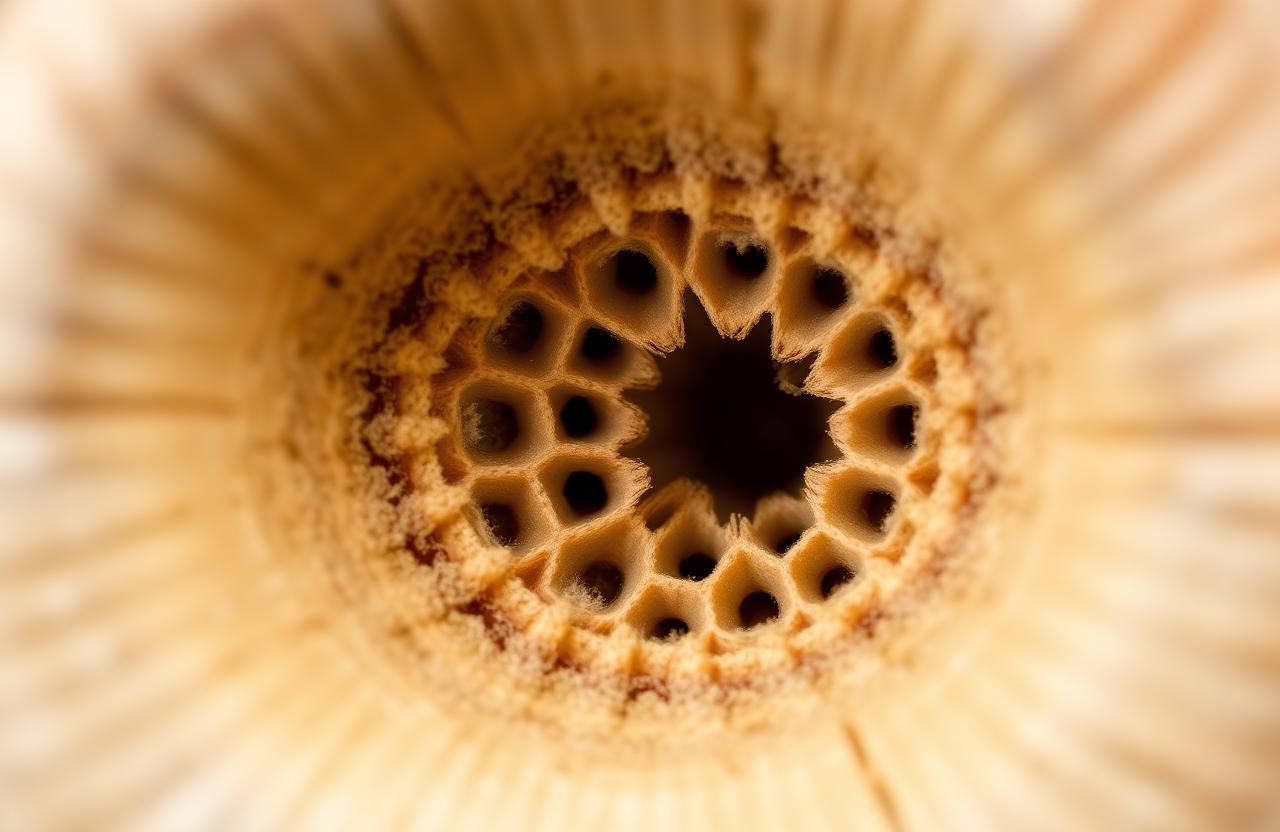
The core of the antler, however, is different. Here, the mineralisation process creates what is known as trabecular or cancellous bone. This inner structure is a porous, honeycomb-like matrix—visibly so when you look at a cross-section. While less dense than the outer shell, it is this very porosity that makes it exceptionally strong relative to its weight. The trabecular core acts as a shock absorber. When the antler sustains a high-impact force, this internal lattice can compress and flex slightly, dissipating the energy throughout the structure and preventing a catastrophic fracture. An antler made of solid cortical bone would be far too brittle and heavy.
This composite design—a hard, rigid shell around a tougher, more resilient core—is a principle that human engineers often use in advanced materials for aerospace and athletics. In the antler, it is perfected. The structural density can be immense, with some studies showing antler bone to possess a fracture toughness that rivals some industrial polymers, all while being grown from grass and sunlight in a matter of months.
Translating Natural Engineering into Enduring Craft
When we bring a piece of naturally shed red deer antler into our workshop, we are not just working with bone; we are collaborating with this intricate, purpose-built material. Our role as craftspeople is to understand its properties and honour them in the objects we create. We see the story of its growth in the texture, the density, and the subtle variations in colour.
Our selection process is guided by this internal architecture. The base of the antler, known as the burr or coronet, is the oldest and densest part, having supported the weight and growth of the entire structure. Its cross-sections reveal the most robust combination of the thick cortical wall and a dense trabecular core. It''s this resilient core, encased in a shell of dense bone, that gives our Antler Ice Cream Scoop its surprising heft and ability to withstand the pressure of even the most frozen dessert, year after year. The handle will not bend or crack under duress, a direct result of the natural engineering designed for clashing stags.
By shaping and polishing this material, we reveal the beauty of the honeycomb matrix within, preserving the function that nature bestowed upon it. The finished piece feels substantial and balanced, a daily reminder of the quiet strength inherent in the natural world. It''s a connection to the wild heart of New Zealand, forged not by us, but by the life of a magnificent animal.
This incredible material, grown and shed in the high country, is more than just a component of our work. It is the very soul of it, offering a story of resilience and renewal. Each piece carries the legacy of its wild origin, transformed by hand into an object of lasting beauty and function.
Related reading
Craft & Materials· 6 min read
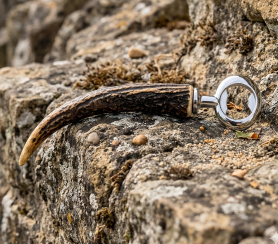
Patio Hosting Mechanics: Selecting Slip-Resistant Tools for Summer Barbecues
A guide to high-durability, slip-resistant barbecue tools. We analyze why natural antler grips better than polymer in wet conditions for confident patio hosting.
Read article →
Craft & Materials· 6 min read
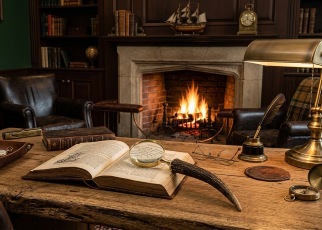
Replacing Greenwashed Corporate Swag with Genuinely Sustainable Luxury
Tired of disposable corporate swag? Discover how naturally shed deer antler offers a truly sustainable, carbon-neutral luxury gift that lasts a lifetime.
Read article →
Craft & Materials· 6 min read
The Psychology of Hosting: How Weighty Bar Tools Change the Guest Experience
Discover the psychology of hosting. We break down the weight-value heuristic, revealing how the heft of quality bar tools subconsciously signals value to your guests.
Read article →